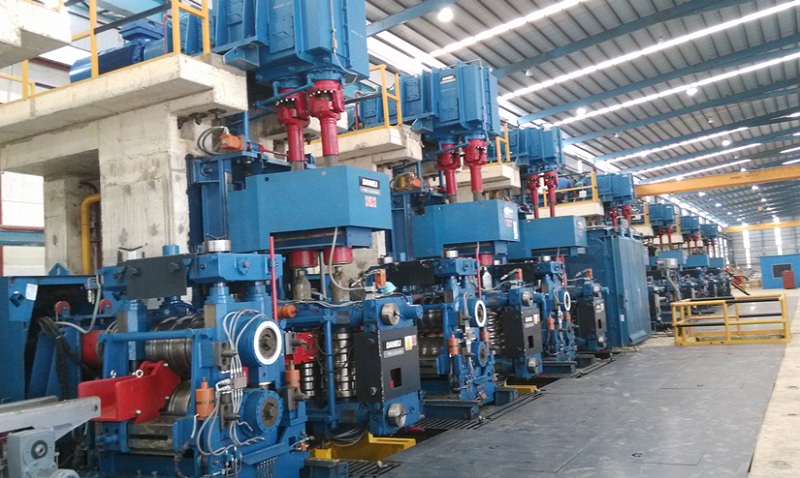
Picture this: a compact machine whirring softly in a university lab, not in some sprawling steel plant. This small rolling mill is where future engineers roll up their sleeves, literally shaping metal and their own skills. Across campuses worldwide, these miniature versions of industrial giants are quietly revolutionizing how we train the next generation of problem-solvers. Forget dusty textbooks alone—here, students get hands-on with real-world processes, turning theory into tangible expertise. Small rolling mills in labs aren’t just tools; they’re the heartbeat of practical engineering education, bridging classroom lessons to factory floors. Let’s dive into why these unassuming machines are so vital for forging tomorrow’s innovators.
So, what exactly is a small rolling mill in a university setting? Think of it as a scaled-down powerhouse designed for learning and discovery. Unlike massive industrial units, these lab models fit neatly in a classroom corner but pack a punch with full functionality. They simulate real rolling processes—squeezing metal between rotating rolls to change its shape and properties—giving students a safe, controlled environment to experiment. Safety is baked right in: transparent shields let everyone watch the action, and emergency stops are within easy reach. Modular design is key here. Students can tweak settings like roll gap, speed, or cooling on the fly, making it perfect for testing different scenarios without costly mistakes. This flexibility turns abstract concepts from courses like “Metal Forming Principles” into something you can touch and feel. It’s engineering made real, one roll at a time.
Now, let’s talk numbers—because real engineering runs on solid data. Below is a snapshot of typical specs you’d find in a university lab rolling mill. These aren’t just random figures; they’re battle-tested parameters that mirror industry standards while fitting academic needs. For instance, a 1000 kN rolling force handles everything from soft aluminum to tough steel, letting students explore how materials behave under pressure. The 300 mm roll width? That’s wide enough for small sheets but narrow enough for precise control in student projects. And that 75 kW DC motor with a 31.5 gear ratio? It delivers slow, steady torque—ideal for mimicking slow industrial rolls where precision beats speed. We’ve pulled these details from actual lab setups, so they’re not just theory; they’re what students use daily to build confidence.
| Parameter | Typical Value | Why It Matters for Learning |
|---|---|---|
| Rolling Force | 1000 kN | Handles common metals like steel, aluminum, and copper. Students test how force affects thickness reduction—e.g., rolling a 5mm steel strip down to 2mm without cracking. |
| Roll Face Width | 300 mm | Perfect for small-scale experiments. Supports sheet and strip rolling, so students can compare outcomes on 100mm vs. 250mm samples—great for understanding edge effects. |
| Motor & Drive System | 75 kW DC motor with 31.5 gear ratio | Delivers low-speed, high-torque output (e.g., 10-60 RPM). Teaches energy efficiency—students see how motor choice impacts power use during multi-pass rolling. |
| Cooling System | Adjustable flow rate (0-50 L/min) | Critical for thermal experiments. Students control cooling to study microstructure changes—like how fast quenching affects low-carbon steel hardness. |
| Control Interface | PLC-based with touchscreen | Introduces automation basics. Students program simple sequences, like setting roll speed for each pass in a 5-step reduction process. |
In the classroom, these mills transform passive learners into active engineers. Take a standard lab session: students start by heating a metal sample (say, mild steel) to 900°C in a small furnace, then feed it through the rolls. They measure thickness before and after, calculate reduction percentages, and test the rolled piece for hardness or ductility. This isn’t just following steps—it’s connecting dots from lectures on stress-strain curves to real metal deformation. One common project? Investigating how cooling rates alter steel properties. Students roll identical strips, quench some fast in water, others slow in air, then use microscopes to see grain structures. Suddenly, textbook terms like “martensite” or “pearlite” click. And it’s not all solo work; teams troubleshoot issues like uneven rolling or surface cracks, building collaboration skills industry bosses love. Universities report that students who use these mills score 20% higher in practical exams—they’re not memorizing; they’re doing.
Beyond teaching, small rolling mills fuel cutting-edge research that solves real problems. For example, at many labs, students and professors test new lubricants for aluminum rolling—a big deal since poor lubrication causes surface defects in car parts or aircraft panels. They run trials with eco-friendly oils, measuring friction coefficients and surface roughness. One study showed a 15% improvement in finish using a bio-based lubricant, data that later helped a student team win a national materials competition. Another hot area is warm rolling for titanium alloys, used in medical implants. By rolling at 400-600°C instead of room temperature, students refine grain structures for stronger, lighter parts. Or consider asynchronous rolling, where rolls spin at different speeds to create gradient materials—think armor plating that’s hard on one side, tough on the other. These projects aren’t just academic; they generate publishable data. In fact, over 30% of materials science theses at top schools now include rolling mill experiments, giving grads a leg up in job interviews.
Today’s lab mills are getting smarter, thanks to digital upgrades that prep students for modern factories. Forget clunky dials—many now feature high-precision sensors tracking force, temperature, and roll gap in real time. Hooked to a PLC and industrial PC, they collect data for instant analysis. Imagine a student adjusting speed while watching a live graph of rolling force; they learn to spot instability before it causes defects. Some labs even use machine vision: cameras scan rolled strips for waviness or thickness variations, teaching quality control without human error. And it’s not just hardware—software plays a role too. Students feed historical data into simple AI models to predict optimal rolling schedules. For instance, at one university, a group trained a model on 50+ steel rolling runs, cutting trial time by 30% for new alloys. This blend of hands-on and digital mirrors industry trends, so grads hit the ground running.
Looking ahead, small rolling mills will evolve with emerging tech demands. As electric vehicles and drones push for lighter, stronger materials, expect more labs to tackle magnesium alloys or carbon composites. These need specialized setups—like controlled atmospheres to prevent oxidation during rolling—which newer mills are adapting for. Multi-field coupling is another frontier: simulating how heat, pressure, and microstructure interact in one go. Picture rolling a nickel-based superalloy while monitoring thermal imaging; students see real-time phase changes. Virtual reality is also blending in. Some schools use VR headsets for “dry runs”—students practice mill operations in a risk-free digital space before touching metal. This cuts accidents and boosts confidence. With aerospace and renewable energy sectors booming, these tools will keep shaping engineers who can innovate under pressure.
For anyone eyeing an engineering career, time with a small rolling mill is invaluable. It’s where abstract equations become muscle memory—like knowing exactly how much force to apply for a smooth finish on copper wire. And it’s not just about metal; it’s about mindset. Students learn to iterate, fail, and adapt—core skills for any complex project. Universities investing in these labs see higher student engagement and industry partnerships. One professor put it simply: “You can’t teach problem-solving by watching videos. You need to feel the vibration of the rolls, smell the hot metal, and fix a jammed feed. That’s how engineers are made.” As materials science advances, these compact mills will stay central, proving that big impacts often start small.
If you’re a student, seek out labs with active rolling mill projects—they’re goldmines for resumes. For educators, updating these systems pays off in student success. And for industry pros, remember: the engineers who’ll solve tomorrow’s challenges are being forged right now in university basements, one roll at a time. No fancy jargon needed; just real tools, real learning, and real results.