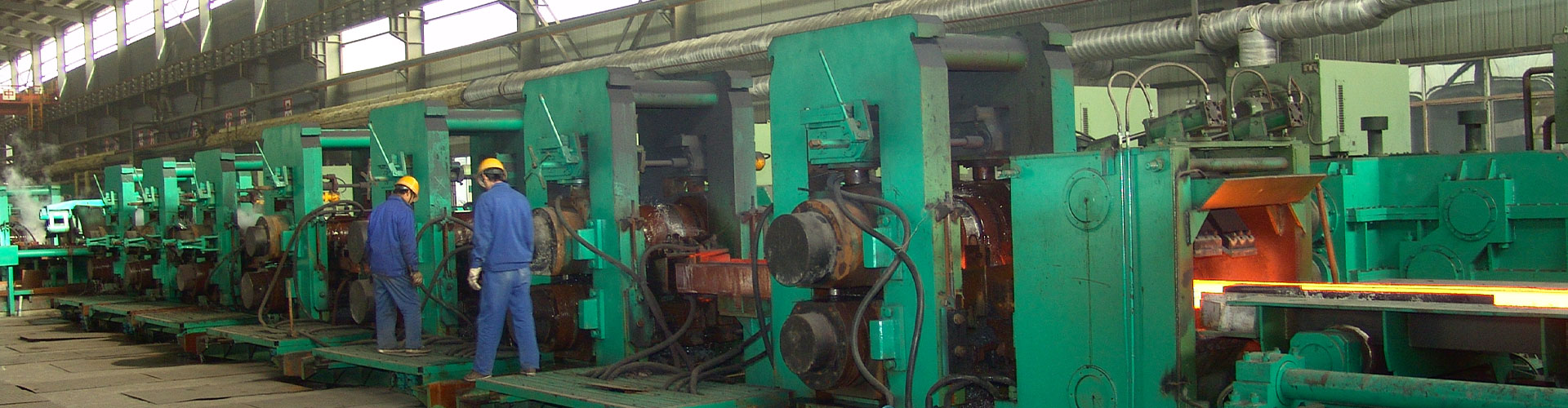
A detailed look at the initial stages of modern high-speed wire rod production — from billet handling to heating and descaling.
High-speed wire rod mills are the backbone of modern steel wire manufacturing. These advanced production lines turn continuous cast billets into high-quality wire rods at speeds exceeding 100 meters per second in the finishing stands. The entire process is highly automated, precise, and designed for maximum efficiency and consistency. This article dives deep into the first critical stages: billet feeding, heating, and descaling — essential steps that set the foundation for high-performance wire rod output.
Billet Handling and Feeding into the Furnace
Before any rolling begins, the raw material — typically square cross-section billets from continuous casting — must be accurately delivered to the heating furnace. In most modern high-speed wire rod mills, this starts with electromagnetic cranes lifting billets from storage and placing them onto a feeding platform located at an elevation of +5.0 meters.
The billet feeding platform is equipped with a step-by-step transfer mechanism using eccentric wheels. This system ensures smooth, controlled movement of each billet toward the furnace entrance. As billets approach the end of the platform, a pneumatic stopper lowers, allowing one billet at a time to slide onto the furnace entry roller table.
Automated Weighing and Length Measurement
Once on the roller table, each billet is automatically weighed using an inline billet scale. This real-time data helps track material consumption and ensures consistent charge weights for uniform heating. At the same time, a non-contact laser measuring system records the length of each billet as it moves forward.
These measurements are crucial for process control. They allow the automation system to calculate the exact position of each billet inside the furnace and ensure proper alignment during entry. Misaligned billets can cause jams or uneven heating, leading to quality defects downstream.
| Parameter | Value / Range | Notes |
|---|---|---|
| Billet Cross Section | 150×150 mm, 160×160 mm | Most common sizes for high-speed mills |
| Billet Length | 6,000 – 12,000 mm | Adjustable based on grade and target coil weight |
| Feeding Speed | 0.5 – 1.2 m/s | Controlled by step mechanism frequency |
| Weighing Accuracy | ±0.5% | Ensures consistent thermal load |
| Length Measurement | ±2 mm | Laser-based system |
Heating Process in the Reheating Furnace
After accurate positioning, the billet enters the walking-beam reheating furnace, which is the heart of the pre-rolling stage. This type of furnace is widely used in high-speed wire rod mills due to its excellent temperature uniformity, low oxidation loss, and precise control over heating profiles.
When the billet reaches the furnace entrance, it is stopped and aligned. A pusher mechanism at the rear end of the furnace then transfers the billet from the entry roller table onto the fixed beams inside the furnace. From there, the walking beam system takes over.
How the Walking Beam System Works
The walking beam operates in a “step-and-settle” motion:
- Lift Up: The beam rises, lifting all billets resting on it.
- Forward Move: The beam shifts forward by one step (typically 200–300 mm).
- Lower Down: The beam descends, placing the billets on the stationary beams.
- Return: The beam retracts to its original position without touching the billets.
This cycle repeats continuously, advancing billets through the furnace zones: preheating, heating, and soaking. Each zone is independently controlled to match the thermal requirements of different steel grades.
Typical Heating Curve and Temperature Settings
The target discharge temperature for most carbon and low-alloy steels is between 1050°C and 1120°C. However, this varies depending on the final product specification and rolling speed.
| Steel Grade | Target Temp (°C) | Soaking Time (min) | Furnace Capacity (t/h) |
|---|---|---|---|
| Q195, Q235 (Low Carbon) | 1080 – 1100 | 45 – 55 | 150 |
| SWRH77B, 82B (High Carbon) | 1050 – 1080 | 50 – 60 | 140 |
| ML08Al (Cold Heading Steel) | 1070 – 1090 | 55 – 65 | 135 |
| Special Alloy Steels | 1000 – 1050 | 60 – 75 | 120 |
The furnace is typically fueled by mixed gas (blast furnace gas + coke oven gas) or natural gas, with air preheated via regenerative burners to improve thermal efficiency. Modern systems achieve thermal efficiency above 65%, significantly reducing fuel consumption per ton of steel.
Temperature uniformity across the billet cross-section is maintained within ±15°C, which is vital for ensuring consistent deformation behavior during rolling. Infrared pyrometers and thermocouples monitor the process in real time, feeding data to the control system for automatic adjustments.
High-Pressure Descaling (Oxide Scale Removal)
After exiting the furnace, the hot billet carries a layer of iron oxide scale formed during heating. If not removed, this scale can cause surface defects, increase roll wear, and lead to inconsistent dimensional control in the rolling mill.
To solve this, a high-pressure water descaling system is installed immediately at the furnace exit. This system uses multiple fan-shaped nozzles arranged in a ring around the billet path to deliver water at pressures ranging from 120 to 200 bar.
Key Features of the Descaling System
- Water Pressure: 120–200 bar (adjustable based on steel grade and scale thickness)
- Flow Rate: 80–150 m³/h per descaling box
- Nozzle Type: Fan jet, 15°–25° spray angle, tungsten carbide or ceramic tips
- Response Time: Less than 2 seconds from signal to full pressure
- Activation: Triggered by hot metal detector (HMD) as billet exits furnace
The billet moves through the descaling box at a speed of 0.8 to 1.5 m/s, ensuring sufficient exposure time for effective scale removal. The water jets strike the surface at high velocity, breaking the brittle oxide layer and flushing it away.
Cleaned billets then proceed to the roughing mill, where the first rolling reductions take place. A well-maintained descaling system can reduce roll wear by up to 30% and improve surface quality, especially important for high-carbon and drawing-quality wire rods.
Common Issues and Best Practices
⚠️ Tip: Clogged nozzles or low water pressure are the most common causes of poor descaling. Regular inspection and cleaning (at least once per shift) are essential. Use filtered water to prevent nozzle blockage.
✅ Best Practice: Install a water recycling and cooling system to reduce consumption and maintain stable water temperature. Hot water reduces descaling efficiency.
From Furnace to Rolling: The Final Handoff
After descaling, the billet is guided onto the transfer table leading to the roughing mill. Here, entry guide rolls and side guides ensure precise alignment before the billet enters the first stand of the roughing mill.
A motorized pinch roll or feeding roll may be used to assist in feeding the billet into the first stand, especially for larger cross-sections or high-friction materials. This ensures smooth咬入 (biting-in) and prevents looping or jamming.
The entire sequence — from crane handling to furnace discharge — is synchronized through the plant’s Level 2 automation system. This integration allows for real-time tracking of each billet, predictive maintenance alerts, and energy consumption monitoring.
What Comes Next?
In the next part of this series, we’ll cover the rolling process in detail — including the roughing, intermediate, and finishing mill stands, the role of loopers and活套 (loop control), and how high-speed吐丝机 (twin-block吐丝机) shape the final wire rod coil. We’ll also look at cooling bed dynamics and quality inspection methods used in modern high-speed wire rod production lines.
Understanding these initial stages — billet feeding, heating, and descaling — is key to optimizing the entire production chain. Small improvements in temperature control or scale removal can lead to significant gains in yield, surface quality, and downstream processing performance.