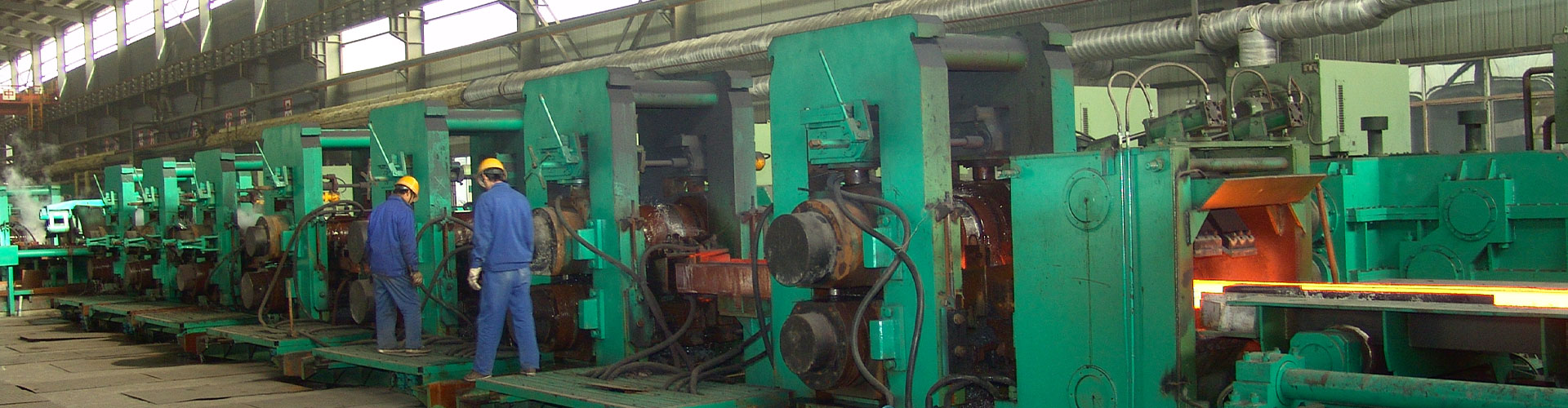
Steel billet heating is a critical step in the production process of a high-speed wire rod mill. Getting this stage right directly affects the quality, mechanical properties, and surface finish of the final wire rod product. In modern high-speed wire rod mills—where rolling speeds can exceed 100 meters per second—the demands on billet temperature uniformity, accuracy, and control are more stringent than ever.
Why Temperature Control Matters in High-Speed Wire Rod Milling
In high-speed wire rod production, steel billets are typically rolled at speeds that leave little room for error. If the billet enters the first stand of the mill with uneven temperature distribution, it can lead to several serious issues:
- Uneven deformation during rolling
- Increased risk of surface cracks or internal defects
- Poor dimensional accuracy of the final product
- Difficulty in achieving target microstructure and mechanical properties
Because of these challenges, the heating process must ensure not only the correct average temperature but also precise control over the temperature profile along the entire length of the billet.
The Unique Challenge: Billet Length and Weight
Modern high-speed wire rod mills often use large billets—typically 150 mm × 150 mm or 160 mm × 160 mm in cross-section, with lengths ranging from 6 to 12 meters and weights between 1.5 to 3.5 tons. The sheer size means that heat transfer dynamics become complex. The ends of the billet lose heat faster than the center, especially during transfer from the reheating furnace to the roughing mill stands.
To compensate, operators intentionally heat the head and tail sections of the billet slightly hotter than the middle section. This technique—known as “temperature profiling” or “end compensation”—ensures that by the time each segment reaches the first rolling stand, they all arrive at nearly the same rolling temperature.
Typical Heating Parameters for Steel Billets
The exact heating parameters depend on the steel grade, but general guidelines exist for common carbon and low-alloy steels used in wire rod production (e.g., SWRH82B, SAE1006, Q195, Q235).
| Steel Grade | Target Soaking Temp (°C) | Head/Tail Offset (°C) | Max Temp Uniformity Deviation | Furnace Type |
|---|---|---|---|---|
| Q195 / Q235 | 1180–1220 | +30 to +50 | ±15°C | Walking Beam / Pusher |
| SWRH62A / SWRH82B | 1150–1190 | +35 to +45 | ±10°C | Walking Beam |
| SAE1006 / 1008 | 1200–1230 | +30 to +50 | ±12°C | Walking Beam / Rotary Hearth |
| 45# / 60# Carbon Steel | 1170–1210 | +40 to +50 | ±10°C | Walking Beam |
Note: The “Head/Tail Offset” refers to how much hotter the ends are heated compared to the billet center. This offset is essential to counteract heat loss during transfer and initial contact with rolls.
Common Defects from Poor Billet Heating
When billet heating is not properly controlled, several defects can occur—many of which are irreversible once rolling begins:
- Overheating: Grain coarsening occurs above critical temperatures (usually >1250°C for plain carbon steel), reducing ductility and increasing crack sensitivity.
- Burning: Irreversible oxidation along grain boundaries when temperatures approach the solidus point (~1300°C). This leads to catastrophic failure during rolling.
- Excessive Scale Formation: High oxygen levels or prolonged soaking times increase iron oxide scale, which not only wastes material but can also cause surface pits on the wire rod.
- Decarburization: Loss of surface carbon in high-temperature, oxidizing atmospheres—especially problematic for high-carbon grades like SWRH82B used in tire cord or prestressed concrete wire.
- Twisting or Warping: Uneven thermal expansion due to temperature gradients can physically distort long billets, causing handling issues or roll damage.
Best Practices for Optimal Billet Heating
Leading wire rod producers follow these proven strategies to maintain consistent billet quality:
1. Use Walking Beam Furnaces Where Possible
Walking beam furnaces minimize billet contact with refractory surfaces, reducing skid marks and ensuring more uniform bottom-side heating. They also allow precise zoning—typically divided into preheat, heating, and soaking zones—with independent temperature control.
2. Implement Real-Time Temperature Monitoring
Modern mills install infrared pyrometers at multiple points: furnace exit, before the roughing mill, and sometimes even between stands. These sensors feed data to the process control system, enabling dynamic adjustments to furnace settings based on actual billet temperature—not just theoretical models.
3. Optimize Furnace Atmosphere
Maintaining a slightly reducing atmosphere (with controlled O₂ levels below 2%) helps minimize scale and decarburization. Some advanced plants use nitrogen injection or staged combustion to fine-tune the furnace chemistry.
4. Control Soaking Time Precisely
Soaking too long wastes energy and increases scale; too short leads to core-to-surface temperature differences. For a 150 mm billet, typical soaking times range from 40 to 70 minutes, depending on steel grade and furnace efficiency.
How Temperature Affects Final Wire Rod Properties
The entry temperature into the finishing mill directly influences phase transformation during controlled cooling on the Stelmor or similar conveyor lines. For example:
- A higher finishing temperature (e.g., 950°C vs. 880°C) results in coarser ferrite grains and lower tensile strength.
- A tightly controlled temperature window enables consistent pearlite interlamellar spacing in high-carbon grades—critical for drawing performance.
- For microalloyed steels (e.g., Nb- or V-added), precise reheating avoids dissolution of precipitates that contribute to strength via precipitation hardening.
Thus, billet heating isn’t just about making the steel malleable—it’s the foundation for achieving the desired metallurgical structure downstream.
Practical Tips for Operators
If you’re running a high-speed wire rod mill, consider these field-tested recommendations:
- Always verify billet temperature with handheld pyrometers during shift changes or after furnace maintenance.
- Record head, middle, and tail temperatures for every 10th billet as part of quality assurance.
- Adjust end compensation based on ambient temperature—colder environments may require +5°C extra offset.
- Inspect scale thickness regularly; sudden increases may indicate burner imbalance or excess air in the furnace.
- Never skip billet descaling before rolling—even minor scale can embed into the surface at high speeds.
Getting steel billet heating right in a high-speed wire rod mill isn’t just about following a recipe—it’s about understanding the physics of heat transfer, metallurgy, and real-world production dynamics. When done correctly, it leads to smoother rolling, fewer breaks, better surface quality, and consistent mechanical properties batch after batch.