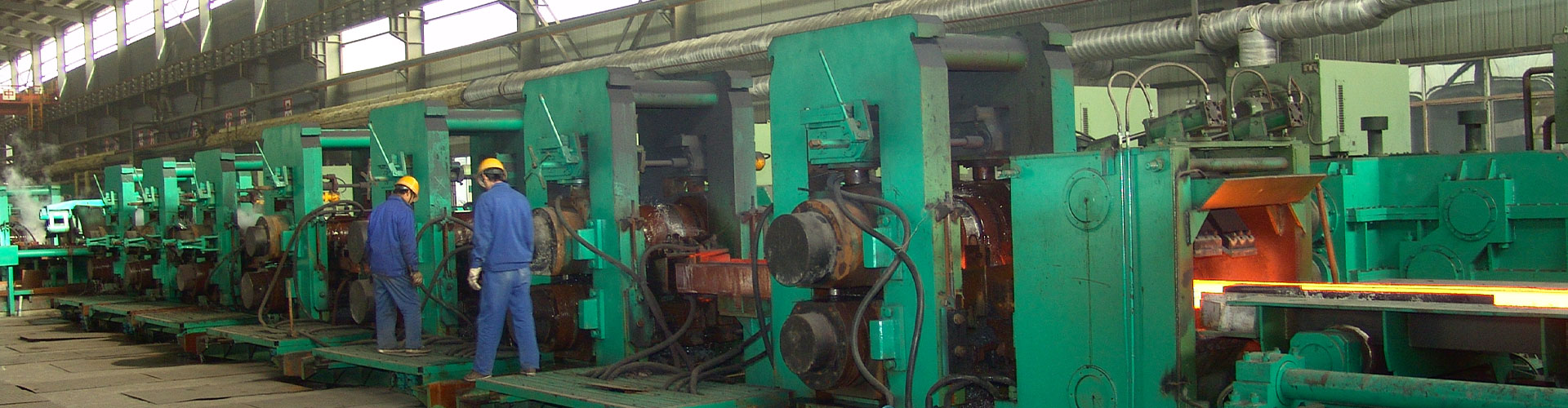
In modern steel production, high-speed wire rod rolling mills have become essential facilities for producing quality wire rods efficiently. At the heart of these production lines lies a critical piece of equipment – the Laying Head Machine. Today, we’ll take a deep dive into the 135m/s laying head machine, exploring its technical specifications, working principles, and practical applications in contemporary wire rod rolling mill operations.
What is a Laying Head Machine?
A laying head machine (also known as wire discharger or coil forming head) is positioned immediately after the water cooling section following the finishing mill stands in a wire rod rolling mill. This equipment works in tandem with pinch rolls to transform fast-moving straight wire rod into uniform spiral coils.
The basic function sounds simple: convert linear motion into circular motion. But when you’re dealing with wire rod traveling at 135 meters per second – that’s 486 kilometers per hour – the engineering challenges become extraordinary. At this speed, the laying pipe completes approximately 2,000 revolutions per minute, forming perfectly shaped coils with a diameter of 1050-1150mm.
Quick Facts About 135m/s Laying Head
- Processes wire rod from Φ5.0mm to Φ16mm diameter
- Produces coils weighing up to 2,500kg
- Operates continuously for 8,000+ hours annually
- Achieves coil forming accuracy within ±3% variation
Technical Specifications of 135m/s Laying Head Machine
The 135m/s laying head represents the latest generation of high-speed coil forming technology. Below are the detailed technical parameters that production engineers and plant managers need to know:
| Parameter | Specification | Remarks |
|---|---|---|
| Machine Type | Horizontal Laying Head | 15° downward inclination |
| Wire Rod Diameter Range | Φ5.0 ~ 16mm | Carbon steel & alloy steel |
| Coil Diameter | 1050 ~ 1150mm | Standard: 1100mm |
| Maximum Laying Speed | 135 m/s | For Φ5.0mm wire rod |
| Gear Ratio | 1:1.526 | Spiral bevel gear |
| Motor Type | AC Variable Frequency Motor | Water-cooled housing |
| Motor Power | 400 ~ 500 kW | Based on production requirements |
| Motor Speed Range | 600 ~ 1800 r/min | Continuously variable |
| Laying Pipe Speed | Up to 2100 r/min | At maximum laying speed |
| Vibration Level | ≤ 4.5 mm/s | Measured at bearing housings |
Working Principle and Operation
Understanding how a laying head machine operates helps maintenance teams troubleshoot issues and optimize performance. Here’s the step-by-step process:
Hot wire rod (typically 800-900°C) exits the water cooling boxes and enters the pinch roll assembly. The pinch rolls grip the wire and feed it into the laying head at precisely controlled speed.
The laying head motor adjusts speed automatically to match the incoming wire velocity. Speed synchronization accuracy must be within ±0.5% to prevent wire breakage or coil deformation.
Wire travels through the guide tube into the rotating laying pipe. The pipe’s curved shape and rotation transform linear wire into spiral coils that drop onto the Stelmor cooling conveyor below.
Formed coils fall freely onto the moving conveyor chain. Proper timing ensures even coil distribution across the conveyor width for uniform cooling.
Key Structural Components
A modern 135m/s laying head machine consists of several critical assemblies. Each component must meet strict quality standards to handle extreme operating conditions.
1. Rotating Spindle Assembly
The rotating spindle is the heart of the laying head. It comprises two main parts:
- Laying Head Cone: Holds the laying pipe securely using a quick-release clamping mechanism. Made from high-strength alloy steel, heat-treated to HRC 48-52.
- Hollow Shaft: Transmits rotational power from the gearbox to the laying head cone. Precision machined to ensure concentricity within 0.02mm.
2. Guide Tube and Cooling System
The stationary guide tube sits inside the hollow shaft, directing incoming wire into the laying pipe. Because wire enters at temperatures up to 900°C, sophisticated cooling is essential:
- Water cooling jacket surrounds the guide tube
- Cooling water flow rate: 15-25 m³/h
- Water pressure: 0.4-0.6 MPa
- Maximum bearing temperature: 70°C
3. Transmission Gearbox
The gearbox uses spiral bevel gears to transmit power at a 90-degree angle. For 135m/s applications, the gearbox features:
| Feature | Specification |
|---|---|
| Gear Material | 20CrMnTi carburized steel |
| Gear Hardness | HRC 58-62 (surface) |
| Gear Accuracy Grade | ISO Grade 5 |
| Lubrication System | Forced circulation oil |
| Oil Flow Rate | 40-60 L/min |
| Oil Pressure | 0.15-0.25 MPa |
4. Safety Enclosure
The laying head operates inside a cylindrical safety housing that protects personnel and contains debris during pipe failure. Key features include:
- Upper section opens via pneumatic cylinder for pipe changes
- Interlock system prevents operation with enclosure open
- 12mm thick steel plate construction
- Wear-resistant liner on inner surfaces
Laying Pipe Selection and Lifespan
The laying pipe is a consumable component that requires regular replacement. Pipe selection depends on wire rod size and production volume. Here’s a practical guide:
| Wire Diameter | Pipe Inner Diameter | Laying Speed | Expected Life |
|---|---|---|---|
| Φ5.0 – 5.5mm | Φ14mm | 115 – 135 m/s | 3,000 – 4,000 tons |
| Φ6.0 – 7.0mm | Φ16mm | 85 – 110 m/s | 4,000 – 5,500 tons |
| Φ8.0 – 10mm | Φ20mm | 50 – 80 m/s | 5,500 – 7,000 tons |
| Φ12 – 14mm | Φ24mm | 30 – 45 m/s | 7,000 – 9,000 tons |
| Φ16mm | Φ28mm | 20 – 28 m/s | 8,000 – 10,000 tons |
Laying pipes are manufactured from special wear-resistant alloys. The pipe interior surface undergoes hardening treatment to achieve HRC 60+ hardness. Some mills now use ceramic-lined pipes for extended service life, achieving 30-50% longer operation between replacements.
Dynamic Balance Requirements
At 135m/s laying speed, the rotating assembly spins at approximately 2,100 RPM. Any imbalance creates severe vibration that damages bearings and reduces component life. The balancing process follows strict procedures:
Balancing Standards for 135m/s Laying Head
| Test Type | Speed | Grade |
|---|---|---|
| Static Balance | – | G2.5 or better |
| Dynamic Balance | 1900 r/min | G2.5 or better |
| Assembled Machine Test | Full speed | ≤4.5 mm/s vibration |
Speed Comparison: 90m/s vs 135m/s Laying Heads
Many existing wire rod mills operate with 90m/s or 100m/s laying heads. Understanding the differences helps when planning upgrades or new installations:
| Aspect | 90m/s Model | 135m/s Model |
|---|---|---|
| Motor Power | 250 kW | 400-500 kW |
| Motor Type | DC Motor | AC Variable Frequency |
| Maximum RPM | 1400 r/min | 2100 r/min |
| Bearing Type | Standard cylindrical | High-speed hybrid ceramic |
| Lubrication | Grease + Oil mist | Forced oil circulation |
| Balance Grade | G6.3 | G2.5 |
| Production Capacity | 60-80 t/h | 100-130 t/h |
| Minimum Wire Size | Φ5.5mm | Φ5.0mm |
Installation and Alignment
Proper installation of the laying head machine directly affects coil quality and equipment longevity. Here are the critical alignment parameters that field engineers must achieve:
Installation Tolerances
- Centerline height deviation: ±0.5mm from pass line
- Horizontal alignment: ±0.3mm over laying head length
- Inclination angle: 15° ±0.5° from horizontal
- Distance from pinch roll exit: 1200-1500mm (typical)
- Foundation vibration isolation: Required for 135m/s models
Common Problems and Solutions
Even well-maintained laying heads experience issues. Here are problems frequently encountered in wire rod rolling mill operations:
Problem 1: Irregular Coil Shape
Symptoms: Coils appear oval or have uneven spacing between rings
Possible Causes:
- Worn laying pipe (check inner diameter)
- Speed mismatch between pinch rolls and laying head
- Bearing wear causing spindle runout
- Bent or damaged laying pipe
Solution: Replace pipe if wear exceeds 1mm. Check and calibrate speed synchronization. Measure spindle runout – should be less than 0.05mm at cone face.
Problem 2: Excessive Vibration
Symptoms: Vibration readings exceed 4.5mm/s at bearing locations
Possible Causes:
- Unbalanced rotating assembly
- Loose laying pipe clamp
- Worn or damaged bearings
- Foundation settling or damage
Solution: Perform vibration analysis to identify source. Check pipe clamping torque. Replace bearings if defects found. Re-balance assembly if needed.
Problem 3: High Bearing Temperature
Symptoms: Bearing temperature rises above 70°C during operation
Possible Causes:
- Insufficient oil flow or pressure
- Oil cooler malfunction
- Cooling water flow restriction
- Bearing preload too tight
Solution: Verify oil flow meets specifications (40-60 L/min). Check cooling water system. Inspect oil filter condition. Adjust bearing preload if necessary.
Maintenance Schedule
A structured maintenance program maximizes laying head availability and prevents unplanned downtime. Follow this schedule for 135m/s high-speed operations:
| Interval | Maintenance Tasks |
|---|---|
| Every Shift |
• Check oil level and pressure • Monitor bearing temperatures • Inspect laying pipe for damage • Verify cooling water flow |
| Weekly |
• Measure vibration levels • Check laying pipe wear • Inspect safety enclosure • Clean oil strainers |
| Monthly |
• Oil sample analysis • Check gear backlash • Inspect motor brushes (if DC) • Verify alignment |
| Annual Overhaul |
• Replace main bearings • Inspect gear condition • Check spindle runout • Re-balance assembly • Replace seals |
Application in Modern Wire Rod Production
The 135m/s laying head machine serves wire rod rolling mills producing various steel grades. Common applications include:
Low Carbon Steel Wire Rod
Used for wire drawing, nail making, mesh welding. Typical grades: SAE 1006, 1008, 1010. Production speed: 110-135 m/s for Φ5.5mm.
High Carbon Steel Wire Rod
For tire cord, spring wire, prestressed concrete strand. Typical grades: SAE 1070, 1080. Production speed: 80-105 m/s for Φ5.5mm.
Alloy Steel Wire Rod
For cold heading, fastener manufacturing. Typical grades: SCM435, 10B21. Production speed: 70-95 m/s depending on grade.
Stainless Steel Wire Rod
For welding electrodes, springs, wire rope. Typical grades: 304, 316, 410. Production speed: 40-70 m/s due to higher strength.
Future Developments in Laying Head Technology
Wire rod rolling mill technology continues advancing. Several trends are shaping next-generation laying head machines:
- Higher Speeds: Some manufacturers are developing 150m/s capable units for ultra-fine wire production (Φ4.5mm and below).
- Smart Monitoring: Integration of vibration sensors, temperature monitors, and predictive maintenance algorithms enables condition-based maintenance.
- Energy Efficiency: Permanent magnet synchronous motors reduce power consumption by 15-20% compared to traditional induction motors.
- Quick-Change Systems: New designs reduce laying pipe change time from 15 minutes to under 5 minutes.
- Advanced Materials: Ceramic hybrid bearings and composite laying pipes extend service intervals significantly.
Key Takeaways for Plant Engineers
When selecting or operating a 135m/s laying head machine in your wire rod rolling mill, remember these essential points:
- Proper dynamic balance (G2.5 grade) is critical for high-speed operation
- Forced oil circulation lubrication is mandatory above 100m/s
- Cooling water system must maintain bearing temperature below 70°C
- Laying pipe selection directly impacts coil quality and production efficiency
- Regular vibration monitoring prevents catastrophic failures
The 135m/s laying head machine represents mature technology that delivers reliable performance in demanding wire rod rolling mill environments. With proper installation, operation, and maintenance, these machines routinely achieve 95%+ availability rates while producing high-quality coils at industry-leading speeds. Whether you’re upgrading an existing line or planning a new installation, understanding these technical details helps ensure successful implementation and trouble-free operation for years to come.