Understanding the Core of Modern Steel Production: High-Speed Wire Rod Rolling Mills
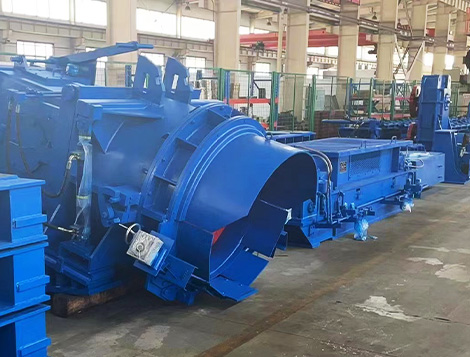
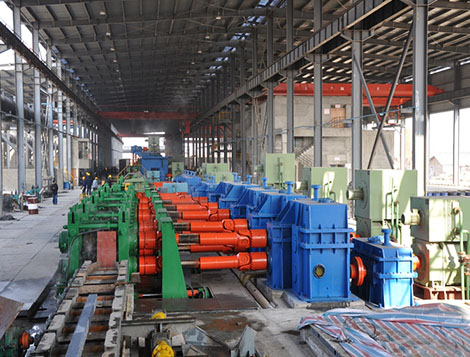
In the world of steel manufacturing, the production of high-quality wire rod is a fundamental process. At the heart of this operation lies the high-speed wire rod mill, a marvel of engineering that transforms heated steel billets into precise wire coils at incredible speeds. This sophisticated rolling mill machinery is not just about speed; it’s about precision, efficiency, and achieving specific metallurgical properties that are critical for countless downstream applications, from construction rebar to automotive components.
The journey of the modern hot rolling mill for wire rod began in the early 1960s with the development of the first no-twist finishing mills. This innovation revolutionized the industry, paving the way for the advanced systems we see today. These mills are characterized by a set of key features: high-speed operation, single-strand rolling, no-twist technology, controlled cooling, and a high degree of automation. The result is a product with superior dimensional accuracy, excellent surface quality, and consistent mechanical properties, all packaged in large, heavy coils that improve handling and processing efficiency for the end-user.
Classifying High-Speed Wire Rod Mills: A Look at Design Variations
While the core principles are similar, high-speed wire rod mills can be categorized based on several design and structural characteristics. Understanding these classifications helps in selecting the right machinery for specific production needs.
1. Based on Roll Diameter
The diameter of the rolls in the finishing block is a primary classification factor, influencing the mill’s rigidity and rolling characteristics.
- Large Diameter Rolls: Typically in the range of 250 mm to 290 mm. These provide greater stiffness but can be less suitable for very high-speed finishing of small-diameter products.
- Small Diameter Rolls: Ranging from 152 mm to 210 mm. Smaller rolls reduce the contact area with the workpiece, lowering rolling forces and power consumption, which is ideal for achieving the highest finishing speeds (often exceeding 100 m/s).
2. Based on Roll Centerline Arrangement
The orientation of the roll stands is crucial for achieving no-twist rolling, where the workpiece is not twisted between successive stands. This preserves the material’s integrity and improves dimensional control.
- 45° Arrangement: In this common configuration, the roll stands are arranged in pairs, with each stand tilted at 45° to the horizontal plane and 90° to the adjacent stand. This creates a smooth, twist-free path for the wire rod.
- Horizontal-Vertical (H-V) Alternating Arrangement: This design alternates between horizontally and vertically oriented two-high roll stands to achieve a similar no-twist effect.
3. Based on Roll Support System
The method of supporting the rolls and their shafts impacts the mill’s rigidity, maintenance speed, and overall footprint.
- Cantilevered Support: This is the most prevalent design in modern high-speed finishing blocks. The roll shafts are supported on one end, leaving the other end “overhanging.” This compact design allows for extremely quick roll changes and uses durable tungsten carbide roll rings, which are essential for high-volume production.
- Two-Point Support: In this traditional design, the roll shaft is supported by bearings on both ends, often within a housing or frame. While offering high rigidity, this system is less common in modern finishing blocks due to slower roll change times.
Technical Parameters of Leading High-Speed No-Twist Finishing Mills
To provide a practical reference, the following table compares the typical technical parameters of several influential designs in the wire rod rolling mill industry. These parameters are indicative of the capabilities and design philosophies of different manufacturers and serve as a benchmark for modern rolling mill technology.
| Parameter | Morgan Type | Demag (SMS) Type | Ashlow Type | Danieli Type |
|---|---|---|---|---|
| Roll Support | Cantilevered | Cantilevered | Cantilevered | Cantilevered |
| Number of Stands | 8 or 10 | 8 or 10 | 8 or 10 | 8 or 10 |
| Drive System | Centralized Drive | Centralized Drive | Centralized Drive | Centralized Drive |
| Main Motor Power (kW) | 2 x (1650-1900) | 2 x (1000-1750) | 2 x (1500-1700) | 2 x (1650-1800) |
| Roll Diameter (mm) | 210 / 150 | 210 | 210 | 210 / 160 |
| Max. Rolling Speed (m/s) | Up to 120 | Up to 120 | Up to 100 | Up to 100 |
| Min. Size Tolerance (mm) | ±0.10 | ±0.10 | ±0.10 | ±0.10 |
| Roll Ring Material | Tungsten Carbide | Tungsten Carbide | Tungsten Carbide | Tungsten Carbide |
| Pass Design System | Oval-Round | Oval-Round | Oval-Round | Oval-Round |
Interpreting the Key Parameters
Maximum Rolling Speed: This directly impacts productivity. Higher speeds mean more tonnage per hour, but they also demand greater precision in control systems and more robust mechanical components.
Size Tolerance: A tight tolerance (e.g., ±0.10 mm) is a critical quality indicator. It ensures that the final product is uniform, which is essential for applications like high-strength concrete reinforcement or fine wire drawing.
Roll Ring Material: The universal adoption of Tungsten Carbide for roll rings is a testament to its incredible hardness and wear resistance. This allows the mill to operate for extended periods without roll changes, maintaining consistent product quality and maximizing uptime.
Motor Power: The substantial power of the main drive motors is necessary to overcome the immense forces involved in deforming steel at high speeds. The power rating is carefully calculated based on the range of products, speeds, and steel grades to be rolled.
The Future of Wire Rod Production
The technology behind the high-speed wire rod mill continues to evolve. The push for greater efficiency, tighter product specifications, and enhanced material properties drives innovation. We are seeing a trend towards even higher rolling speeds, more sophisticated automation and process control systems (incorporating AI and machine learning), and the development of specialized rolling techniques for advanced steel grades. This constant advancement ensures that the rolling mill remains a cornerstone of modern industrial production, supplying the high-quality wire rod that builds and powers our world.