Introduction
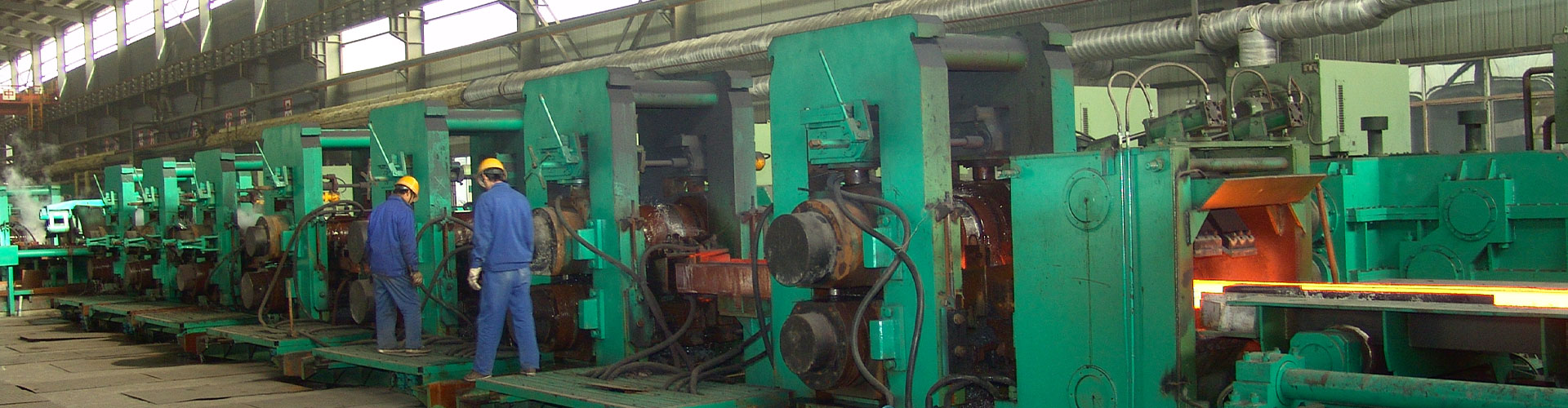
This housing-free rolling mill packs multiple competitive strengths beyond its compact frame. It delivers strong stand rigidity, precise dimensional accuracy and light overall weight. It also supports symmetric roll gap adjustment, easy field operation, stable running status and reasonable initial investment. As a result, steel manufacturers around the globe select it as their primary rolling equipment.
1. Working Principle of High Rigidity Short Stress Line Mill for Bar and Wire Rod Production
1.1 Stress Loop Definition and Rigidity Operating Logic
Hooke’s Law lays out the direct link between elastic deformation and mill rigidity. Longer stress loops trigger larger elastic deformation during rolling. Conversely, shorter stress loops minimize deformation and lift the mill’s overall rigidity effectively.
1.2 Restricted Application Range
2. Distinct Advantages of High Rigidity Short Stress Line Mill for Bar and Wire Rod Production
2.1 Product Origin and Market Popularization
In the decades after its launch, this innovative machine nearly replaced outdated housing rolling mills across bar and wire rod workshops. Moreover, factories have put it into extensive use on narrow strip steel lines in recent years. Seven outstanding merits far outpace conventional housing mills, so the global metallurgical industry has embraced this equipment fully.
2.2 Seven Core Competitive Merits
- Different rolling load bearing mode
Traditional mills rely on heavy integral housings to bear rolling pressure. In contrast, four vertical tie rods carry all rolling loads on the short stress line mill. The condensed force transfer path safeguards nearly all mechanical components against fatigue damage.
- Symmetric roll gap adjustment feature
Tie rod structures lock the rolling line in a fixed position permanently. Operators adjust roll gaps symmetrically on two sides. This method runs simpler and holds higher precision than the single-side screwdown system of old mills. Above all, this trait proves extremely vital for continuous rolling production lines.
- Superior rigidity-to-weight ratio
Shortened stress loops grant the mill inherent high rigidity. To hit the same rigidity index, this machine only weighs one-third of conventional housing rolling mills.
- Broader bearing load distribution angle
Engineers remove screwdown bolts and turn concentrated pressure into scattered load. Rolling force spreads across bearings within a wrap angle wider than 150 degrees. Peak unit load drops more than half, and bearing seats plus rolling bearings gain much longer service cycles.
- Stronger anti-deformation capacity for bearing seats
Workers install floating spherical cushions inside every bearing seat. These cushions let bearing seats adapt to roll bending deformation freely in all directions. The setup avoids edge stress concentration and extends the usable life of bearings and seats further.
- Mechanical balance system for bearing seats
Traditional housing mills adopt hydraulic balance structures. On the short stress line mill, bronze nuts hang bearing seats on tie rods, and thread gaps directly affect finished steel accuracy. For this reason, designers apply mechanical balance systems such as disc springs and elastic deformation assemblies. Balance force moves parallel to rolling force, and the system clears all thread gaps between tie rods and bronze nuts to guarantee accurate, stable roll gap adjustment.
- Fast offline cartridge replacement workflow
Traditional mills conduct roll replacement online and waste massive downtime. The housing-free layout enables full offline cartridge replacement. The whole roll change process finishes within 10 minutes.
Workers lift used cartridges to the roll grinding workshop to swap rolls and clean internal parts step by step. Staff preset rolls and guide components inside new cartridges beforehand in the grinding room. After hoisting the new cartridge onto the mill body, operators start rolling right away without repeated calibration. This workflow cuts countless adjustment hours and lifts overall production efficiency drastically.
2.3 Global Mainstream Derivative Models
Years of market competition and natural selection left two dominant global models: Danieli 5th-generation SHS housing-free short stress line mill and Pomini 4th-generation RedRing mill. Many improved products stem from these two core designs. Representative examples include SMS Meer HL & STEM series, domestic SY mills from University of Science and Technology Beijing, Ceri mills by MCC Jingcheng and WHL mills from MCC Southern Engineering.
3. Structural Composition of High Rigidity Short Stress Line Mill for Bar and Wire Rod Production
3.1 Housing Unit: Main Frame and Two-brand Comparison
Designers reserve three sets of installation interfaces on the frame: four holes for tie rod connection, mounting holes for guide holders, plus key slots and pin holes that match movable bases. In addition, anti-displacement structures limit horizontal roll movement during rolling operations.
Three key differences separate Danieli and Pomini housing frames:
First, tie rod spacing: Danieli uses compact spacing to shorten stress loops further and boost mill rigidity.
Second, opening slide surface length: Danieli fits longer slide surfaces and supports a wider adjustable opening range.
Third, distance between frame-base contact face and rolling centerline: Danieli adopts a larger value. It creates slightly bigger overturning torque during rolling yet lowers movable base height and overall weight effectively.
Overall, Danieli frames feature compact layout and lighter weight, while Pomini frames carry larger volume and stronger holistic stability.
3.2 Roll Gap Adjustment Unit: Transmission Structure & Model Differences
The standard power transmission route runs as follows: hydraulic motors spin tie rods; reverse trapezoidal threads on tie rods push paired bronze nuts to move upward and downward linearly; bronze nuts lift and lower bearing seats synchronously; reverse threads on upper and lower tie rod ends finally deliver symmetric roll gap adjustment.
A clutch structure sits inside the mechanism. Operators adjust drive side and operation side together, or fine-tune one side alone to prevent uneven wedge-shaped screwdown. The unit also reserves manual adjustment options. Workshops normally finish rough roll gap adjustment offline inside roll grinding rooms and run precise calibration online before formal rolling begins.
Transmission paths differ moderately between the two mainstream brands:
Danieli route: Hydraulic motor → worm & worm gear → gear shaft 1 → dual gear shaft 2 → spline spins tie rod
Pomini route: Hydraulic motor → worm & worm gear → bevel gear set → double keys spin tie rod
Generally speaking, the Danieli design suits small and medium rolling mills, as its gear shaft diameter stays within a reasonable range. Pomini fits medium and large rolling mills instead. Few small and medium bar production lines select Pomini structures; dense bevel gears raise machining difficulty and daily maintenance costs substantially.
3.3 Tie Rod Unit: Core Connection Structure & Seven Key Functions
Engineers machine reverse trapezoidal threads on the top and bottom ends of each tie rod. Two tie rods hold a pair of bearing seats; four tie rods assemble four bearing seats for drive side and operation side, with work rolls installed between paired upper and lower seats. This unit fulfills seven vital functions:
- Top splines or double keys receive power from screwdown devices and rotate tie rods steadily.
- Reverse trapezoidal threads mesh with bronze nuts; gland cap bolts fasten bearing seats and the whole roll system onto tie rods firmly.
- Middle shaft shoulders transfer component weight to housing frames and movable bases, then send loads down to the ground foundation.
- Built-in balance systems supply counterforce heavier than the total weight of upper roll assemblies. They erase thread gaps between tie rods and bronze nuts and safeguard rolling precision. Danieli applies built-in disc springs or elastic dampers, while Pomini chooses external plunger cylinders. External dampers tend to fail under small opening conditions, so they occupy a small market share.
- Four tie rods bear rolling force symmetrically. Rolling pressure passes through rolls, bearings and bearing seats to bronze nuts, then acts directly on tie rods. Symmetric reverse forces offset internal loads entirely inside tie rods.
- Anti-rotation fixtures lock bronze nuts tightly. Danieli uses positioning pins for this purpose, whereas Pomini applies outer gear tooth locking. These structures guarantee symmetric vertical movement for bronze nuts and keep the rolling centerline fixed permanently.
- Spherical cushions between tie rods and bearing seats accommodate roll bending deformation, stop edge stress concentration and extend bearing service life.
Tie rod units link screwdown systems, roll systems, housing frames and movable bases organically and shape the complete mechanical structure of the high rigidity short stress line mill.
3.4 Roll System Unit: Bearing Configuration and Assembly Advantages
Roll grooves decide the dimensional precision of finished steel goods. For this reason, designers equip an upper roll axial adjustment device with an adjustable range of ±3.0~4.5 mm to align upper and lower roll grooves perfectly. The manual adjustment process proceeds step by step: operators spin worms to drive helical gears; helical gears rotate trapezoidal thread sleeves and create axial displacement; thrust bearings push work rolls to shift left or right.
Four-row cylindrical roller bearings serve as primary radial bearings. They carry large loads and hold long service life yet cannot withstand axial force. Therefore, engineers install double-row angular contact ball bearings inside operation-side bearing seats to counteract axial displacement.
Cylindrical bearing outer rings detach freely. Staff fit inner rings onto roll necks beforehand and place outer rings inside bearing seats in advance. During assembly, workers push bearing seats toward roll necks to match inner rings, which simplifies assembly work greatly.
The removal of concentrated screwdown loads, wide bearing wrap angles and adaptive spherical cushions distribute bearing stress evenly. Compared with traditional housing mills, bearing service life sees obvious improvement.
3.5 Guide Holder Unit: Position Adjustment & Axial Rigidity Contrast
Guides fasten onto dovetail bases, and pressing devices control clamping tightness. When operators turn lead screws manually, bronze nuts drive dovetail bases to slide horizontally along guide frames and adjust inlet and outlet guide positions flexibly. In addition, cooling nozzles sit inside dovetail bases. They spray coolant onto roll grooves to reduce thermal abrasion and protect work rolls effectively.
Danieli and Pomini adopt identical guide adjustment principles but differ widely in axial connection methods:
Danieli locks guide holders to frames with bolts and positioning pins, and height remains non-adjustable. This method greatly boosts axial rigidity. During roll change, staff only remove drive-side nuts; the guide holder stays fixed on the operation-side frame and never disturbs cartridge replacement work.
Pomini connects guide holders and frames via slotted bolts and allows flexible height adjustment. This design weakens axial rigidity visibly, and workers must detach the whole guide holder before roll replacement.
Pomini delivers convenient height adjustment yet sacrifices axial rigidity. Its larger overall volume and weight compensate this rigidity loss to a certain degree. Besides, Pomini installs extra top pressing fixtures on frame beams. These parts stabilize guides under fierce steel biting impact and inter-frame tension and secure rolling safety.
Floor-mounted rotary guide holders stand as another common option. These holders fix on the foundation and keep aligned with the rolling line constantly. Still, operators must rotate holders away from the rolling line when swapping guides or cartridges, which brings minor operational inconvenience. Users pick suitable types based on their actual production conditions.
3.6 Auxiliary Supporting Devices
Danieli and Pomini share identical design concepts for auxiliary components, and structural gaps stay minimal, so we skip detailed elaboration here.
Conclusion
At present, Danieli SHS and Pomini RedRing models carry out iterative upgrades constantly to meet updated production requirements. With continuous innovation from global metallurgical engineers, the industry will develop higher-efficiency rolling mills in the near future. Furthermore, this mature rolling technology will gradually expand into more segmented machinery manufacturing fields.