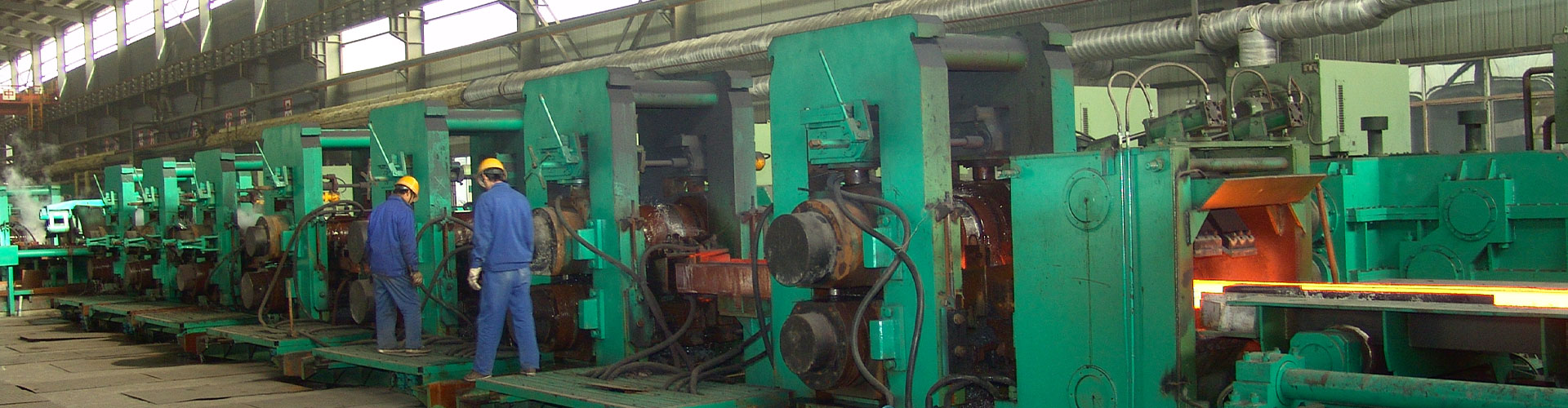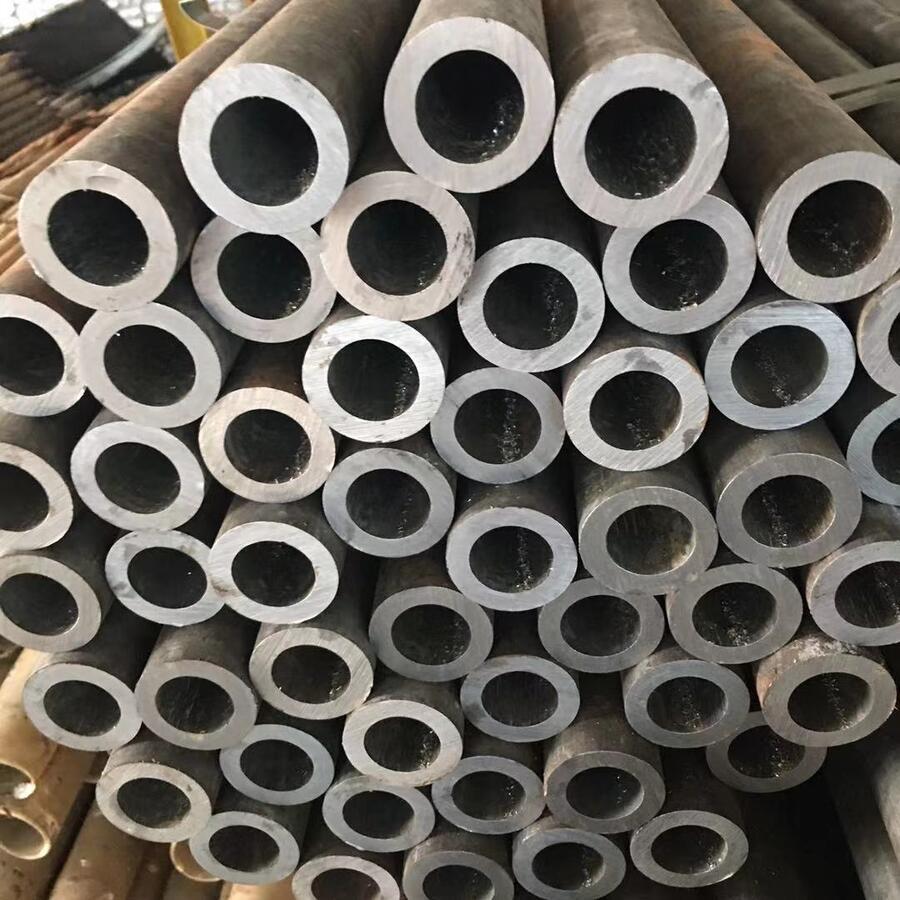
Rolling is the mainstream steel forming method. More than 90% of steel products are manufactured through rolling technology. It features high production efficiency, stable finished quality, wide specification coverage and easy automated operation. Cold rolling refers to metal rolling conducted below the steel recrystallization temperature. The recrystallization temperature of steel is about 300℃, so rolling at room temperature belongs to typical cold-rolled steel strip production.
Compared with hot-rolled strips, cold-rolled steel strips have prominent advantages. They deliver high dimensional accuracy and uniform thickness, with thickness deviation controlled within 0.01 mm. They can produce ultra-thin strips that cannot be manufactured by hot rolling. Meanwhile, they possess excellent surface finish and superior comprehensive mechanical properties. According to material composition, products include carbon steel, stainless steel and alloy steel. By surface treatment, they are divided into uncoated, hot-dip coated, electro-galvanized, electro-tinned, electro-chromed and color-coated steel strips.
1. Core Process Characteristics of Cold-Rolled Steel Strip Production
1.1 Room Temperature Rolling
Cold-rolled steel strip production adopts hot-rolled coils as raw materials. The raw materials require no heating and complete plastic deformation directly at room temperature. Steel has high deformation resistance under low-temperature conditions. The rolling process requires large rolling pressure, which puts higher load demands on production equipment.
1.2 Obvious Work Hardening
Cold rolling processing increases the strength and hardness of steel while reducing its plasticity, which is defined as work hardening. Continuous rolling further increases steel deformation resistance. After a certain number of rolling passes, the steel strip becomes hard and brittle and cannot be rolled further. In actual cold-rolled steel strip production, recrystallization annealing and other softening heat treatments are essential after fixed rolling passes. These processes restore material plasticity, reduce deformation resistance and ensure continuous thin rolling operation.
1.3 Tension Rolling Mode
The entire cold rolling process adopts front and rear tension control. Tension rolling realizes multiple production optimization goals. It prevents steel strip deviation and ensures centering rolling. It optimizes strip flatness and maintains smooth strip surface. In addition, it reduces metal deformation resistance, supports the production of ultra-thin specifications and cuts overall production energy consumption.
1.4 Large Width-Thickness Ratio and Difficult Shape Control
Cold continuous rolling strips can reach a minimum thickness below 0.1 mm and a maximum width above 2000 mm, with a width-thickness ratio exceeding 10000. A large width-thickness ratio makes uniform strip deformation difficult. It puts forward extremely strict requirements for strip shape control technology in cold-rolled steel strip production.
1.5 Necessary Cooling and Lubrication Process
During rolling, 84% to 88% of deformation work is converted into heat. The temperature of steel strips and work rolls rises rapidly. Excessively high roll temperature reduces the hardness of the roll quenching layer. It damages roll service life and strip surface quality. Uneven roll temperature changes roll profile and destroys dimensional accuracy and flatness. High temperature also causes failure of rolling lubricants.
Water or water-based emulsion is widely used as cooling and lubricating medium in production. The medium dual functions of cooling and lubrication. It reduces rolling friction coefficient and rolling load, avoids steel roll adhesion, protects roll surfaces and significantly improves the surface quality of finished cold-rolled strips.
2. Complete Production Flow of Cold Continuous Rolling
Cold continuous rolling is the dominant production mode for cold-rolled steel strips, accounting for more than half of total output. The complete process includes pickling, cold continuous rolling, annealing, tempering, finishing and coating, matched with auxiliary processes such as uncoiling, welding, shearing and coiling.
2.1 Pickling
Hot-rolled steel coils form oxide scales on the surface during high-temperature manufacturing. The oxide layer must be removed before cold rolling. Hydrochloric acid chemical pickling is widely used in the industry. It strips surface oxide scales through chemical reactions between acid liquid, iron oxide and metallic iron.
2.2 Cold Continuous Rolling
Hot-rolled coils are sent to multiple series-connected mill stands for continuous rolling to reach the target thickness. Mainstream units adopt four-stand or five-stand configuration with four-high or six-high mill structures. The rolling speed of modern advanced units can exceed 1000 m/min.
2.3 Annealing
The steel strip is heated to the set temperature, held for a certain time and then cooled slowly. Annealing eliminates work hardening caused by cold rolling, reduces hardness and restores material plasticity. It removes internal residual stress, stabilizes metallographic structure and avoids finished product deformation. It also improves internal defects such as coarse grains and uneven composition.
2.4 Tempering
Tempering is a secondary cold rolling process with a reduction rate of 1% to 5%. As a key finishing process, it directly determines the mechanical properties, flatness and surface quality of final products. Tempering optimizes strip flatness and surface finish. It adjusts mechanical properties by controlling reduction rates to meet diverse application requirements. For deep-drawing steel sheets, tempering eliminates the yield platform and ensures excellent deep drawing performance.
Single-stand four-high temper mills are adopted when the reduction rate is no more than 2%. Double-stand four-high temper mills are used for high-precision thin strips with a reduction rate of 2% to 5%.
2.5 Coating and Finishing
Surface treatments such as galvanizing and tinning are carried out according to product requirements. After subsequent shearing, coiling and other finishing processes, finished products are produced, including cold-rolled coils, galvanized sheets, tin plates and stainless steel coils.
3. Practical New Technologies in On-Site Production
3.1 Acid-Free Oxide Removal Technology
Traditional pickling produces a large amount of waste water, waste gas and waste acid, with high pollutant treatment costs. The acid-free descaling process uses no corrosive media and produces no hazardous waste. It avoids metal loss caused by pickling and delivers bright strip surfaces with low equipment maintenance costs, suitable for medium and small production lines. The process includes heating, reaction and cooling. The strip is rapidly heated in a non-oxidizing atmosphere. Iron oxide reacts with hydrogen in a hydrogen-rich atmosphere to generate metallic iron. Finally, the strip is cooled in a hydrogen-nitrogen mixed atmosphere to prevent secondary oxidation.
3.2 Double-Stand Reversible Cold Rolling Process
Single-stand reversible mills have limited production capacity, while conventional continuous rolling units only achieve high efficiency in mass production. The double-stand reversible cold rolling process adopts two-stand continuous rolling with forward and reverse rolling functions. The equipment integrates cold rolling and tempering functions, balancing output and adapting to multi-variety and small-batch orders. Matched with coil joining rolling technology, it splices multiple raw coils for unified rolling, increases single coil weight, reduces head and tail material loss and improves yield and production capacity.
3.3 Induction Heating Continuous Annealing
Traditional batch bell furnace annealing has long cycles and unstable product quality. Continuous annealing features continuous operation, high capacity, short cycle, high thermal utilization rate and few finished defects, simplifying subsequent tempering operations. Induction heating continuous annealing realizes rapid internal and external strip heating through induction effect, shortening annealing cycles and compacting line layout. It is equipped with longitudinal and transverse induction heating modules to flexibly adjust process parameters according to steel grades and specifications.
3.4 Liquid Nitrogen Cooling Rolling Technology
Traditional emulsion cooling causes waste water pollution. The liquid nitrogen cooling process sprays liquid nitrogen directly on the strip surface at the mill entrance. It rapidly takes away rolling heat through liquid nitrogen vaporization with almost no lubrication effect. This eco-friendly technology produces no waste liquid pollution. It increases rolling speed and allows higher rolling reduction. The finished strip has uniform surface without emulsion residue and corrosion, achieving mirror-level surface quality even under high-speed rolling conditions.
3.5 Strip Edge Thinning Control Technology
Abnormal edge thinning easily occurs during rolling, increasing trimming loss and reducing material yield. It is caused by two factors. Work roll elastic flattening at the edge is slighter than that at the strip center. Meanwhile, low lateral resistance of edge metal causes transverse flow and further reduces edge rolling pressure. By axially moving tapered work rolls to align the tapered section with the strip edge, the process compensates for edge thickness loss, effectively suppresses edge thinning and reduces trimming material waste.
3.6 On-Line Detection and Three-Level Computer Control System
The production line is equipped with thickness gauges, speedometers, flatness meters and tension meters to collect real-time production data. The system is divided into three levels. The first level is the direct digital control level, realizing closed-loop control of thickness, pressure and other basic parameters. The second level is the process control level, completing parameter calculation, strip tracking, adaptive learning, production monitoring and data analysis. The third level is the production control level, responsible for production planning, contract and raw material data processing, parameter transmission and product quality management.
3.7 Flatness Control Mill Equipment
With increasingly strict requirements for strip flatness, various professional mills are widely applied for precision shape control, including roll crossing mills, roll shifting mills, HC mills, UC mills, tapered roll shifting mills and VC mills. They achieve targeted correction of different strip shape defects to improve finished product quality.
4. Development Trend of Cold-Rolled Steel Strip Industry
The application scenarios of cold-rolled steel strips continue to expand. Cold-rolled steel strip production processes are developing toward green production, high precision and industrial chain extension. The industry focuses on reducing production pollution and energy consumption. It continuously optimizes rolling processes to improve dimensional accuracy and surface quality of finished products. It extends to downstream deep processing industries to improve steel utilization efficiency, realize efficient resource utilization and achieve sustainable manufacturing development.