Cold-rolled steel is an indispensable high-precision material in modern manufacturing industries. It is widely used in automobiles, home appliances, construction, packaging and electrical equipment fields. To fully understand the application advantages and production value of cold-rolled steel, this article systematically sorts out the basic knowledge of cold rolling, mainstream production methods, complete technological processes, and the production principles of mainstream coated steel products such as tin-plated steel and galvanized steel.
1. Definition and Core Advantages of Cold Rolling and Cold-Rolled Steel Strip
1.1 What is Cold Rolling
Cold rolling refers to the metal rolling deformation process completed below the metal recrystallization temperature. In actual industrial production, it generally means rolling hot-rolled steel strips directly at room temperature without reheating. Even if the steel strip becomes hot after high-speed rolling friction, it is still defined as cold rolling because no external heating is applied during processing.
1.2 Key Advantages of Cold-Rolled Steel Strip
Compared with traditional hot-rolled steel, cold-rolled steel strips have outstanding advantages in dimensional accuracy, surface quality and mechanical properties, which are the core reasons for their wide application in high-precision scenarios.
First, cold-rolled steel delivers ultra-high dimensional accuracy. Its thickness deviation is controlled within 0.01mm to 0.03mm, fully meeting the strict tolerance requirements of precision manufacturing. Second, it can produce ultra-thin steel strips that cannot be manufactured by hot rolling, with the minimum thickness reaching below 0.001mm.
Third, cold rolling optimizes surface quality completely. It avoids common defects of hot-rolled steel such as pitting and pressed iron oxide scale. Manufacturers can customize steel strips with different surface roughness including glossy and matte surfaces to adapt to subsequent processing requirements.
Fourth, cold-rolled steel has stable and excellent mechanical properties. It features high tensile strength, low yield limit and superior deep drawing performance. Finally, cold rolling supports high-speed and fully continuous rolling, with extremely high production efficiency suitable for large-scale industrial mass production.
2. Main Production Methods of Cold-Rolled Steel Strip
According to different production forms, cold-rolled steel strip production is mainly divided into single sheet rolling and coil rolling. Coil rolling has become the mainstream production mode in modern industry due to its high efficiency and stable quality.
2.1 Single Sheet Rolling
Single sheet rolling is an early cold rolling production method. It originally adopts two-high rolling mills and now mostly uses four-high cold rolling mills, which are divided into reversible and non-reversible types.
For non-reversible four-high mill production, workers manually feed steel sheets one by one. After one pass of rolling for the whole stack, the steel plates are hoisted to the mill entrance for cyclic rolling until reaching the finished size. For reversible rolling, there are two operating modes. The first is reciprocating rolling of a single steel sheet to the finished size, which effectively avoids surface scratches and is suitable for large-size and heavy steel plates. The second is batch circulating rolling, which improves production output but may cause slight scratches between steel plates.
Limited by the absence of tension control, the single-pass reduction rate of single sheet rolling is less than 14%. Multiple rolling passes will cause serious work hardening, so this method cannot produce ultra-thin cold-rolled steel products.
2.2 Coil Rolling
Coil rolling is the mainstream of modern cold rolling production, including single-stand coil rolling and multi-stand continuous coil rolling. It is compatible with various rolling mills such as four-high, six-high, eight-high and twenty-high mills.
Single-stand non-reversible rolling mills are mostly two-high and four-high types, widely used in domestic narrow strip production. The rolling speed ranges from 1.2m/s to 2.0m/s, mainly producing narrow strips below 600mm. Single-stand reversible rolling mills adopt work roll driving, which reduces deformation resistance and energy consumption, and is suitable for rolling ultra-thin strips.
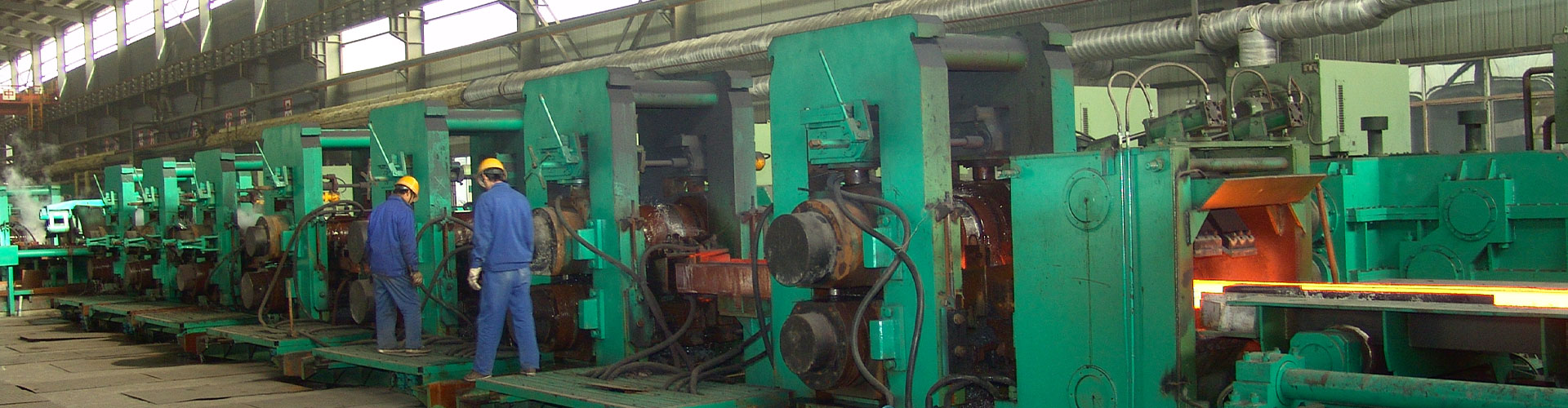
Multi-stand continuous cold rolling mills are the core equipment for high-end cold rolling production. Their rolling speed can exceed 25m/s, with a maximum speed of 41m/s. This production method realizes rolling at both ends of steel coils, reducing head and tail cutting losses and improving metal yield. The annual output can reach hundreds of thousands to over one million tons. Equipped with full hydraulic screwdown and automatic control systems, it ensures excellent product dimensional accuracy and mechanical properties.
However, multi-stand continuous rolling mills also have limitations. The speed and extension coordination of each stand is difficult to adjust, the product specification range is restricted, and the overall equipment investment cost is high.
3. General Production Process of Cold-Rolled Steel Strip
Although cold rolling production includes single sheet and coil rolling, single-stand and multi-stand rolling modes, the core technological process is basically consistent. The mainstream high-value products of cold-rolled steel include coated steel sheets, automotive steel sheets and electrical silicon steel sheets.
The complete cold rolling production process covers raw material hot-rolled coil pickling, cold rolling forming, annealing treatment, tempering rolling, finishing shearing and surface coating. Each process is closely linked to eliminate internal stress, optimize mechanical properties and improve surface quality, ensuring the finished steel strip meets different industrial application standards.
4. Development Status and Technical Trends of Cold-Rolled Steel Production
Cold-rolled strip production technology is an important symbol of the development level of the steel industry. Cold-rolled steel is widely used in automobiles, agricultural machinery, chemical industry, food packaging, construction, home appliances and electronic industries, and its market proportion is increasing year by year.
Early cold rolling production mainly relied on two-high and four-high mills. With the market demand for ultra-thin and high-precision strips, new rolling mill structures such as six-high, twelve-high and twenty-high multi-roll mills have been developed. At present, three-stand to six-stand four-high continuous cold rolling mills are the mainstream equipment, featuring high automation, high productivity and stable product quality.
In recent years, cold rolling technology has been continuously upgraded in multiple dimensions. First, increasing the weight of steel coils reduces the time loss of threading and coil changing, improving stable rolling time and product quality. At present, the maximum coil weight of cold-rolled steel strips reaches 40t to 60t.
Second, the rolling speed is continuously improved. The speed of five-stand and six-stand continuous rolling mills has increased from 20m/s to over 40m/s. Third, full hydraulic screwdown and AGC thickness automatic control systems are widely used to improve thickness accuracy. Fourth, hydraulic roll bending technology optimizes strip flatness and eliminates flatness defects.
In addition, the industry has realized full-process automatic control such as automatic coil centering and deviation correction. The emerging full-continuous cold rolling mill realizes welding and continuous rolling of steel coils, which increases production efficiency by 30% to 50%. New processes including continuous annealing, low-tank hydrochloric acid pickling and asynchronous rolling further optimize production efficiency and product accuracy.
5. Basic Knowledge and Production Process of Tin-Plated Steel Sheet
5.1 Definition and Application of Tin-Plated Steel Sheet
Tin-plated steel sheet, commonly known as tinplate, is a composite material formed by attaching a dense tin layer on the surface of cold-rolled steel sheet through hot dipping or electrolytic plating. Tin has stable chemical properties, good plasticity and non-toxic characteristics, with a density of 7.3g/cm³ and a melting point of 232℃. It is insoluble in dilute acid and alkali solutions, providing excellent anti-corrosion performance for steel substrates. Tin-plated steel sheets are mainly used for food cans, packaging boxes and daily packaging materials, delivered in sheet or coil forms.
5.2 Hot-Dip Tin Plating Process
Hot-dip tin plating is a traditional coating process. The steel strip passes through molten tin liquid to form a tin coating. The coating thickness is usually more than 25g/m² with relatively uneven distribution, suitable for low-speed production of single sheets and narrow strips.
The complete process flow is: raw material preparation → electrolytic pickling → high-pressure water cleaning → solvent treatment → hot-dip tinning → oil treatment → alkali degreasing → polishing → finished product inspection. The tin liquid temperature is controlled at 300℃ to 400℃. After tin plating, the steel strip passes through palm oil tank at 235℃ to 240℃ to prevent tin oxidation, and excess tin is scraped off by coating rolls. Finally, degreasing and polishing are carried out to obtain smooth tin-plated products.
5.3 Electro-Tin Plating Process
Compared with hot-dip tin plating, electro-tin plating features thin, uniform and firmly bonded coating and beautiful surface, becoming the mainstream modern production process. Electro-tin plating units are divided into alkaline, acidic and halogen types.
Alkaline units have simple equipment and low investment but low production speed and high power consumption. Acidic units have high efficiency and adjustable coating thickness, supporting differential thickness plating on both sides, with a maximum speed of 550m/min. Halogen units have the highest efficiency, with a maximum speed of 760m/min, but have strong corrosiveness and high equipment maintenance requirements.
The core principle of acidic electro-tin plating is to use tin as the anode and steel strip as the cathode. Tin ions are precipitated on the steel surface to form a coating. Since the initial electroplated tin layer is dull and poorly adhesive, the steel strip needs soft melting treatment to melt the tin layer and form a glossy surface.
After soft melting, the tin layer will form oxide film, which is easy to yellow and reduce corrosion resistance. Therefore, passivation treatment is required to form a dense protective chromate film. Finally, the finished products are obtained through cleaning, drying, electrostatic oiling and fixed-length shearing or coiling.
6. Basic Knowledge and Production Principle of Galvanized Steel Sheet
6.1 Characteristics and Application of Galvanized Steel Sheet
Galvanized steel sheet is a anti-corrosion material formed by coating a zinc layer on the surface of cold-rolled steel sheet. Zinc is a blue-white metal with a melting point of 419.4℃ and a density of 7.14g/cm³. It has good ductility and stable chemical properties. In humid air, a dense zinc carbonate film will be formed on the zinc surface to isolate air and moisture and protect the steel substrate.
Different from tin plating, galvanized steel has sacrificial anode protection performance. When the zinc layer is partially damaged, zinc will preferentially corrode to protect the internal steel plate from rusting. Therefore, galvanized steel sheets have excellent anti-corrosion performance and are widely used in construction, vehicle manufacturing, furniture, mechanical electrical and packaging industries.
6.2 Main Production Methods of Galvanized Steel Sheet
The mainstream production methods of galvanized steel sheets are hot-dip galvanizing and electro-galvanizing. Hot-dip galvanizing has thick coating and strong anti-corrosion ability, suitable for outdoor and heavy-corrosion environments. Electro-galvanizing has uniform and thin coating, smooth surface, and is more suitable for precision manufacturing and post-painting processing. Both processes effectively improve the service life of cold-rolled steel sheets and expand the industrial application scope of steel products.
7. Conclusion
Cold-rolled steel products are core high-precision steel materials in modern industry. With the advantages of high dimensional accuracy, excellent surface quality and stable mechanical properties, they make up for the deficiencies of hot-rolled steel. From single sheet rolling to fully continuous intelligent coil rolling, cold rolling production technology is constantly iterating and upgrading.
On the basis of original cold-rolled substrates, tin-plated steel and galvanized steel further endow steel sheets with anti-corrosion and durable performance. They form an important product system of cold-rolled steel and are widely used in various fields of national economy. With the continuous improvement of industrial manufacturing standards, high-precision, energy-saving and intelligent cold rolling and coating technologies will become the main development direction of the industry.