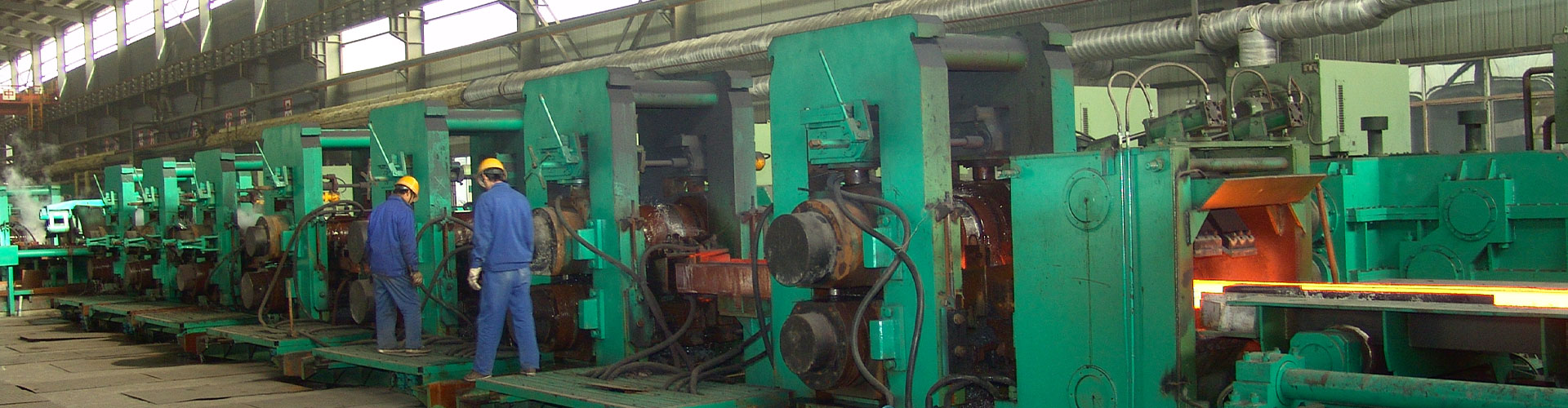
Manufacturers improve productivity for this mill through three main methods. They increase coil weight, raise rolling speed and lift equipment operating rates.
Modern cold rolled steel coils commonly reach 40 tons. Some single coils can hit 60 tons.
Five-stand mill units reach a maximum rolling speed of 37.5 m/s. Most run at around 30 m/s. Six-stand models can exceed 40 m/s.
Process lubrication materials and methods limit further speed gains. Operators select 25 m/s as the ideal speed for five-stand mills. They set 30 m/s for six-stand mills to maintain stable product quality.
## 1. Equipment Upgrade of Steel Strip
Teams widely fit hydraulic roll bending devices on the steel strip tandem cold rolling mill. These devices improve strip flatness effectively.
Cold strip requires tight thickness tolerances. Engineers install full hydraulic screw-down systems to speed rolling adjustments. They also add automatic thickness control units. These units keep precise strip thickness.
High-speed, high-output production lines use computer control for full rolling cycles.
## 2. The Arrival of Full Continuous Rolling Technology
The steel industry launched the first full continuous steel strip tandem cold rolling mill in 1971. Operators only finish one initial strip threading step. Then the mill carries out continuous rolling.
Workers weld the head of each new coil to the tail of the previous coil. A loop device sits at the mill inlet. It buffers strip material to keep steady rolling speed during welding.
The mill outlet holds a flying shear for coil splitting. Two tension reelers take turns to wind strip, so the line can change coils without stops.
This mill keeps strip inside the machine during roll changes. Production restarts right after workers finish roll replacement.
The first full continuous five-stand unit produces strips from 0.15 mm to 1.6 mm thick and 620 mm to 1300 mm wide. Its roll width reaches 1425 mm. It handles a maximum coil weight of 32 tons and a top speed of 30 m/s.
This full continuous design lifts productivity by 30~50%. It also improves product quality and material yield.
## 3. Three Core Development Trends
Full continuous cold rolling technology matures steadily. Modern rolling equipment moves toward three directions: intelligence, flexibility and green production.
### 3.1 Intelligent Operation
New-generation steel strip tandem cold rolling mill systems connect with industrial IoT. They optimize rolling force, tension and flatness parameters in real time.
An AI flatness control system predicts thermal crown changes on work rolls from historical data. It adjusts roll bending force in advance. This system lifts strip flatness pass rate to 99.2%.
### 3.2 Flexible Production
Modular reconfigurable stands support flexible production. The latest system switches between four-high and six-high mill modes within 30 minutes.
One single production line can produce automotive sheets (0.3-0.8 mm) and home appliance sheets (0.8-2.0 mm).
Hydraulic quick-change tools and adaptive rolling force algorithms help workers swap work rolls and backup rolls quickly. This cuts specification change time by 60%.
### 3.3 Green Manufacturing
Micro-oil lubrication breaks speed limits for high-speed rolling. New lubricants with nano additives form stable oil films at 45 m/s. They cut rolling oil consumption by 85% compared with traditional lubricants.
Oil and gas recovery systems control VOC emissions below 10 mg/m³. These systems help steel plants meet strict environmental standards.
## 4. Future Outlook of Steel Strip
Digital twin tools change maintenance routines for the steel strip tandem cold rolling mill. Engineers build full-life-cycle virtual models for mill equipment.
They predict the remaining service life of main drive bearings up to 72 hours early. This cuts unplanned downtime by 40%.
Predictive maintenance works with 5G remote diagnosis. These tools help cold rolling plants build unmanned dark factories.
Future ultra-thin strip rolling technology (<0.1 mm) will expand application scenarios for this mill. It will serve emerging markets such as new energy battery current collectors.