El alambrón es uno de los productos siderúrgicos más utilizados en el mundo.. Sirve como material base para innumerables aplicaciones industriales., desde barras de refuerzo para la construcción hasta resortes de precisión en motores de automóviles. Esta guía cubre todo lo que necesita saber sobre las variedades de alambrón., presupuesto, y aplicaciones prácticas en la fabricación moderna.
¿Qué es el alambrón??
Wire rod refers to hot-rolled round steel with a diameter typically ranging from 5.0mm to 25mm. It is delivered in coil form, which is why it’s also commonly called “rod coil” or “wire rod coil” in the steel industry. The coiled delivery method makes transportation efficient and allows for continuous processing in downstream applications.
While round cross-sections dominate the market, accounting for over 95% of production, special profiles like oval, square, and ribbed shapes are also manufactured for specific purposes.
Datos breves sobre la producción de alambrón
- Global wire rod production exceeds 200 million metric tons annually
- China produces approximately 45% of the world’s wire rod
- Standard coil weight ranges from 1.5 a 2.5 metric tons
- Rolling speed can reach up to 120 meters per second in modern mills
Especificaciones estándar de alambrón
Understanding the technical parameters of wire rod is essential for selecting the right material for your application. The following table presents the most common diameter specifications available in the global market:
| Diámetro (mm) | Weight per Meter (kilogramos/m) | Aplicaciones comunes | Tolerancia (mm) |
|---|---|---|---|
| 5.5 | 0.187 | Fine wire drawing, clavos | ±0.20 |
| 6.5 | 0.260 | Standard wire, mesh | ±0.25 |
| 8.0 | 0.395 | Refugio, pernos | ±0.30 |
| 10.0 | 0.617 | Construcción, sujetadores | ±0.30 |
| 12.0 | 0.888 | Heavy-duty applications | ±0.40 |
| 14.0 | 1.208 | Structural components | ±0.40 |
| 16.0 | 1.578 | Pre-stressed concrete | ±0.50 |
| 20.0 | 2.466 | Large diameter wire rope | ±0.50 |
Siete categorías principales de alambrón
Based on steel composition and end-use requirements, Los productos de alambrón se pueden clasificar en siete categorías principales.. Cada tipo tiene propiedades químicas y características mecánicas distintas adecuadas para aplicaciones industriales específicas..
1. Alambrón de acero estructural al carbono
Este es el tipo más común de alambrón utilizado en la construcción y fabricación en general.. Los grados de acero típicos incluyen Q195, Q215, Q235, y Q275, junto con sus variantes de grado F (acero con borde). Estos productos ofrecen buena soldabilidad y conformabilidad a precios competitivos..
Barras de refuerzo para la construcción, materia prima para trefilado, electrodos de soldadura, pernos, nueces, tornillos, remaches, y fabricación de hardware en general..
| Grado de acero | Contenido de carbono (%) | Resistencia a la tracción (MPa) | Fuerza de producción (MPa) | Alargamiento (%) |
|---|---|---|---|---|
| Q195 | 0.06-0.12 | 315-430 | ≥195 | ≥33 |
| Q215 | 0.09-0.15 | 335-450 | ≥215 | ≥31 |
| Q235 | 0.14-0.22 | 375-500 | ≥235 | ≥26 |
| Q275 | 0.18-0.28 | 410-540 | ≥275 | ≥23 |
2. Varilla de alambre de acero estructural al carbono de calidad
Esta categoría representa productos de alambrón de mayor calidad con un control más estricto de la composición química y propiedades mecánicas superiores.. Se subdivide en tres grupos según el contenido de carbono.:
Acero bajo en carbono (08F, 10, 15, 20)
Contenido de carbono: 0.08-0.25%. Se utiliza para trefilar alambre de acero con bajo contenido de carbono y productos de alambre perfilados críticos.. Las excelentes propiedades de conformado en frío hacen que estos grados sean ideales para aplicaciones de embutición profunda y estampado en frío..
Acero de medio a alto carbono (30-85 Calificación)
Contenido de carbono: 0.30-0.85%. Las aplicaciones incluyen alambre de acero estructural al carbono., alambre de radios de bicicleta, alambre del talón del neumático, cuerda de alambre de acero, alambre de resorte, alambre galvanizado, y ACSR (Conductor de aluminio reforzado con acero.) alambre central.
Acero al manganeso (15Minnesota, 65Minnesota)
Contiene 0.70-1.40% manganeso. Diseñado específicamente para fabricar alambre de acero para resortes de alta resistencia y productos de alambre perfilados especiales que requieren una resistencia superior a la fatiga..
3. Varilla de alambre de soldadura
El alambrón de soldadura se fabrica específicamente para producir consumibles de soldadura.. El estricto control del contenido de azufre y fósforo garantiza cordones de soldadura de alta calidad con defectos mínimos.. Esta categoría incluye dos tipos principales.:
| Tipo | Grados comunes | Contenido S+P | Proceso de soldadura |
|---|---|---|---|
| Alambre de soldadura sin aleación | H08A, H08MnA, H10Mn2 | ≤0,030% | Arco manual, SIERRA, A MÍ |
| Alambre de soldadura de baja aleación | H08CrMoA, H10CrMoA | ≤0,025% | TIG, SIERRA, con núcleo fundente |
Estos productos de alambrón sirven como materia prima para electrodos de soldadura por arco manual., soldadura por arco sumergido (SIERRA) cable, soldadura por arco metálico con gas (GMAW) cable, y producción de alambre tubular para soldadura.
4. Varilla de alambre de soldadura de acero inoxidable
Para soldar componentes de acero inoxidable., Se requiere alambrón de soldadura especializado con la misma resistencia a la corrosión.. Los grados populares incluyen H0Cr21Ni10, H0Cr19Ni12Mo2, y H1Cr24Ni13. Las variantes bajas en carbono (indicado por el prefijo “0”) Minimizar la precipitación de carburo durante la soldadura., Preservar la resistencia a la corrosión en la zona afectada por el calor..
| Calificación | do (%) | cr (%) | En (%) | Mes (%) | Solicitud |
|---|---|---|---|---|---|
| H0Cr21Ni10 | ≤0,03 | 19-22 | 9-11 | – | 304 soldadura de acero inoxidable |
| H0Cr19Ni12Mo2 | ≤0,03 | 18-20 | 11-14 | 2-3 | 316 soldadura de acero inoxidable |
| H1Cr24Ni13 | ≤0,12 | 23-26 | 12-14 | – | 309 soldadura de acero inoxidable |
5. Varilla de alambre de acero inoxidable
El alambrón de acero inoxidable se produce principalmente a partir de grados de acero inoxidable austenítico.. Los grados más comunes incluyen 1Cr18Ni9. (equivalente a AISI 302), 0Cr17Ni14Mo2 (AISI 316L), y 1Cr13 (AISI 410). These products feature excellent corrosion resistance and are processed into various finished products.
Productos terminados de alambrón de acero inoxidable:
Spring Wire
Cold Heading Wire
Wire Rope
Mesh Wire
Knitting Wire
6. Varilla de alambre de piano (Varilla de alambre musical)
Piano wire rod represents one of the highest quality wire rod products manufactured. It uses high carbon quality structural steel or carbon tool steel with grades such as 60, 65Minnesota, 70, 75, 80, and T9A. The carbon content typically ranges from 0.60% a 0.95%.
The exceptional purity and uniform microstructure of piano wire rod enable production of:
- Piano wire – Tensile strength up to 3,000 MPa
- High-stress spring wire – For valve springs in engines
- Oil-tempered valve wire – Operating at elevated temperatures
- Precision instrument strings – Musical instruments
7. Alambre de acero pretensado y alambrón (Cable duro)
This specialized wire rod category serves the construction industry, particularly for prestressed concrete applications. Utiliza acero exclusivo con alto contenido de carbono con un contenido de carbono entre 0.70% y 0.85%, con contenido de azufre y fósforo estrictamente controlado a ≤0,025%.
| Calificación | Carbón (%) | Minnesota (%) | Y (%) | Resistencia a la tracción (MPa) |
|---|---|---|---|---|
| 72A | 0.70-0.75 | 0.50-0.80 | 0.15-0.35 | ≥1080 |
| 77B | 0.75-0.80 | 0.60-0.90 | 0.15-0.35 | ≥1130 |
| 82A | 0.80-0.85 | 0.60-0.90 | 0.15-0.35 | ≥1180 |
| 82B | 0.80-0.85 | 0.70-1.00 | 0.15-0.35 | ≥1180 |
El sufijo "A" indica el contenido de carbono estándar., mientras que "B" denota un mayor contenido de manganeso para mejorar la resistencia.. Estos grados se someten a un estricto control de calidad durante la fabricación del acero para garantizar un acero limpio con inclusiones mínimas..
Proceso de producción de alambrón
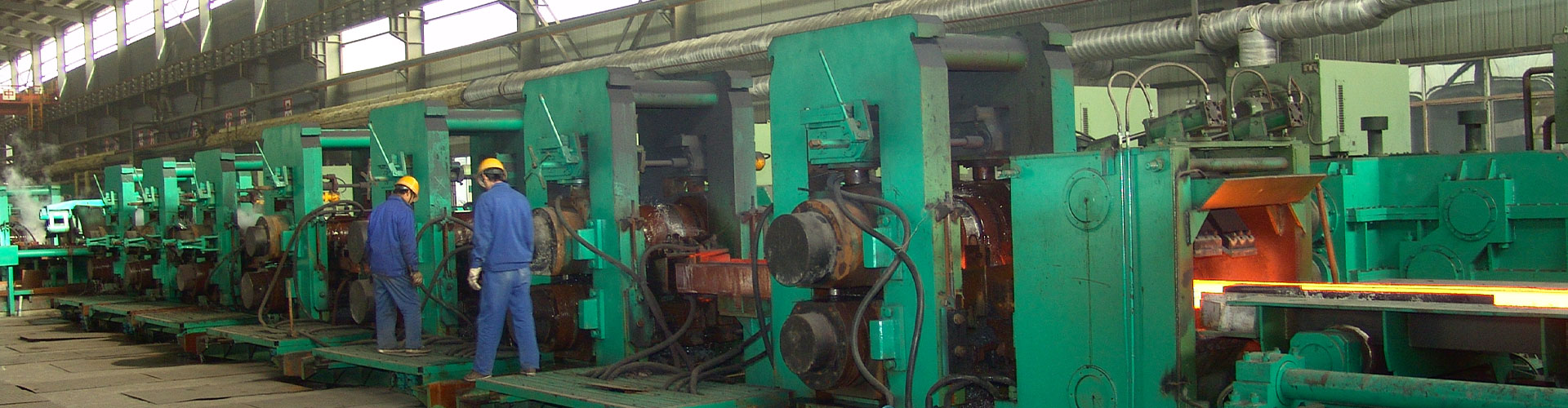
La producción moderna de alambrón implica varios pasos cuidadosamente controlados para lograr una calidad constante.. Comprender este proceso ayuda a los compradores a apreciar los factores que influyen en la calidad y el precio del producto..
(BOF/EAF)
Refinación
Fundición
Recalentar
Laminación
Enfriamiento
Parámetros críticos del proceso
| Etapa del proceso | Parámetro clave | Valor típico |
|---|---|---|
| Calefacción | Temperatura del horno | 1100-1200°C |
| Laminación | Temperatura de acabado | 900-1050°C |
| Laminación | Velocidad de rodadura | 80-120 EM |
| Colocando la cabeza | Temperatura de colocación | 800-950°C |
| Enfriamiento | Tasa de enfriamiento | 0.5-15°C/s |
Industry Applications by Sector
Los productos de alambrón encuentran aplicaciones en prácticamente todos los sectores industriales.. The versatility of this material makes it indispensable in modern manufacturing.
🏗️ Construction Industry
Reinforcement bar (refugio) producción, prestressed concrete strands for bridges and buildings, tie wire for rebar installation, concrete mesh reinforcement, and anchor bolts for structural connections.
🚗 Automotive Sector
Engine valve springs, suspension springs, alambre del talón del neumático, cable controls, seat frame wire, sujetadores (pernos, tornillos, clips), and welding wire for body assembly.
⚡ Electrical Industry
ACSR conductor core wire for power transmission, ground wire, fence wire, cable armoring, and equipment grounding conductors.
🔩 Hardware Manufacturing
Clavos, tornillos, pernos, nueces, remaches, chain links, hooks, hangers, staples, and general fastening products for construction and industrial use.
🪢 Wire Rope Industry
Elevator cables, crane hoist ropes, mining cables, bridge suspension cables, ski lift cables, and marine mooring lines.
Quality Standards and Testing
Wire rod quality is governed by various international and national standards. Manufacturers must comply with these specifications to ensure product reliability and customer satisfaction.
| Estándar | Región | Coverage |
|---|---|---|
| ASTM A510 | EE.UU | Carbon steel wire rod |
| EN 10017 | Europa | General purpose wire rod |
| JIS G 3505 | Japón | Low carbon steel wire rod |
| GB/T 701 | Porcelana | Hot rolled carbon steel wire rod |
| ISO 16120 | International | Non-alloy steel wire rod |
Common Quality Tests
- Análisis químico: Verifies carbon, manganeso, silicio, azufre, and phosphorus content
- Pruebas de tracción: Measures ultimate tensile strength, límite elástico, y elongación
- Bend Testing: Evaluates ductility and formability
- Inspección de superficie: Detects cracks, costuras, laps, and scale defects
- Dimensional Verification: Confirms diameter and ovality within tolerance
- Microstructure Examination: Assesses grain size, decarburization, and phase distribution
Selecting the Right Wire Rod Grade
Choosing the appropriate wire rod grade depends on your specific application requirements. Consider the following factors when making your selection:
Selection Criteria Checklist:
- Required strength level – Match tensile requirements to steel grade
- Drawing reduction ratio – Higher carbon grades allow less reduction
- Final product form – Wire, fastener, primavera, welding consumable
- Surface quality needs – Critical for bright wire and spring applications
- Resistencia a la corrosión – Consider stainless grades for harsh environments
- Heat treatment requirements – Some applications need specific microstructures
- Cost considerations – Balance performance needs with budget constraints
Storage and Handling Best Practices
Proper storage and handling of wire rod coils is essential to maintain product quality and prevent surface defects that could affect downstream processing.
Store coils under roof protection to prevent rain exposure. If outdoor storage is unavoidable, use waterproof covers and elevate coils on pallets to avoid ground moisture.
Stack coils no more than 3-4 layers high using proper coil saddles. Ensure even weight distribution to prevent deformation of bottom coils.
Use C-hooks or coil lifters designed for wire rod. Avoid dropping coils or rough handling that could cause edge damage or loose wraps.
Market Trends and Future Outlook
The global wire rod market continues to evolve with changing industry demands and technological advancements. Several trends are shaping the future of wire rod production and consumption:
- Higher strength grades: Automotive lightweighting drives demand for advanced high-strength wire rod
- Improved cleanliness: Critical applications require ultra-clean steel with minimal inclusions
- Green steel production: Carbon reduction initiatives promote hydrogen-based and electric arc furnace steelmaking
- Digital quality control: AI-based surface inspection and process optimization
- Supply chain localization: Regional production to reduce logistics costs and carbon footprint
Final Thoughts
Wire rod remains a foundational material in global manufacturing. From the reinforcement bars in buildings to the springs in your car’s suspension, this versatile steel product enables countless applications that we rely on daily. Understanding the different grades, presupuesto, and applications helps buyers and engineers make informed decisions for their specific needs.
Whether you’re sourcing carbon steel wire rod for general manufacturing, high-carbon grades for spring production, or stainless steel wire rod for corrosion-resistant applications, the key is matching material properties to end-use requirements. Work with reputable suppliers who can provide certified test reports and consistent quality to ensure your downstream processes run smoothly.