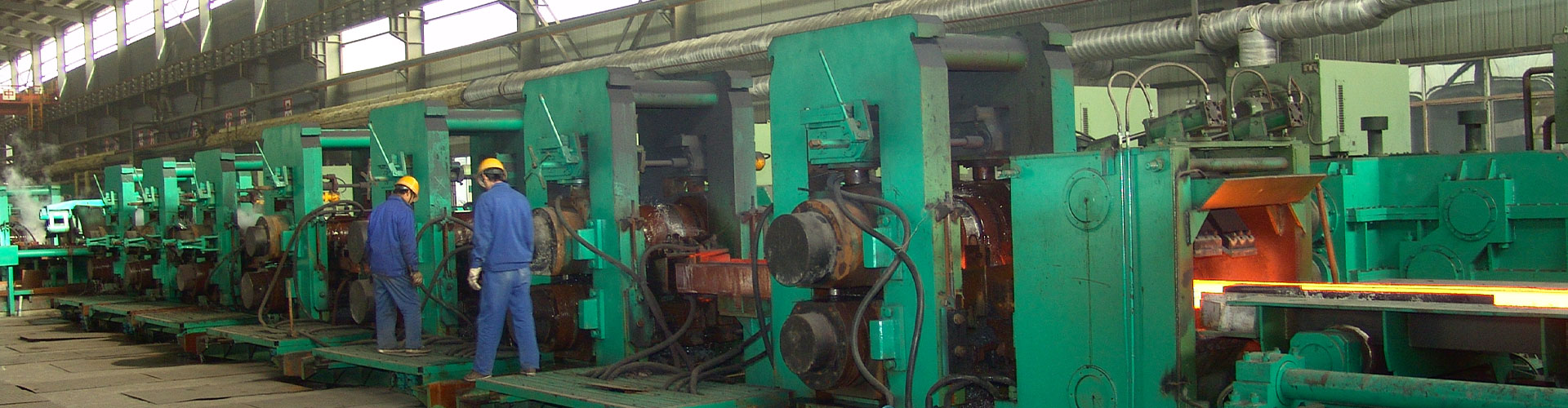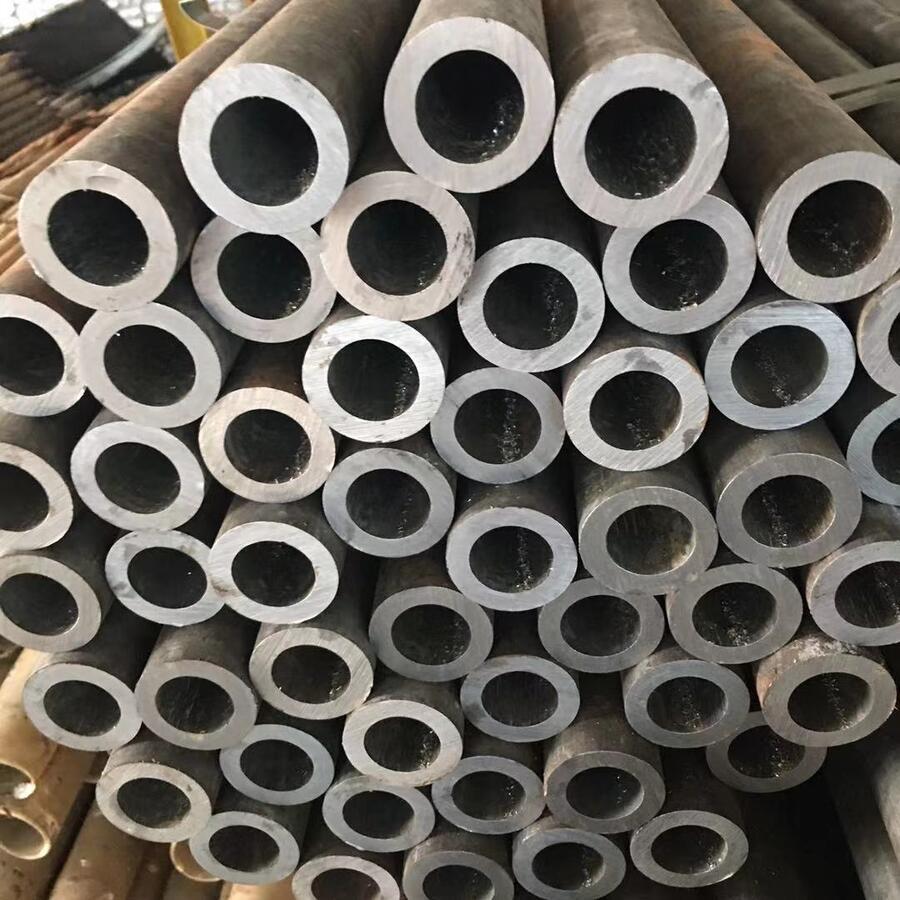
In the world of steel manufacturing, efficiency and precision are paramount. El slitting and rolling mill process, often called slit rolling, stands out as a highly innovative technique that dramatically boosts productivity. En su núcleo, this process is a clever method for taking a single piece of hot steel (a billet or slab) and longitudinally splitting it into two, three, or even more separate strands within the rolling mill itself. These strands are then rolled simultaneously into finished products like rebar or wire rods.
Imagine trying to make two spaghetti strands from a single, wider strip of pasta dough. Instead of cutting it after it’s rolled flat, you could use a special cutter to divide it while you are still rolling it. Slit rolling works on a similar principle but with red-hot steel and immense industrial power. This approach allows a mill to produce multiple items in the time it would normally take to produce one, revolutionizing the economics of steel production.
A Brief History of Slit Rolling
The concept of slitting metal during rolling is not new. Its earliest forms date back to the 18th century, where it was primarily used as a way to recycle old steel rails. Sin embargo, el moderno, continuous production method we see today was pioneered in the 1970s by the Co-steel Group in Canada. This breakthrough transformed slit rolling from a niche recycling technique into a mainstream, high-efficiency production strategy.
Following this innovation, the technology was quickly adopted and refined by industrial powerhouses in the United Kingdom, los estados unidos, Alemania, and Japan. Hoy, these nations remain at the forefront of research and application in multi-strand slitting technology, continuously pushing the limits of what can be achieved in a rolling mill.
The Core Methods: How is the Steel Split?
The magic of splitting a solid piece of hot steel happens through two primary methods. The choice between them depends on the mill’s setup, the desired product, and specific operational preferences.
1. Pass Slitting Method
This is the most direct approach. In the pass slitting method, the steel workpiece is fed through a set of specially designed rolls. These rolls have a unique groove pattern, or “pass,” that both compresses the steel to shape it and, al mismo tiempo, uses sharp, V-shaped edges to cut it longitudinally.
- Simultaneous Action: The deformation (laminación) and the separation (slitting) occur in a single step within the same roll pass.
- No Extra Equipment: This method is elegant because it doesn’t require any additional machinery. The intelligence is built directly into the design of the rolling pass.
2. Tool Slitting Method
The tool slitting method is a two-stage process. Primero, the workpiece is rolled into a specific pre-slit shape, often resembling a dog bone or a shape with deep grooves where the splits will occur. Entonces, as this pre-formed piece exits the rolling stand, it passes through a special slitting tool.
- Separate Stages: Shaping happens first, followed by splitting. The splitting is done by a device like a slitting wheel or a static blade guide that tears the steel along the pre-formed grooves.
- Added Device: This method requires a slitting guide or wheel to be installed at the exit of the mill stand, which adds a piece of equipment to the production line.
Multi-Strand Slitting: Multiplying Output
The true power of the slitting and rolling mill process is realized with multi-strand production. While two-strand slitting is the foundation, modern mills have advanced to create even more products from a single billet.
- Two-Strand Slitting: The basic process where one workpiece is split into two.
- Three-Strand Slitting: The workpiece is split on both sides simultaneously, creating three independent strands (one central, two lateral).
- Four-Strand Slitting: This is typically achieved in two steps. Primero, a three-strand slit is performed, but the central piece is left connected. In a subsequent pass, this larger central piece is subjected to a two-strand slit, resulting in a total of four strands.
- Five-Strand Slitting: This advanced technique often involves a combination of two three-strand slitting operations to achieve five final products.
Key Advantages of the Slit Rolling Process
The adoption of slit rolling is driven by a compelling set of benefits that impact everything from capital investment to final product quality.
| Ventaja | Descripción & Real Parameters |
|---|---|
| Massive Productivity Increase | The most significant benefit. A mill can produce two to four times the output in the same amount of time, dramatically increasing the tons-per-hour rate and making the production of small-diameter products economically viable. |
| Energy and Cost Reduction | Efficiency gains lead to substantial savings.
|
| Improved Product Accuracy | Dimensional accuracy can improve by 5-20% compared to conventional rolling. This is because all strands enter the rolls synchronously, experience minimal temperature differences, and can be rolled under tension-free conditions. |
| Optimized Mill Layout & Investment | Slit rolling allows mills to use larger, more economical billet sizes (p.ej., 150×150mm) from continuous casters. This can reduce the number of required rolling stands, saving on initial investment and factory floor space. |
| Enhanced Flexibility | The process simplifies the rolling of asymmetrical products (like angle iron) by allowing for more symmetrical pass designs, which are easier to control and result in higher precision. |
Potential Challenges and Modern Solutions
Like any advanced manufacturing process, slit rolling is not without its challenges. Sin embargo, modern engineering has developed effective solutions for these issues.
-
Challenge: Sickle Bend. After slitting, the strands can develop a slight horizontal curve. If severe, this can cause problems with guiding the steel into the next rolling stand.
Solución: Avanzado, precisely adjustable entry and exit guides are used to straighten the strands immediately after the slit, ensuring they travel correctly. -
Challenge: Defectos superficiales. Uneven cuts, burrs, or misalignment between passes can cause surface folds on the final product. Además, slitting exposes the core of the original billet, which can reveal internal impurities or voids.
Solución: This is managed through high-precision roll and guide manufacturing, rigorous quality control of the initial steel billets, and optimized pass design to ensure clean, consistent cuts.
The slitting and rolling mill process is a testament to continuous improvement in the steel industry. By enabling the simultaneous production of multiple finished products from a single feedstock, it offers an unparalleled combination of speed, eficiencia, y rentabilidad. While it requires precision engineering and careful process control, its benefits have made it an indispensable technology for competitive steel manufacturers around the globe.