Introduction
L'évolution de la métallurgie moderne a été considérablement influencée par les progrès des procédés de laminage.. L'un des appareils critiques dans ce domaine est le laminoir d'acier., qui joue un rôle déterminant dans la formation de produits métalliques aux dimensions précises et aux propriétés mécaniques améliorées. Dans cet article complet, nous examinerons non seulement les aspects clés et les paramètres de conception du machine à rouler l'acier mais discutons également de ses applications dérivées et de ses interconnexions avec d'autres équipements de traitement des métaux. Références de leaders de l'industrie tels que les segments du laminage à chaud et des accessoires métallurgiques de HANI TECH (visite Solutions de laminage à chaud HANI TECH et Composants métallurgiques HANI TECH) sont incorporés pour fournir des informations supplémentaires précieuses.
Aperçu de la technologie des laminoirs en acier
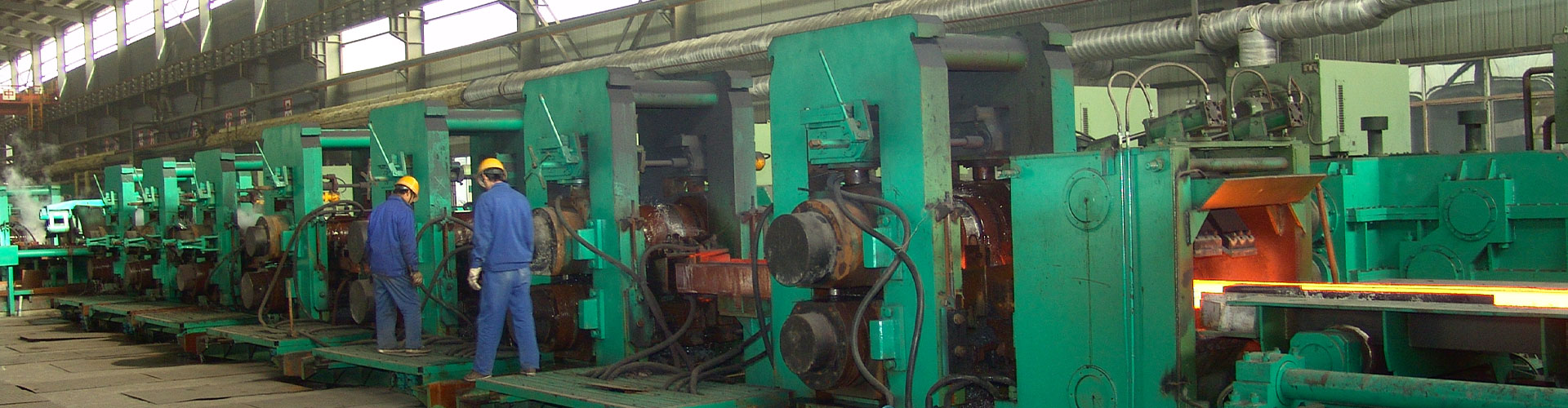
Le machine à rouler l'acier a été à l’avant-garde de l’innovation industrielle, transformer l'acier brut en produits finaux viables pour la construction, automobile, et applications de machinerie lourde. Ces machines exploitent une conception mécanique précise pour laminer et former l'acier dans des conditions contrôlées.. Le principe de base consiste à alimenter l'acier chauffé ou froid à travers une série de rouleaux, où la haute pression entraîne une déformation et une mise en forme du matériau. Ce processus permet d'obtenir une structure de grain améliorée, meilleure finition de surface, et une amélioration globale des propriétés mécaniques de l’acier.
Moderne machines à rouler l'acier intégrer une automatisation avancée, systèmes de surveillance numérique, et des matériaux de haute qualité. Des mots-clés dérivés supplémentaires naturellement intégrés dans cette discussion incluent « technologie des laminoirs »," "laminoir à chaud," "laminoir à froid,» et « procédés de laminage métallurgique ». Les paramètres du processus, combiné avec des systèmes de contrôle numérique, garantir que la production est optimisée à la fois en termes d’efficacité et de qualité.
Principes techniques et mécanismes de fonctionnement
Le fonctionnement du machine à rouler l'acier se concentre sur plusieurs composants de base qui fonctionnent en harmonie pour fournir les caractéristiques de produit souhaitées. Les mécanismes d'entraînement comprennent des rouleaux réglables, systèmes hydrauliques, et unités de contrôle de température. Voici quelques principes techniques fondamentaux:
- Application de la force de roulis: La pression exercée par les rouleaux détermine l'épaisseur finale et les propriétés mécaniques de l'acier. La force de roulement doit être calibrée pour différentes qualités d'acier et exigences d'épaisseur.
- Gestion thermique: Le contrôle des températures élevées est essentiel, en particulier dans les applications de laminage à chaud. Les systèmes informatisés de surveillance thermique aident à maintenir des températures de laminage optimales pour éviter les défauts tels que les problèmes de déformation ou de joints de grains..
- Dynamique des flux de matières: Le comportement de l’acier lors de sa déformation sous pression est crucial. Analyse avancée par éléments finis (FEA) des techniques sont souvent appliquées pour prédire le flux de matières, garantissant ainsi un laminage uniforme et une cohérence entre les lots.
Ces principes de fonctionnement sont améliorés dans les appareils modernes en intégrant des systèmes de rétroaction et des capteurs de précision, s'assurer que le machine à rouler l'acier fonctionne à des performances optimales même dans des conditions de charge variées et des influences environnementales.
Paramètres de conception et d'ingénierie
Pour mieux comprendre les capacités du machine à rouler l'acier, il est essentiel d'examiner ses spécifications techniques. Le tableau ci-dessous résume un large ensemble de paramètres typiques d'une machine à rouler l'acier de pointe.. Les paramètres d'ingénierie détaillés incluent la mécanique, électrique, et caractéristiques thermiques qui déterminent le processus de laminage.
| Paramètre | Description | Spécification | Unités |
|---|---|---|---|
| Diamètre du rouleau | Diamètre des rouleaux utilisés pour la déformation | 500 – 1500 | mm |
| Largeur du rouleau | Largeur des rouleaux assurant une répartition uniforme de la force | 1000 – 3200 | mm |
| Force de roulis | Force maximale pouvant être appliquée lors du roulage | 5000 – 30000 | tonnes |
| Température de fonctionnement | Plage de température pendant les processus de laminage à chaud | 1100 – 1300 | °C |
| Système de contrôle | Type d'automatisation utilisée dans le processus | API & Basé sur SCADA | N / A |
| Plage de vitesse | Gamme de vitesses de roulement | 0.5 – 5.0 | MS |
| Consommation d'énergie | Énergie électrique consommée pendant le fonctionnement | 150 – 500 | kW |
| Matériau du rouleau | Composition des matériaux pour la durabilité et la gestion de la chaleur | Acier allié de haute qualité | N / A |
| Tolérance de précision | Tolérance de fabrication pour les produits en acier | ±0,05 | mm |
| Construction du cadre | Conception structurelle pour minimiser les vibrations | Acier renforcé | N / A |
| Circuit de refroidissement | Méthode de régulation de la température pendant le processus | Refroidi par eau & options refroidies par air | N / A |
| Interface utilisateur | Type d'interface pour le fonctionnement de la machine | Panneau de commande à écran tactile | N / A |
| Régulation de la vitesse de l'arbre | Contrôle de vitesse variable des arbres de rouleaux | 0 – 1800 | tr/min |
| Système de lubrification | Système pour réduire la friction entre les surfaces de travail | Lubrification automatisée | N / A |
| Cycle d'entretien | Délai recommandé pour l’entretien de routine | 3000 heures d'ouverture | heures |
| Caractéristiques de sécurité | Mécanismes de sécurité intégrés pour protéger les opérateurs | Arrêts d'urgence, Gardes, Alarmes | N / A |
Le tableau ci-dessus fournit une liste complète de paramètres associés au moderne machine à rouler l'acier. Lorsqu'il est combiné avec des protocoles d'installation et de contrôle qualité appropriés, ces spécifications contribuent à garantir des résultats opérationnels supérieurs et des cycles de production optimisés.
Applications et impact sur l’industrie
La polyvalence du machine à rouler l'acier s'étend à une multitude d'applications industrielles. Les secteurs courants utilisant cette technologie comprennent la construction, fabrication automobile, ingénierie ferroviaire, et production d'équipements lourds. Le processus de laminage améliore l'intégrité structurelle de l'acier, ce qui en fait un matériau privilégié pour les composants porteurs et les pièces de précision.
En outre, les améliorations du traitement des matériaux apportées par machine à rouler l'acier la technologie a une corrélation directe avec la durabilité dans les opérations industrielles. L'application efficace de la force de roulement et la gestion thermique précise réduisent la production de déchets. En plus, l'intégration de systèmes automatisés contribue aux économies d'énergie et à la réduction des coûts d'exploitation, tout en favorisant un environnement de travail plus sûr.
Les tendances émergentes dans l'industrie incluent le développement de laminoirs intelligents, caractérisés par leur connectivité Internet et leur intégration avec l'IoT industriel (Internet des objets) plates-formes. Ces avancées permettent une surveillance et des analyses en temps réel, augmentant encore l'efficacité et la fiabilité pendant le fonctionnement. L'adoption d'algorithmes d'apprentissage automatique dans l'optimisation des processus est un autre développement passionnant, conduisant à de nouvelles innovations dans machine à rouler l'acier candidatures.
Intégration avec les systèmes auxiliaires et tendances futures
Les installations de fabrication modernes ne dépendent pas uniquement du machine à rouler l'acier pour le traitement de l'acier. La machine est souvent intégrée à un réseau de systèmes auxiliaires pour obtenir une solution de production de bout en bout. Par exemple, Sites Internet de HANI TECH (accessible à Solutions de laminage à chaud HANI TECH et Composants métallurgiques HANI TECH) fournir une gamme de composants complémentaires, comme les rouleaux spécialisés, unités de contrôle de la température, et équipements auxiliaires de précision, qui améliorent considérablement les performances du laminoir.
L'intégration de ces systèmes facilite un processus de production holistique dans lequel les données de chaque étape — depuis le verrouillage des matériaux et le préchauffage, en roulant, à la finition et au contrôle qualité - peuvent être rassemblés et analysés. Cette intégration fournit aux fabricants des informations précises sur la production, qui sont nécessaires pour atteindre les objectifs de production Lean. La tendance vers une plus grande automatisation et une intégration intelligente devrait se poursuivre à mesure que des capteurs et des algorithmes de contrôle plus avancés sont introduits dans l'industrie..
En plus, l’accent croissant mis sur la durabilité et l’efficacité oriente la recherche et le développement vers des conceptions et des améliorations de processus plus économes en énergie. Avenir machine à rouler l'acier les conceptions peuvent incorporer des matériaux avancés pour les rouleaux et des diagnostics de système améliorés grâce à une maintenance prédictive basée sur l'IA, réduisant davantage les temps d'arrêt et améliorant la productivité globale.
Analyse comparative avec d'autres équipements de traitement des métaux
Par rapport à d'autres technologies de traitement des métaux telles que le forgeage, fonderie, et extrusion, le machine à rouler l'acier se distingue par sa capacité à produire des produits très uniformes et dimensionnellement précis. Contrairement au forgeage, qui repose largement sur les forces d'impact, le laminage assure une déformation continue qui se traduit par des propriétés métallurgiques améliorées. Fonderie, tout en étant bénéfique pour réaliser des formes complexes, souffre souvent de problèmes de porosité interne que le roulage peut atténuer efficacement.
La stabilité relative du processus de laminage signifie également que machine à rouler l'acier la technologie est particulièrement adaptée aux environnements de production à haut volume. Ses paramètres contrôlables permettent aux fabricants d'adapter le processus aux propriétés spécifiques des matériaux et aux exigences du produit final., ce qui en fait un choix polyvalent dans divers secteurs industriels.
Études de cas réels et exemples pratiques
Plusieurs leaders mondiaux de l'industrie sidérurgique ont adopté des machine à rouler l'acier technologie pour améliorer leurs capacités de production. Par exemple, usines leaders en Chine, Europe, et l'Amérique du Nord ont signalé des améliorations remarquables en termes d'efficacité et de cohérence des produits après la mise à niveau vers des produits plus récents., laminoirs automatisés. Ces études de cas valident les modèles analytiques qui prédisent des structures de grains améliorées et une réduction des défauts de roulement lors de l'utilisation d'équipements de pointe..
En outre, les fabricants ont signalé des réductions significatives des coûts opérationnels, qui peut être directement attribué à la conception économe en énergie des bâtiments modernes machines à rouler l'acier et la fréquence réduite des temps d'arrêt pour maintenance. La synergie opérationnelle observée entre le laminoir et les systèmes complémentaires fournis par des entreprises comme HANI TECH améliore encore la productivité globale et la qualité des produits., établir une nouvelle référence dans l'industrie.
Défis techniques et orientations de recherche
Malgré les nombreux avantages associés au machine à rouler l'acier, plusieurs défis techniques demeurent. L'une des principales préoccupations est la gestion de l'usure des rouleaux et de la fatigue des matériaux.. Un fonctionnement continu soumet les rouleaux à des contraintes mécaniques sévères et à une dégradation thermique, ce qui peut affecter les performances de roulement au fil du temps. Par conséquent, la recherche s'oriente progressivement vers le développement de matériaux avancés résistants à l'usure et de techniques de refroidissement innovantes.
Un autre défi permanent est le maintien de tolérances dimensionnelles précises sur de longs cycles de production.. Avec des améliorations dans les technologies de capteurs et les systèmes de rétroaction en temps réel, les ingénieurs travaillent au développement d'algorithmes de contrôle plus robustes capables d'ajuster dynamiquement les paramètres de roulement. Ce contrôle adaptatif garantit une conformité continue de la qualité avec une intervention humaine minimale.
Regarder vers l'avenir, les recherches futures se concentrent sur l’intégration de l’intelligence artificielle (IA) et apprentissage automatique (ML) pour prédire et prévenir les problèmes courants avant qu’ils ne surviennent. Cette approche de maintenance prédictive, combiné avec des modèles de simulation améliorés, devrait prolonger considérablement la durée de vie du machine à rouler l'acier et améliorer la fiabilité globale du processus.
Conclusion
En conclusion, le machine à rouler l'acier occupe un rôle central dans la métallurgie moderne et la fabrication industrielle. Grâce à son design sophistiqué, paramètres d'ingénierie précis, et l'intégration de systèmes de contrôle avancés, cette machine continue de faire progresser les capacités de transformation de l'acier à l'échelle mondiale. La recherche continue et l'intégration avec les systèmes auxiliaires des principaux fournisseurs de technologie, comme HANI TECH, ouvrir la voie à de nouvelles améliorations de l’efficacité, durabilité, et la qualité des produits.
Praticiens, chercheurs, et les passionnés du domaine de la transformation des métaux doivent continuer à collaborer, innover, et diffuser les connaissances sur ces technologies avancées. L'interaction de l'expertise technique et de l'application dans le monde réel détermine en fin de compte l'évolution du machine à rouler l'acier, s’assurer qu’elle reste à la pointe des innovations métallurgiques aujourd’hui et à l’avenir.