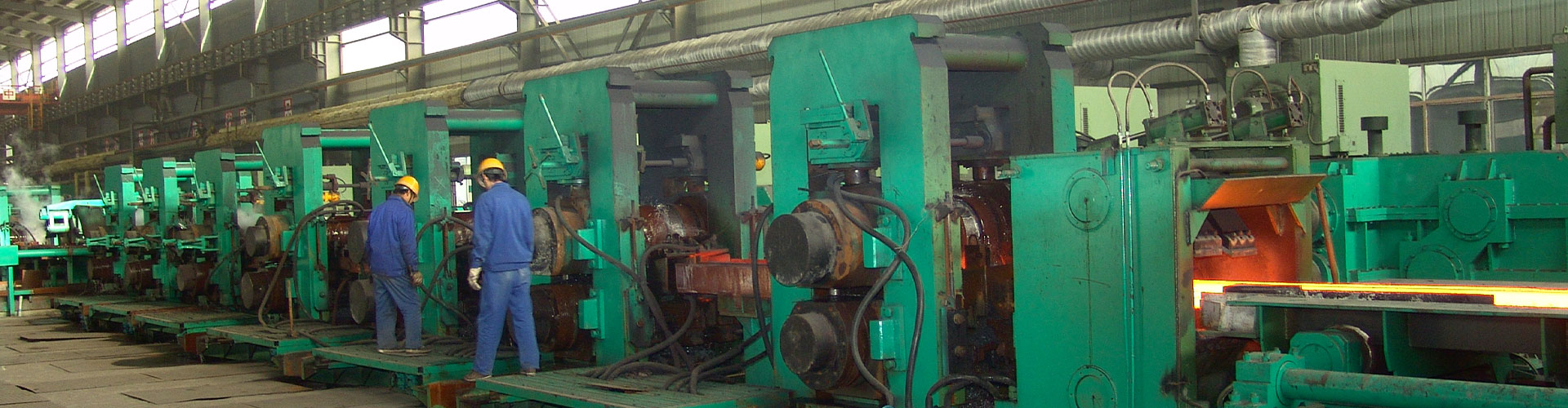
Rolls are core consumable components of rolling mills, directly determining the dimensional accuracy, surface quality of rolled steel and roll consumption. Different rolling processes, load conditions and product requirements need rolls made from different materials. This article systematically introduces three major roll material categories: rouleaux en fonte, cast steel rolls and forged steel rolls, including microstructure, manufacturing processes and typical application scenarios.
## 1. Rouleaux en fonte
Cast iron rolls feature carbon content of 2.5%~3.5%. They are divided into four types: ordinary cast iron rolls, high-nickel chromium indefinite chill composite cast iron rolls, high chromium composite cast iron rolls and alloy ductile iron rolls. The metallurgical structure consists of matrix, cementite and graphite. Matrix includes ferrite, perlite, bainite and martensite; graphite exists in flake or spherical form.
### 1.1 Ordinary Cast Iron Rolls
Ordinary cast iron rolls cover chilled cast iron rolls, low & medium alloy indefinite chill cast iron rolls and low & medium alloy ductile iron rolls. Chilled cast iron forms white layer on roll surface by supercooling and mold chilling, delivering high hardness and good wear resistance. It can be classified into non-ductile iron type, ductile iron composite type and ductile iron core type according to production process and core material.
Indefinite chill cast iron sits between chilled cast iron and grey cast iron, with graphite distributed in the working layer and no clear boundary between working layer and roll core. Ordinary cast iron rolls are widely used for pack rolling sheet mills, three-high plate mills, moulins à tige, bar mills and section mills.
### 1.2 High-Nickel Chromium Indefinite Chill Composite Cast Iron Rolls
Indefinite chill cast iron contains evenly distributed graphite inside working layer. Graphite content increases while hardness decreases from roll surface to inner part without obvious dividing line. Alloyed with high nickel, chromium and molybdenum, high-nickel chromium indefinite chill cast iron rolls are produced by full-flushing or centrifugal composite casting.
A large amount of carbides in matrix brings excellent wear resistance, and graphite improves thermal crack resistance. They are commonly adopted for finishing rolls of wide, medium and heavy plate mills and strip rolling mills.
### 1.3 High Chromium Composite Cast Iron Rolls
High chromium composite cast iron rolls use 12-22% Cr high chromium white wear-resistant cast iron as outer working layer, and ductile iron for roll core and roll neck, manufactured via centrifugal composite casting.
Various carbides including Cr7C3 eutectic carbide, Mo2C eutectic carbide and Cr23C6 secondary carbide endow outstanding wear resistance. They serve as work rolls for roughing and early finishing stands of hot strip mills, brouillage & finishing rolls for plate mills and finishing rolls for section & broyeurs à plaques.
### 1.4 Alloy Ductile Iron Rolls
Spherical graphite uniformly distributed from roll surface to core gives high tensile strength to bear heavy loads and good wear resistance. Based on matrix structure, alloy ductile iron rolls are grouped into pearlite type and acicular type. Most are produced by integral casting; high alloy acicular ductile iron rolls adopt centrifugal composite casting to reduce casting stress.
With good thermal shock resistance and wear resistance, alloy ductile iron rolls are used for primary mills, section mills, bar continuous rolling mills and large seamless tube mills.
## 2. Cast Steel Rolls
Cast steel rolls include steel rolls (C:0.4~1.4%) et rouleaux semi-acier (C:1.4~2.4%). Low carbon steel rolls have relatively low hardness with ferrite and pearlite microstructure. Adding Cr, Dans, Mo or heat treatment can increase hardness. Thanks to high tensile strength and toughness, they are applied in high-temperature heavy-load blooming mills and back-up rolls. Special heat treatment can reach hardness above HS90 for cold rolling work rolls.
Semi-steel rolls have carbon content between cast steel and cast iron, mainly pearlite matrix plus certain carbides. The most prominent advantage is slight hardness drop from surface to core, suitable for deep groove rolls, widely used in section mill roughing/finishing stands and roughing & early finishing stands of hot strip mills. Increasing silicon content and graphitization treatment can improve thermal crack resistance and toughness for blooming rolls and vertical rolls of hot strip mills.
### 2.1 Alloy Cast Steel Rolls
Adjust chemical composition and heat treatment to obtain pearlite or bainite matrix. Tempered sorbite features high strength, toughness and thermal crack resistance; tempered sorbite with substructure also has good wear resistance. Alloy cast steel rolls have high tensile strength, dureté, moderate wear resistance and thermal crack resistance, mainly used for blooming rolls and roughing rolls of section mills.
### 2.2 Cast High Chromium Steel Rolls
High chromium steel rolls use high chromium steel (C:0.5~1.5%, Cr:8~15%) for outer working layer and ductile iron as core by centrifugal composite casting. Higher chromium matrix provides superior wear resistance. Lower carbide content brings excellent thermal crack resistance, making it a preferred material trend for roughing rolls of hot continuous rolling mills.
### 2.3 Centrifugal Composite HSS Rolls
High speed steel rolls combine good thermal crack resistance, excellent wear resistance and red hardness, greatly extending roll service life and improving rolled product quality. They are used for front finishing work rolls of hot strip continuous mills.
### 2.4 Rouleaux semi-acier
Carbon content of semi-steel rolls ranges from 1.4~2.4%. Mechanical performance lies between cast steel and cast iron, characterized by small hardness drop and good wear resistance. Applied in roughing & intermediate stands of section mills and roughing & early finishing stands of hot strip mills.
When carbon content exceeds 1.9%, it becomes high-carbon semi-steel with eutectic carbides, used for blooming continuous rolling stands, intermediate and finishing stands of section mills. Silicon-enhanced semi-steel is also called graphitic cast steel roll, combining merits of cast steel and cast iron for billet hot continuous rolling and section rolling.
## 3. Rouleaux d'acier forgé
Forged steel rolls go through smelting, forging and heat treatment. The roll working layer achieves uniform high hardness and wear resistance, while roll neck and core retain high strength and toughness. This unique property makes forged steel rolls irreplaceable in cold rolling and non-ferrous metal rolling compared with cast rolls.
They are divided into forged hot rolling rolls and forged cold rolling rolls. Forged hot rolls are used for blooming and section roughing. Forged cold rolls have stricter requirements: uniform high surface hardness, sufficient hardened depth and high accident resistance, demanding high metallurgical purity and homogeneous microstructure.
Traditional C2 series cold rolls contain around 2% Cr with hardened depth ~10mm above HS90. New Cr5 series rolls have hardened depth over 30mm above HS90. Cr5 work rolls show comprehensive superior performance and will gradually replace C2 rolls as mainstream cold rolling work rolls.