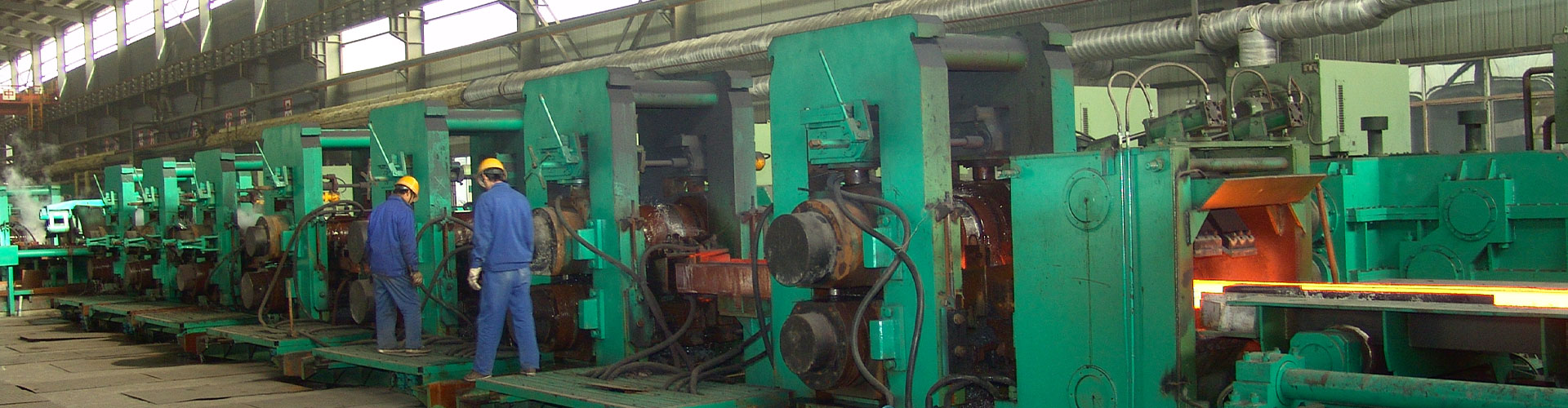
L’industrie des laminoirs à fil machine a connu des progrès technologiques remarquables au cours des six dernières décennies.. Depuis les débuts des vitesses de roulement limitées jusqu’aux systèmes hautes performances d’aujourd’hui, l'évolution de la technologie des usines de finition et des blocs de dimensionnement a transformé la façon dont les fabricants d'acier produisent des produits en fil machine.. Cet article retrace le parcours de développement et fournit des informations pratiques aux opérateurs d'usine et aux ingénieurs..
La naissance de la technologie moderne de laminage du fil machine
En octobre 1966, un événement révolutionnaire s'est produit au Canada qui allait remodeler toute l'industrie du fil machine.. Morgan Construction Company a mis en service avec succès la première usine de finition à grande vitesse et sans torsion au monde. Ce système révolutionnaire comportait 10 stands à impulsion collective, anneaux de roulement en carbure de tungstène montés en porte-à-faux, 45-disposition alternée des degrés, et roulement sans torsion sur une seule ligne.
Avant cette percée, les broyeurs à fil machine en continu équipés de systèmes d'entraînement à courant continu ne pouvaient atteindre que des vitesses de laminage inférieures à 30 MS. Les laminoirs cross-country étaient encore plus lents, fonctionnant à seulement 15 à 18 MS. Le moulin sans torsion Morgan a immédiatement placé la barre plus haut 45 MS, marquant le début d’une nouvelle ère dans la production de fil machine.
Principales caractéristiques du moulin Morgan sans torsion original
- 10-configuration stand avec transmission collective
- Montage sur rouleau en porte-à-faux pour une capacité de changement rapide
- Anneaux de rouleau en carbure de tungstène pour une durée de vie prolongée
- 45-disposition des stands en alternance
- Roulage sans torsion pour une qualité de produit améliorée
Quatre décennies d'amélioration continue
Après le premier succès, Morgan a investi massivement dans la recherche et le développement. Au cours du prochain 40 années, l'entreprise a continuellement affiné ses conceptions d'usines de finition. Chaque génération a apporté des améliorations dans la structure mécanique, systèmes d'entraînement, matériaux en rouleau, et technologie de refroidissement.
Au milieu des années 1990, la vitesse de roulement maximale avait atteint une vitesse impressionnante 112 MS. Cela représentait un 149% augmentation par rapport à l'original 45 conception m/s. Les améliorations sont venues grâce à de meilleurs roulements, des systèmes d'alignement des rouleaux plus précis, lubrification avancée, et des structures de logement plus solides.
Chronologie de l’évolution de la vitesse
| Période | Vitesse de roulement maximale | Jalon technologique |
|---|---|---|
| Avant 1966 | 15-30 MS | Broyeurs continus à entraînement CC, roulage tout-terrain |
| 1966 | 45 MS | Première usine de finition sans torsion Morgan |
| 1970s | 60-70 MS | Roulements et matériaux de roulement améliorés |
| 1980s | 80-90 MS | Systèmes de refroidissement et lubrification améliorés |
| Milieu des années 1990 | 112 MS | Structures mécaniques avancées |
| 2000à partir de maintenant | 120 MS (140 conception m/s) | Intégration de broyeurs de réduction et de dimensionnement |
L'usine de réduction et de dimensionnement à 4 supports qui change la donne
Un progrès significatif s'est produit lorsque Morgan et Danieli ont développé indépendamment des broyeurs de réduction et de dimensionnement de fil machine à 4 cages.. Ces unités, installé après le broyeur de finition traditionnel, poussé la vitesse de roulement maximale à 120 m/s en fonctionnement réel, avec des capacités de conception atteignant 140 MS.
Le moulin à encollage réduit (RSM) apporté plus que de simples améliorations de vitesse. Il a introduit un changement fondamental dans la manière dont les usines de fil machine abordent la productivité et la flexibilité..
Comprendre le 8+4 Configuration
L'émergence de la configuration de broyeur à encollage réduit « 8+4 » a représenté un tournant majeur dans la philosophie du broyeur à fil machine.. Le numéro 8 fait référence aux stands dans la section du laminoir de finition, alors que 4 représente les supports de blocs de dimensionnement réduits. Cette combinaison a changé l’approche de l’industrie en matière d’amélioration de la productivité.
Changement d'industrie: Avant le 8+4 système, les fabricants se concentrent principalement sur l’augmentation de la vitesse de roulement pour augmenter la production. La nouvelle approche a mis l’accent sur la flexibilité de conception des passes, temps de changement de rouleau réduit, et un taux d'utilisation amélioré de l'usine. Cette stratégie s'est avérée plus efficace pour les demandes de production modernes.
Paramètres techniques des usines de finition modernes
Les laminoirs de finition de fil machine à grande vitesse d'aujourd'hui fonctionnent selon des paramètres bien établis.. Le tableau suivant présente les spécifications typiques avec lesquelles les ingénieurs et les opérateurs travaillent dans les installations modernes..
| Paramètre | Moulin de finition standard | Avec RSM/RSB |
|---|---|---|
| Vitesse de conception maximale | 112 MS | 140 MS |
| Vitesse de fonctionnement réelle | 90-100 MS | 120 MS |
| Vitesse garantie (Diamètre minimum du rouleau) | 100 MS | 112 MS |
| Nombre de stands | 10 | 8+4 ou 10+4 |
| Matériau de l'anneau de roulement | Carbure de tungstène | Carbure de tungstène |
| Gamme de diamètre d'anneau de rouleau | 150-212 mm | 150-212 mm (FM), 130-180 mm (RSM) |
| Capacité de production annuelle | 400,000-500,000 tonnes | 600,000-700,000 tonnes |
| Gamme de tailles de produits | 5.5-16 mm | 4.5-20 mm |
Deux catégories principales de broyeurs à fil machine modernes
L'industrie du laminage de fil machine reconnaît aujourd'hui deux configurations de laminoirs distinctes., chacun adapté aux exigences spécifiques du produit et aux demandes du marché.
Taper 1: Moulin de finition traditionnel à 10 supports
Applications principales:
- Fil machine ordinaire en acier au carbone
- Nuances d'acier de qualité
- Produits en acier de construction
- Applications de fils standards
Taper 2: Moulin à finition + RSM/RSB
Applications principales:
- Fil machine en acier de qualité
- Nuances d'acier allié
- Corde de pneu et tringle
- Acier à ressort et acier à roulement
Avantages de la réduction du dimensionnement des usines dans la production de fil machine
L'ajout de blocs de réduction de dimensionnement après le broyeur de finition offre plusieurs avantages opérationnels et qualitatifs qui ont un impact direct sur la rentabilité..
Précision dimensionnelle améliorée
Les broyeurs à calibrage réduit peuvent atteindre des tolérances de diamètre de ± 0,10 mm ou mieux, par rapport à ±0,20 mm des laminoirs de finition conventionnels. Pour les applications exigeantes comme le fil de câble pour pneu ou le fil de soudage de précision, cette précision améliorée réduit les coûts de traitement en aval et améliore la qualité du produit final.
Qualité de surface améliorée
La déformation contrôlée dans le bloc d'encollage produit une finition de surface plus lisse. Cet avantage est particulièrement important pour les produits nécessitant des opérations ultérieures de revêtement ou de placage..
Une plus grande flexibilité de conception de laissez-passer
Avec le broyeur de calibrage réducteur gérant le calibrage final, le laminoir de finition en amont peut utiliser un plus petit nombre de familles de passes. Cette approche réduit le nombre total de jeux de rouleaux requis et accélère les changements de produits..
| Mesure de performances | Sans RSM | Avec RSM | Amélioration |
|---|---|---|---|
| Tolérance de diamètre | ±0,20 mm | ±0,10 mm | 50% plus serré |
| Ovalité | 0.25 mm maximum | 0.12 mm maximum | 52% mieux |
| Temps de changement de rouleau | 25-30 minutes | 10-15 minutes | 50% plus rapide |
| Familles de tailles requises | 8-10 | 3-4 | 60% réduction |
| Taux d'utilisation de l'usine | 75-80% | 85-90% | 10-12% plus haut |
Croissance de la capacité de production au fil des décennies
La capacité de production annuelle des laminoirs à fil machine à ligne unique a considérablement augmenté depuis l'introduction du laminoir de finition sans torsion.. Dans 1966, une usine de pointe pourrait produire environ 150,000 tonnes par an. Aujourd'hui, les installations modernes atteignent régulièrement 600,000 à 700,000 tonnes par an à partir d'une seule ligne.
Cette augmentation de capacité provient de plusieurs facteurs agissant ensemble:
- Des vitesses de roulement plus élevées permettant plus de tonnes par heure
- Tailles de billettes plus grandes (jusqu'à 180 mm carré dans certains moulins)
- Temps d'arrêt réduits grâce aux systèmes de changement rapide des rouleaux
- Meilleure fiabilité du broyeur et réduction des arrêts imprévus
- Équipement amélioré de manutention et de finition des bobines
Technologie des anneaux de roulement dans les usines de finition à grande vitesse
Le succès des laminoirs de finition à fil machine à grande vitesse dépend fortement de la technologie des anneaux de laminage. Les rouleaux en carbure de tungstène sont la norme depuis la première usine Morgan, mais des améliorations significatives ont eu lieu dans la composition et la fabrication.
| Propriété du matériau du rouleau | WC standards | WC haut de gamme | WC haute performance |
|---|---|---|---|
| Dureté (HRA) | 85-87 | 87-89 | 89-91 |
| Résistance à la rupture transversale (MPa) | 2,400 | 2,800 | 3,200 |
| Tonnage typique par rainure | 3,000-4,000 tonnes | 5,000-7,000 tonnes | 8,000-12,000 tonnes |
| Application recommandée | Carbone | Acier de qualité | Acier allié, inoxydable |
Évolution du système d'entraînement
Les systèmes d'entraînement alimentant les laminoirs de finition à fil machine ont subi des changements substantiels. Les premières usines utilisaient des entraînements collectifs par moteur à courant continu avec distribution mécanique par engrenages. Les installations modernes comportent des variateurs de fréquence CA sur chaque support ou paire de supports, offrant un meilleur contrôle de la vitesse et une meilleure efficacité énergétique.
Options de configuration du lecteur
Conduite collective: Un ou deux gros moteurs entraînent plusieurs supports via un train d'engrenages complexe.. Cette approche offre un coût initial inférieur mais une flexibilité limitée pour l'optimisation de la vitesse entre les stands..
Entraînement de stand individuel: Chaque stand possède son propre moteur et sa propre boîte de vitesses. Cette configuration permet un contrôle précis de la vitesse et des ajustements rapides pour différents produits. Les usines de réduction de dimensionnement modernes utilisent généralement cette approche.
Entraînement de groupe avec trim individuel: Une approche hybride où des groupes de stands partagent un entraînement principal mais disposent de moteurs de trim individuels pour un réglage précis. Cela équilibre le coût et la flexibilité.
Systèmes de refroidissement et de lubrification
Le laminage à grande vitesse génère une chaleur importante à la fois dans le produit et dans les rouleaux. Les usines de finition modernes intègrent des systèmes de refroidissement sophistiqués pour maintenir des conditions de fonctionnement optimales..
Le refroidissement des rouleaux utilise généralement des jets d'eau à haute pression dirigés vers la surface du rouleau entre les passes.. Débits de 200-400 les litres par minute par support sont courants dans les applications à grande vitesse. L'eau de refroidissement doit être soigneusement filtrée et contrôlée en température pour éviter les chocs thermiques et la contamination..
La lubrification des roulements dans les usines modernes utilise des systèmes de circulation d'huile avec filtration et refroidissement continus.. La sélection de la viscosité de l'huile dépend de la vitesse de fonctionnement et de la température, avec des qualités typiques allant de ISO VG 220 à VG 460.
Considérations pratiques de fonctionnement
Les opérateurs d'usine et les équipes de maintenance sont confrontés à des défis quotidiens dans la maintenance des usines de finition à fil machine à grande vitesse.. Les conseils suivants abordent les problèmes opérationnels courants.
Meilleures pratiques en matière de définition des écarts de roulement
- Vérifiez toujours les paramètres d’écartement des rouleaux après chaque changement de rouleau
- Utilisez des jauges d'écartement étalonnées qui correspondent à la température de fonctionnement
- Vérifiez le faux-rond de l'anneau de roulement avant l'installation
- Paramètres d'espacement des documents pour chaque taille de produit
Conseils d'optimisation de la vitesse
- Démarrer de nouveaux produits à vitesse réduite et augmenter progressivement
- Surveiller la consommation de courant du moteur pour détecter une charge anormale
- Ajuster la tension entre les cages en fonction du comportement du produit
- Suivez la fréquence des pavés par rapport à la vitesse pour chaque produit
Contrôle qualité dans le laminage de fil machine à grande vitesse
Le maintien d'une qualité constante des produits à des vitesses de laminage élevées nécessite des systèmes de mesure et de contrôle robustes.. Les usines de finition modernes intègrent plusieurs types d'équipements de jaugeage en ligne.
Jauges de diamètre laser mesurer la section transversale du produit en plusieurs points autour de la circonférence. Ces systèmes peuvent détecter les variations de diamètre, ovalité, et des défauts de surface à des vitesses allant jusqu'à 120 MS.
Systèmes d'inspection optique des surfaces utiliser des caméras à haute vitesse et un traitement d'image pour identifier les défauts de surface tels que les rayures, coutures, et balance roulée.
Mesure de température en plusieurs points du broyeur de finition, aide les opérateurs à optimiser le débit d'eau de refroidissement et à détecter les conditions anormales.
État technologique actuel et limites de vitesse
Pour le passé 20 années, la vitesse maximale de conception pour les laminoirs de finition à fil machine est restée stable à 140 MS. La vitesse de roulement réelle en exploitation commerciale est généralement 120 MS, tandis que la vitesse garantie au diamètre minimum du rouleau est 112 MS.
Ce plateau reflète des limitations pratiques dans plusieurs domaines:
- Limites de la technologie des roulements pour une rotation à grande vitesse
- Limites de contrainte des anneaux de roulement à des vitesses de surface élevées
- Comportement métallurgique du produit lors d'une déformation ultra-rapide
- Défis de pose de la tête et de la formation des bobines
- Considérations économiques pour le coût de l'équipement par rapport aux avantages
Points clés à retenir pour les exploitants d'usines
L'usine de finition de fil machine a évolué à partir de 45 m/s dans 1966 à 120 m/s aujourd'hui, avec une capacité de production augmentant de 150,000 à 700,000 tonnes par an. L'ajout de broyeurs de réduction de dimensionnement offre des tolérances plus strictes et une plus grande flexibilité opérationnelle.. Alors que les vitesses maximales se sont stabilisées, améliorations continues des matériaux en rouleaux, systèmes d'entraînement, et l'automatisation continuent d'améliorer la productivité et la qualité.
Regarder vers l'avenir: Domaines d'intervention des usines de fil machine
Plutôt que de rechercher des vitesses plus élevées, l'industrie du fil machine se concentre désormais sur d'autres améliorations. L’efficacité énergétique est devenue un enjeu majeur, avec des usines modernes ciblant une consommation d'énergie inférieure à 55 kWh par tonne pour les nuances d'acier au carbone.
Les systèmes d'automatisation et de contrôle numérique aident les usines à atteindre une qualité plus constante et à réduire la dépendance des opérateurs.. Les systèmes de maintenance prédictive utilisant la surveillance des vibrations et l'évolution de la température aident à éviter les pannes inattendues.
Le développement de produits se poursuit vers des tailles plus fines et des tolérances plus strictes. Certaines usines produisent désormais du fil machine jusqu'à 4.5 mm de diamètre avec des tolérances de ±0,08 mm, répondre aux exigences des opérations de tréfilage de précision.
L’évolution du laminoir de finition du fil machine représente l’une des grandes réussites de l’industrie sidérurgique. Depuis ses origines en 1966 aux installations hautement automatisées d’aujourd’hui, l'amélioration continue a permis des gains de rapidité remarquables, capacité, et qualité. Comprendre cet historique de développement aide les opérateurs et les ingénieurs à apprécier la technologie avec laquelle ils travaillent et à prendre des décisions éclairées concernant les mises à niveau et la maintenance..