Fonctions et types de support de laminoir
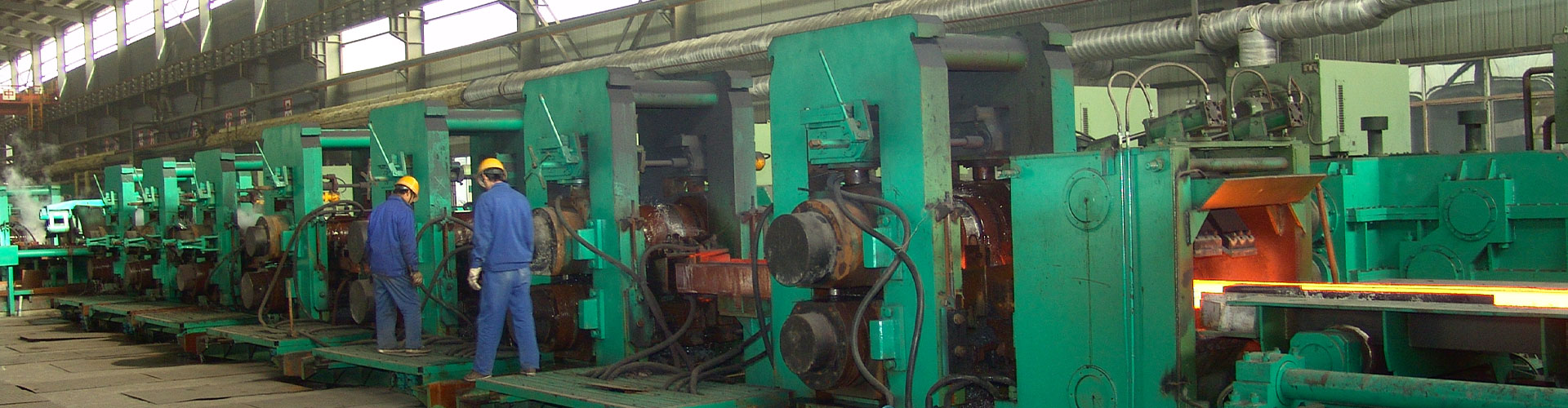
In the steel production process, le support de laminoir (souvent appelé le logement du moulin) is the central backbone of the entire rolling line. It is the heavy structural component responsible for holding the rolls, roll chocks, roulements, screw-down mechanisms, and guide equipment in place. More importantly, it must withstand the immense rolling forces generated when metal is deformed. Because of this, the design, material, and type of the rolling mill stand directly influence the precision of the final product and the stability of the production line.
Core Functions
- Load Bearing: Absorbs the separation force between the work rolls.
- Positioning: Maintains the precise alignment of the rolls and bearings.
- Stability: Dampens vibrations during high-speed rolling.
Classification of Rolling Mill Stands
Based on the manufacturing process and the specific requirements for rigidity and roll changing, stands are generally categorized into two main traditional types: Closed Stands et Open Stands. Modern mills also utilize specialized designs like Pre-stressed and Housing-less stands.
1. Closed Rolling Mill Stand
The closed stand features a unified, integral frame. The top and bottom crossbeams are cast or forged as a single piece with the side columns. This “window” frame design offers exceptional mechanical properties.
- Characteristics: It possesses very high strength and rigidity (rigidité). The deformation under load is minimal.
- Application: It is standard for mills where rolling pressure is extreme or where product tolerance is strict. You will find these in blooming mills, usines de brames, broyeurs à plaques, broyeurs à bandes à chaud, and almost all cold rolling mills.
- Inconvénient: Changing rolls can be slower compared to open types because the rolls must be extracted axially through the window.
2. Open Rolling Mill Stand
In an open stand, the top cover (cap) is separate from the main U-shaped body. The cap can be removed or swung open.
- Characteristics: The rigidity is generally lower than that of a closed stand because of the joint between the cap and the body. Cependant, the primary advantage is the ease of maintenance.
- Application: Primarily used in section mills (like cross-country mills) where rolls need to be changed frequently to produce different shapes.
Connection Types for Open Stands
Since the open stand consists of a separate body and a cap, the method of connecting these two parts is critical for maintaining stiffness. There are four common connection methods used in the industry:
UN. Bolt Connection
The cap is secured with two long heavy-duty bolts. While the structure is simple, the long bolts tend to stretch under heavy load, resulting in lower stand stiffness. Removing nuts for roll changes can also be time-consuming.
B. Ring (Link) Connection
Instead of vertical bolts, a heavy link or ring fits over the column and cap. It is locked with a wedge. This allows for a larger cross-section than a bolt, improving rigidity. Roll changing is generally faster than the bolted type.
C. Pin Connection
The cap is connected using round pins and tightened with wedges. While the connection is compact, the pins can deform along the shear plane under heavy impact. This deformation makes disassembly very difficult, potentially increasing downtime.
D. Wedge Connection (Half-Closed)
This is the most effective design for open stands. The cap is locked to the columns purely via wedges. It offers high stiffness, earning it the name “half-closed stand.” It is widely used due to its balance of rigidity and convenient roll changing.
Modern Stand Variations
To meet the demands for higher precision wire rods and rebars, newer technologies have emerged:
- Pre-stressed Stand: Before rolling begins, the stand is put under tension using hydraulic nuts or tension rods. This eliminates mechanical clearances and increases the stiffness of the system, reducing the “spring” effect during rolling.
- Housing-less Stand (Short Stress Path): This design eliminates the traditional heavy cast housing entirely. The roll chocks are connected directly by tension screws. This shortens the stress loop, making the mill incredibly stiff and compact. It is the standard for modern bar and wire rod finishing blocks.
Technical Comparison Table
The following table provides a quick reference for engineers comparing different housing types based on operational parameters.
| Type de support | Rigidity (Stiffness) | Roll Change Speed | Primary Application |
|---|---|---|---|
| Closed Type | Très élevé | Slow (Axial removal) | Plate, Bande, Blooming |
| Open (Bolt/Pin) | Faible | Modéré | Small Section Mills |
| Open (Wedge/Half-Closed) | Medium-High | Fast | Medium Section Mills |
| Housing-less (Short Stress) | Haut | Very Fast (Cartridge swap) | Bar & Fil machine |
Material and Maintenance Insights
The manufacturing of a rolling mill stand requires high-quality metallurgy. Most large housings are made from cast steel (par ex., SCW480 or similar grades) to prevent cracking under shock loads.
Maintenance Tips:
- Wear Liner Management: The inner surfaces of the stand window are lined with wear plates. These must be checked regularly. If the liner wears unevenly, the roll bearing housing will tilt, causing product defects.
- Corrosion Control: Cooling water is constantly sprayed during rolling. Stands must be painted or coated effectively to prevent rust, which can weaken the structure over decades of use.
- Surface Machining: Au fil du temps, the mounting surfaces for the screw-down mechanism can deform. On-site machining is sometimes required to restore flatness and ensure accurate gauge control.
Selecting the correct rolling mill stand is a balance between the initial investment cost and the required product tolerance. While closed stands offer the ultimate durability for flat products, the flexibility of wedge-locked open stands remains vital for the complex world of shape and section rolling.