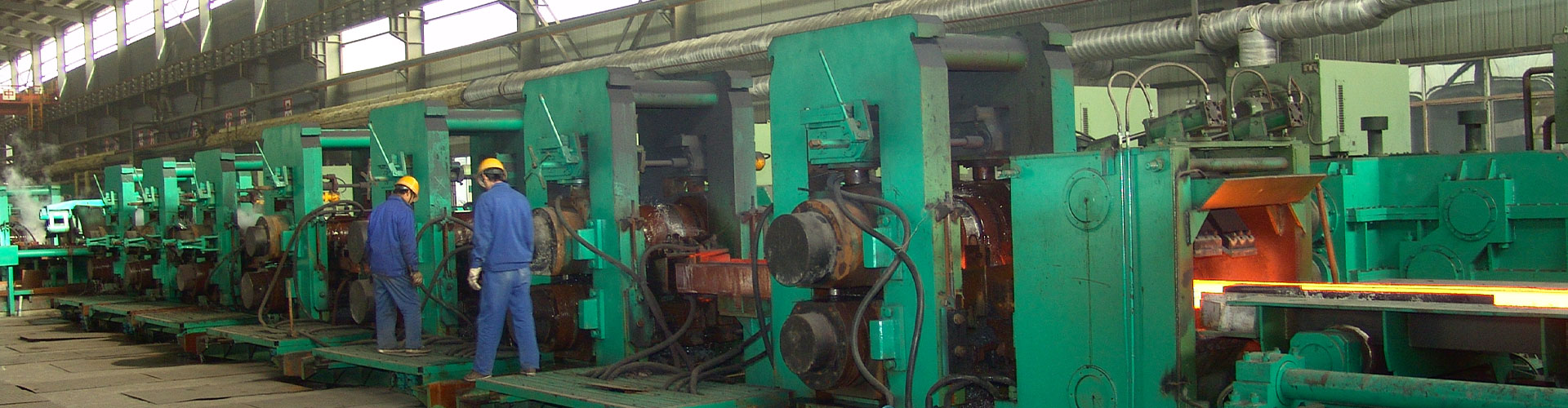
Dans les laminoirs d'acier modernes, incidents inattendus, comme un bris de barre, désalignement du guide, ou blocage des rouleaux : peut causer de graves dommages à l'équipement en aval s'il n'est pas résolu immédiatement.. Pour atténuer ces risques, des dispositifs de sécurité spécialisés sont installés aux points critiques de la chaîne de production. Parmi ceux-ci, le cisaille volante pour les accidents joue un rôle essentiel dans la protection des machines de grande valeur telles que les usines de préfinition et de finition. HANI Intelligent Products a développé un robuste, solution fiable conçue précisément à cet effet.
Qu'est-ce qu'une cisaille volante en cas d'accident?
Souvent appelée cisaille à coupure d'urgence ou cisaille à préhension, ce dispositif est stratégiquement positionné entre les cages de pré-finition et de finition dans un laminoir à chaud de bandes ou de barres. Sa fonction principale est simple mais essentielle: pour couper instantanément la barre d'acier chaude entrante en cas d'urgence, l'empêchant de pénétrer dans les équipements sensibles en aval.
Contrairement aux cisailles volantes conventionnelles utilisées pour la coupe en longueur, ce type de cisaille n’est pas conçu pour une coupe de précision, il est conçu pour la vitesse, fiabilité, et interruption par force brute. Lorsqu'un défaut survient en amont (par ex., une barre cassée faisant une boucle dans le moulin), le système se déclenche en quelques millisecondes, serrer et déchirer la billette en mouvement en utilisant sa propre énergie cinétique.
Comment ça marche: La simplicité rencontre l'efficacité
La conception suit une double lame, mécanisme en forme de ciseaux:
- Une lame est montée au-dessus de la ligne de laminage.
- L'autre est positionné directement en dessous.
- Les deux lames restent rétractées pendant le fonctionnement normal pour éviter les interférences.
- Au signal d'urgence, un vérin pneumatique actionne, entraîner un système de liaison qui force les deux lames à se fermer simultanément sur la barre mobile.
Surtout, la cisaille ne repose pas uniquement sur des arêtes de coupe tranchantes. Plutôt, il exploite le mouvement à grande vitesse de l'acier chaud (se déplaçant généralement à une vitesse de 5 à 15 m/s). Alors que les lames se resserrent, l’élan de la barre vers l’avant génère une immense contrainte de traction au point de pincement, le provoquant à se fracturer proprement – un processus connu sous le nom de « déchirure par autopropulsion ». Cette méthode élimine le besoin d’une force hydraulique massive ou d’une synchronisation complexe.
Principales spécifications techniques
La cisaille volante de HANI pour la protection contre les accidents est conçue pour les environnements difficiles des usines. Vous trouverez ci-dessous les paramètres de performances vérifiés basés sur des installations réelles:
| Paramètre | Valeur / Gamme |
|---|---|
| Nuances d'acier applicables | Carbone, acier faiblement allié (par ex., Q235, SS400, SAE 1045) |
| Température de fonctionnement | >950°C (température de sortie typique du laminoir d'ébauche) |
| Taille du cylindre pneumatique | Φ100/Φ32 × 240 mm (à double effet) |
| Exigence de pression atmosphérique | 0.4 – 0.6 MPa (alimentation en air standard de l'usine) |
| Temps de réponse | ≤ 0.3 secondes entre le signal et la fermeture complète |
| Vitesse maximale de la barre au point de cisaillement | Jusqu'à 12 MS (selon la disposition du broyeur) |
| Construction du cadre | Base en acier soudé avec structure soulagée |
Fonctionnalités de conception importantes dans les opérations réelles
L'expérience sur le terrain montre que la fiabilité dans des conditions extrêmes n'est pas négociable. La conception de HANI intègre plusieurs améliorations pratiques:
Structure mécanique robuste
L'ensemble repose sur une base soudée robuste, minimisant les vibrations et assurant la stabilité de l'alignement au fil des années de cycle thermique. Le corps de la cisaille utilise de l'acier à outils trempé pour les lames, avec inserts remplaçables pour réduire les temps d'arrêt pour maintenance.
Stratégie de lubrification intelligente
Pour survivre sous une forte chaleur, environnement très poussiéreux, le système évite les circuits d'huile complexes. Plutôt:
- Les points de pivotement sur les bras de lame utilisent bagues imprégnées d'huile en bronze fritté—sans entretien pendant des milliers de cycles.
- Toutes les autres articulations (liens, épingles) sont équipés de graisseurs pour une lubrification manuelle lors des arrêts programmés.
Cette approche hybride équilibre longévité et simplicité d'entretien : pas de pompes, filtres, ou conduites sujettes aux fuites.
Actionnement pneumatique: Pourquoi l'air plutôt que l'hydraulique?
Alors que les systèmes hydrauliques offrent une force plus élevée, ils introduisent de la complexité: fuites d'huile, sensibilité à la température, et réponse plus lente lors des démarrages à froid. En revanche, l'air comprimé en usine est déjà disponible dans la plupart des usines. En utilisant un cylindre standard Φ100 à 0.5 MPa délivre une poussée d'environ 3 900 N, soit plus que suffisant pour serrer une barre chauffée au rouge lorsqu'il est combiné avec un levier mécanique. Plus, les systèmes d'air se réinitialisent plus rapidement et ne présentent aucun risque d'incendie à proximité de l'acier chaud.
Installation & Conseils d'intégration
Pour des performances optimales, considérez ces lignes directrices éprouvées sur le terrain:
- Positionnement: Installer 1,5 à 2 mètres en amont du premier stand de finition. Cela fournit suffisamment d'espace pour que la tête de ligne coupée puisse tomber en toute sécurité sans se coincer..
- Alignement: Assurez-vous que l'axe du cisaillement correspond à l'axe de roulement à ± 1 mm près.. Un mauvais alignement provoque une usure inégale de la lame et des coupes incomplètes.
- Logique de contrôle: Intégrez le déclencheur de cisaillement à plusieurs signaux de défaut, par ex., surcharge du moteur, activation du détecteur de boucle, ou boutons d'arrêt d'urgence. Utilisez des capteurs redondants pour éviter les faux négatifs.
- Protection contre le refroidissement: Protégez le cylindre et les liaisons avec des rideaux réfractaires ou des chemises refroidies à l'eau si le rayonnement ambiant dépasse 150°C..
Liste de contrôle de maintenance pour une fiabilité à long terme
Même les équipements les plus résistants ont besoin de soins. Suivez cette routine:
| Tâche | Fréquence | Remarques |
|---|---|---|
| Inspecter l’usure de la lame | Hebdomadaire | Remplacer si le bord s'écaille >3 mm ou écart >1 mm une fois fermé |
| Lubrifier les articulations pivotantes | Chaque 2 semaines | Utilisez de la graisse au lithium haute température (NLGI #2) |
| Vérifier le filtre à air & régulateur | Mensuel | Vidanger les condensats; vérifier la stabilité de la pression à 0.5 MPa |
| Tester le déclencheur d'urgence | Trimestriel | Simuler un signal de défaut; confirmer la fermeture complète dans 0.3 s |
Lorsqu’il est correctement entretenu, ce système peut fonctionner de manière fiable pendant plus de 5 des années sans révision majeure, offrant une tranquillité d'esprit et des économies significatives en évitant les dommages catastrophiques à l'usine. Dans un cas documenté dans une usine de fabrication de barres de 600 000 tonnes/an, l’installation de la cisaille volante HANI pour les accidents a réduit les temps d’arrêt imprévus de 18% rien que la première année, principalement en évitant la destruction des passes de roulis lors des bris de barre.
Pour les ingénieurs d’usine et les responsables des opérations, investir dans une cisaille d’urgence bien conçue n’est pas seulement une question de matériel : il s’agit également de renforcer la résilience de la chaîne de production. Et dans une industrie où chaque minute d'arrêt coûte des milliers de dollars, que la résilience s'amortit plusieurs fois.