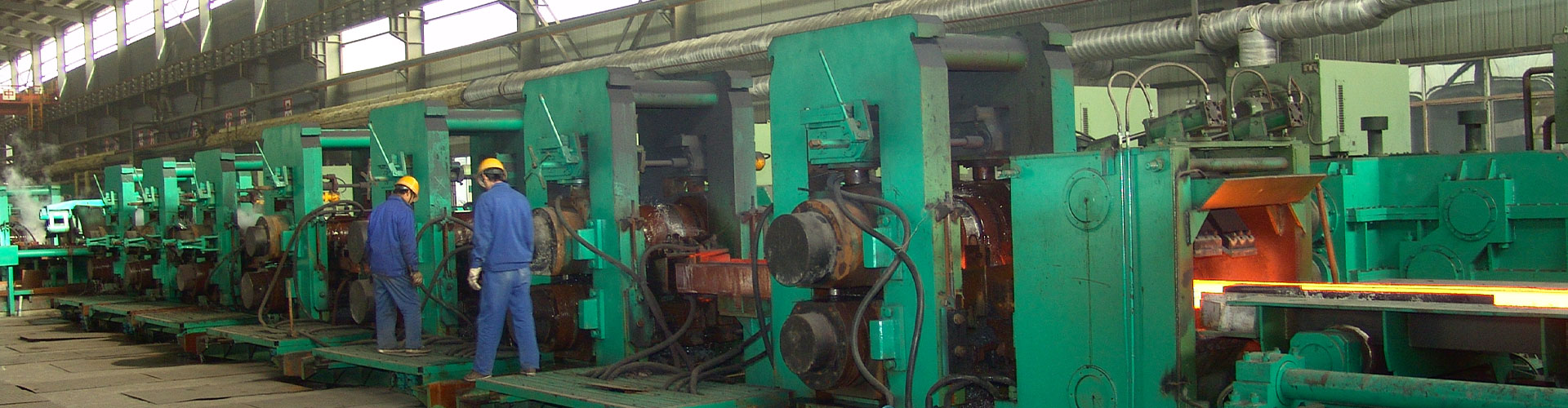
Les laminoirs sont essentiels dans les industries de transformation des métaux, spécialement pour façonner l'acier dans les formes souhaitées comme des tôles, barres, ou des rails. Bien que ces machines soient construites pour durer, leurs performances et leur longévité dépendent fortement d’un bon entretien. Négliger les soins de routine peut entraîner des temps d'arrêt imprévus, mauvaise qualité du produit, et des réparations coûteuses. Ce guide vous guide à travers des étapes pratiques, étapes testées sur le terrain pour entretenir efficacement un laminoir, couvrant tout, des contrôles quotidiens aux stratégies à long terme.
Pourquoi la maintenance est importante pour les laminoirs
Contrairement à de nombreuses machines industrielles qui tombent en panne à cause de pannes structurelles, les laminoirs souffrent généralement d'usure sur des composants spécifiques. Les parties les plus vulnérables comprennent:
- Rouleaux (rouleaux de travail et rouleaux de sauvegarde)
- Vissé (appuyer vers le bas) mécanismes
- Roulements et cales
- Systèmes hydrauliques et de lubrification
- Moteurs d'entraînement et réducteurs
En laminage de bandes à chaud, Par exemple, les rouleaux de travail fonctionnent dans des conditions extrêmes : les températures dépassent souvent 600°C, et les charges mécaniques peuvent dépasser 10,000 kN. Sans entretien constant, fatigue thermique, fissuration superficielle, et l'effritement des rouleaux devient un problème courant.
Tous les jours & Tâches de maintenance hebdomadaires
Commencez par des routines simples mais essentielles que les opérateurs peuvent effectuer pendant les quarts de travail ou les arrêts de courte durée..
1. Inspecter les surfaces des rouleaux
Vérifiez les fissures, bosses, ou une usure inégale. Même des défauts de surface mineurs peuvent être transférés au produit final. Utilisez une lampe de poche et une loupe si nécessaire. Dans les lignes de laminage à chaud, inspecter après chaque changement de bobine.
2. Surveiller les systèmes de lubrification
S'assurer que la pression et les débits d'huile répondent aux spécifications. La plupart des usines modernes utilisent des systèmes de lubrification centralisés avec minuteries automatiques. Vérifiez que les buses ne sont pas obstruées et que l'huile n'est pas contaminée par de l'eau ou des fines métalliques..
Spécifications typiques des lubrifiants pour les roulements à col roulé:
| Composant | Type de lubrifiant | Viscosité (ISOS VG) | Débit (L/min) |
|---|---|---|---|
| Roulements de travail | Huile minérale avec additifs EP | 68–100 | 3–5 |
| Roulements de secours | Huile synthétique (Basé sur PAO) | 150–220 | 5–8 |
| Mécanisme à vis | Graisse (complexe de lithium) | NLGI #2 | Relubrification manuelle tous les 8 heures |
3. Vérifier la pression hydraulique & Fuites
Les systèmes hydrauliques contrôlent l’écart entre les rouleaux, flexion, et l'équilibrage. Inspecter les tuyaux, raccords, et cylindres pour fuites. Une baisse de pression du système, même de 5 %, peut affecter la précision de l'épaisseur de la bande.. Enregistrez les pressions de base chaque semaine pour l’analyse des tendances.
Mensuel & Entretien approfondi trimestriel
Ces tâches nécessitent des temps d'arrêt planifiés et des techniciens qualifiés.
1. Retrait et inspection des rouleaux
Supprimez les rouleaux de travail et de sauvegarde tous les 30 à 60 jours (en fonction du volume de production). Mesurez le diamètre du rouleau en plusieurs points pour détecter l'usure du cône ou du canon.. Utilisez des tests par ultrasons pour vérifier les fissures souterraines, en particulier dans les rouleaux à haute teneur en carbone ou en alliage.
Limites d'usure acceptables (exemple pour un 600 rouleau de travail de mm de diamètre):
- Usure radiale maximale: 3.0 mm
- Fausse rondeur maximale: 0.15 mm
- Rugosité de la surface (Râ): ≤ 0.8 µm après broyage
2. Alignement de la boîte de vitesses et de l'accouplement
Un mauvais alignement provoque des vibrations, chaleur, et défaillance prématurée des roulements. Utilisez des outils d'alignement laser pour vous assurer que le décalage de couplage est inférieur 0.05 mm et angulaire inférieure à 0,1°. Resserrez les boulons de fondation selon les spécifications du fabricant (généralement 80 à 90 % de la limite d'élasticité)..
3. Rinçage du système de refroidissement
Les buses de refroidissement des rouleaux sont souvent obstruées par du tartre ou des débris. Débrancher et rincer tout le circuit avec une solution détartrante (par ex., 5% acide citrique à 60°C pour 30 minutes), puis rincer abondamment à l'eau claire. Vérifiez l'uniformité du motif de pulvérisation à l'aide de papier thermique ou d'imagerie infrarouge..
Considérations particulières pour les laminoirs à chaud
Les broyeurs à chaud sont confrontés à des défis uniques en raison des températures élevées et des cycles thermiques. Voici comment les gérer:
Ne jamais tremper les petits pains chauds avec de l'eau
Une erreur courante consiste à pulvériser de l'eau froide directement sur les rouleaux chauffés au rouge. (>500°C) pour accélérer les changements. Cela provoque une contraction rapide, conduisant à des fissures dues au choc thermique ou à une distorsion permanente. Plutôt:
- Utilisez un brouillard d'air à basse pression pour un refroidissement progressif
- Laisser refroidir naturellement pendant au moins 15 à 20 minutes avant le contact avec l'eau
- Si un refroidissement d’urgence est inévitable, appliquer de l'eau par petites rafales avec rotation
Soulager le stress mécanique pendant les temps d'arrêt
Lorsque le moulin reste inutilisé pendant plus de 2 heures, desserrer légèrement le mécanisme à vis (0.5–1,0mm). Cela réduit la précharge sur les roulements et empêche le Brinell. Aussi, relâcher la pression d'équilibrage hydraulique pour éviter la déformation du joint.
Stratégies à long terme pour prolonger la durée de vie des rouleaux
La planification proactive permet d'économiser des milliers de dollars en coûts de remplacement de rouleaux.
Mettre en œuvre un calendrier de rotation des rouleaux
Faites pivoter les rouleaux entre les supports pour répartir l'usure uniformément. Pour un broyeur tandem à 4 cages, une rotation typique pourrait être:
| Faire du vélo | Rester 1 | Rester 2 | Rester 3 | Rester 4 |
|---|---|---|---|---|
| Initial | Nouveau rouleau A | Nouveau rouleau B | Nouveau rouleau C | Nouveau rouleau D |
| Après 500 tonnes | Rouleau B | Rouleau C | Rouleau D | Lancer A (rebroyer) |
Suivre les indicateurs de performances
Tenir des journaux de:
- Tonnes roulées par jeu de rouleaux
- Nombre de rebroyés avant rejet
- Incidents de rupture ou d’effritement des rouleaux
- Consommation de lubrifiant et niveaux de contamination
Au fil du temps, ces données révèlent des tendances, comme une nuance d'acier spécifique provoquant une usure plus rapide, et aident à optimiser les intervalles de maintenance.
Erreurs courantes à éviter
- Ignorer les contrôles préalables au démarrage: Vérifiez toujours l’alignement et la lubrification des rouleaux avant d’augmenter la vitesse..
- Utiliser une graisse incorrecte: Le mélange de graisses à base de lithium et de calcium peut provoquer la formation de boues.
- Ignorer les tendances vibratoires: UN 20% l'augmentation des vibrations du boîtier de roulement précède souvent la défaillance.
- Boulons de cale trop serrés: Un couple excessif déforme les sièges de roulement : suivez les spécifications de couple avec précision.
Cohérent, une maintenance réfléchie transforme un laminoir d'un centre de coûts en un actif de production fiable. En combinant la vigilance des opérateurs avec des interventions techniques programmées, les broyeurs peuvent prolonger la durée de vie de leurs composants de 20 à 30 % et réduire considérablement les arrêts imprévus. La clé est la discipline: de petites actions répétées correctement chaque jour évitent des pannes majeures sur toute la ligne.