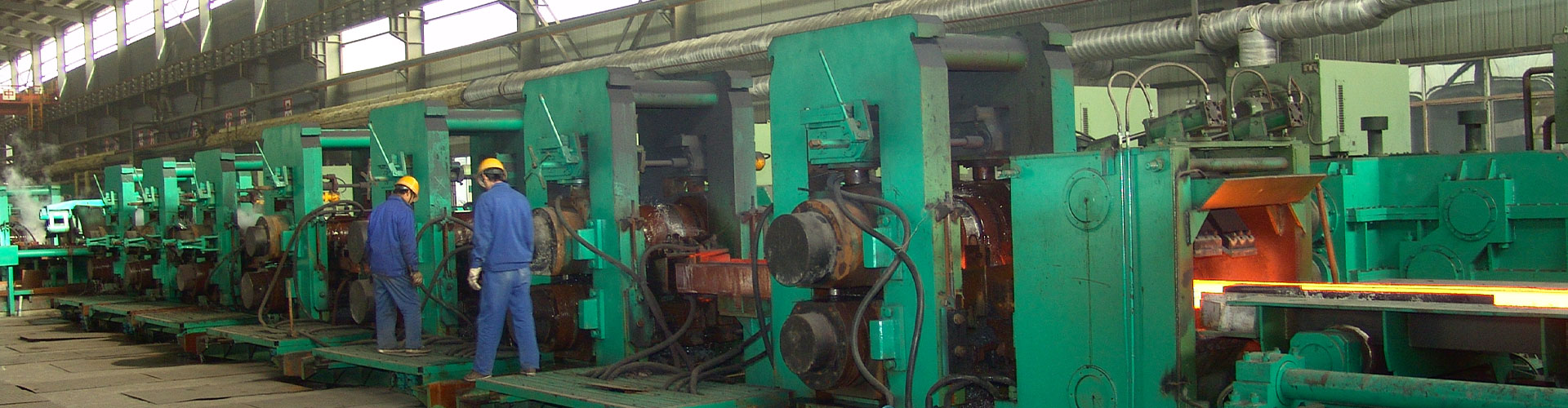
In the heavy industry sector, particulièrement dans laminage d'acier, the machinery faces extreme conditions. The loads are massive, the temperatures are high, and the demand for precision is non-negotiable. At the heart of every rolling mill stand lies the bearing. Traditional bearings often struggle to balance the need for durability during high-speed operations and protection during low-speed startups. This is where the hydrostatic-dynamic bearing comes into play. It is a smart engineering solution designed to solve specific pain points in modern rolling mills.
Why Traditional Bearings Struggle in Steel Rolling
To understand the value of this technology, we first need to look at the limitations of standard bearings used in laminage d'acier équipement.
- The Dynamic Bearing Problem: Pure dynamic bearings rely on the rotation of the shaft to pull oil in and create a wedge (an oil film). This works perfectly at high speeds. Cependant, during startup, braking, or low-speed inching, there isn’t enough speed to generate this film. The result? Metal-on-metal contact, severe wear, and potential damage to the roll neck.
- The Static Bearing Problem: Hydrostatic bearings solve the low-speed issue by using an external pump to force high-pressure oil into the bearing, lifting the shaft regardless of speed. Cependant, this requires a complex, high-pressure hydraulic system running continuously. It consumes a lot of energy, and if the hydraulic system fails, the bearing fails immediately.
The Hybrid Solution: Comment ça marche
The hydrostatic-dynamic bearing is effectively a “hybrid” system. It combines the best features of both types while eliminating their weaknesses. This technology has been successfully implemented in advanced production lines, such as the 1700 cold rolling mills found in major steel plants.
The structure involves modifying a standard dynamic bearing by adding high-pressure oil pockets (recesses) in the load-carrying zone. The operation logic is smart and automated:
Operational Phases
- Startup & Low Speed: The high-pressure static system is activated. Oil is forced into the pockets, lifting the rolling mill roll neck and separating it from the bearing bush before rotation even begins. Friction is near zero.
- Acceleration: As the mill speeds up, the rotation naturally begins to generate a dynamic oil film.
- Stable High Speed: Once the speed reaches a set threshold where the dynamic film is strong enough to support the load, the high-pressure static system automatically shuts off. The bearing now runs as a pure dynamic bearing.
Technical Comparison: Old vs. Nouveau
For engineers and plant managers, the data speaks louder than descriptions. Below is a comparison of performance characteristics relevant to laminage d'acier environments.
| Mesure de performances | Pure Dynamic Bearing | Pure Hydrostatic Bearing | Hydrostatic-Dynamic (Hybride) |
|---|---|---|---|
| Startup Friction | Haut (Metal contact) | Near Zero | Near Zero |
| Consommation d'énergie | Faible | Haut (Continuous Pump) | Modéré (Pump acts briefly) |
| System Reliability | Haut | Moyen (Dependant on pump) | Très élevé |
| Capacité de charge (Vitesse) | Increases with speed | Constant | Excellent across full range |
Critical Parameters for Production Reference
Implementing these bearings in a laminage d'acier mill requires precise control of parameters. Based on typical setups for intermediate or finishing stands in rolling mills, here are reference values that ensure stability.
Static Supply Pressure
10 – 20 MPa
This high pressure is required only during startup to lift the heavy roll neck. Once the speed threshold is met, this drops to zero.
Switching Speed
1.5 – 2.5 MS
Linear velocity of the roll surface. Below this speed, static pressure is active. Above this, dynamic lubrication takes over.
Advantages in Daily Operations
For the maintenance team and the production manager, the switch to hydrostatic-dynamic bearings brings tangible benefits beyond just “theory.”
1. Extended Bearing Life:
The majority of wear in a rolling mill bearing occurs during the first few seconds of startup and the last few seconds of stopping. By eliminating contact during these phases, the bearing life is extended significantly, reducing the frequency of costly shutdowns for replacements.
2. Reduced Power Demand on Motor Startup:
Starting a rolling mill under load with high friction requires massive torque. By “floating” the shaft on high-pressure oil before rotation, the starting torque is drastically reduced. This puts less strain on the main drive motors and electrical systems.
3. Safety Backup:
In a purely hydrostatic system, a pump failure is catastrophic. In this hybrid system, if the high-pressure pump fails during high-speed operation, the bearing simply continues to operate as a dynamic bearing. This redundancy is crucial for continuous laminage d'acier production lines.
Practical Installation Notes
When retrofitting or installing these units, precision is key. The oil pockets (recesses) must be positioned exactly in the load zone. If the pockets are too large, they reduce the dynamic load capacity. If they are too small, they cannot generate enough lift during startup.
En outre, the control system logic must be robust. Sensors detecting the RPM of the roll must trigger the high-pressure pump immediately if the speed drops below the critical threshold. This prevents “wiping” of the bearing surface during emergency stops or process deceleration.
Summary for Production Floor: This technology represents a mature, reliable upgrade for modern rolling mills. By utilizing high pressure only when needed (basse vitesse) and relying on efficient dynamic film for the bulk of operation, mills achieve better efficiency and longer maintenance intervals.