
Understanding the Layout of a Continuous Wire Tandem Rolling Mill
When it comes to modern steel production, one of the most efficient and widely used systems for manufacturing high-quality wire rod is the continuous wire tandem rolling mill. This system has become the backbone of high-speed wire rod manufacturing, especially in plants aiming for high output, consistent quality, and low energy consumption.
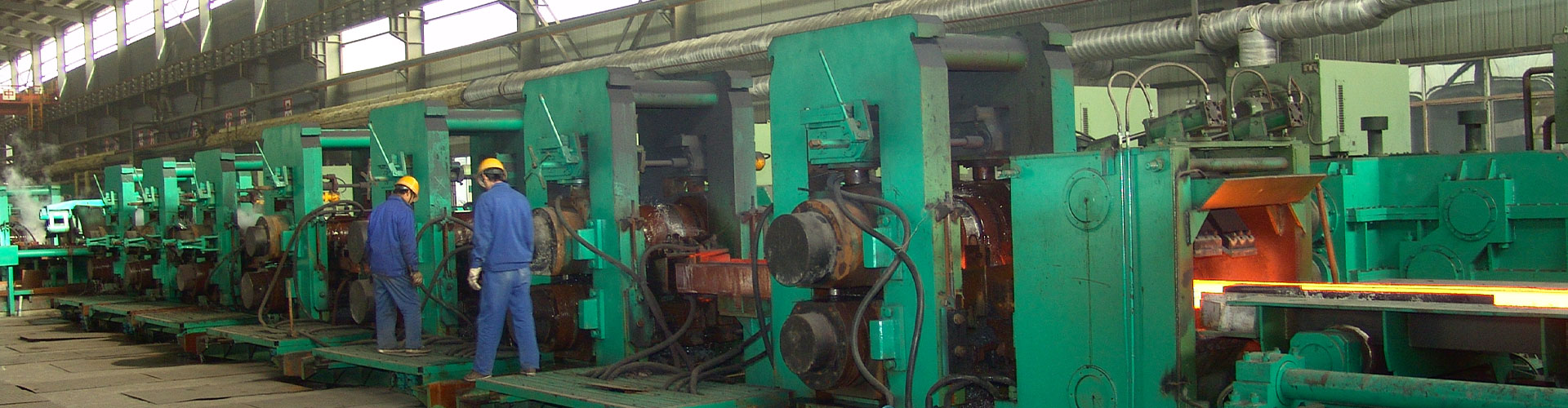
Unlike older rolling methods that relied on manual transfers or non-continuous setups, today’s wire tandem rolling mill operates as a fully integrated line where the steel bar passes through multiple stands without stopping. Chaque support réduit légèrement la section transversale, gradually shaping the material into the final wire diameter at speeds exceeding 100 mètres par seconde.
How Does a Full-Continuous Wire Rod Mill Work?
The term “full-continuous” means that every rolling stand is driven independently and synchronized so that the bar moves forward smoothly from one stand to the next without piling, looping, or manual intervention. This setup allows for uninterrupted production over long periods — often 24/7 in large mills.
In a typical continuous wire tandem rolling mill, the entire process is divided into four main sections:
- Moulin à ébourignage – where large billets are reduced in size
- Moulin intermédiaire – further reduction with improved dimensional control
- Pre-Finish Mill – prepares the bar for high-speed finishing
- Finish Mill – produces the final wire dimension at very high speed
Each section plays a critical role in ensuring the final product meets tight tolerances, has uniform mechanical properties, and is suitable for downstream applications like wire drawing, spring making, or galvanizing.
Configuration standard: The 28-Stand Tandem Layout
One of the most common configurations in modern wire rod production is the 28-stand continuous tandem mill. This layout has been refined over decades and offers an excellent balance between productivity, flexibility, and maintenance efficiency.
| Section | Nombre de stands | Rolling Speed Range (MS) | Fonction & Caractéristiques |
|---|---|---|---|
| Moulin à ébourignage | 6 se tient | 0.5 – 3.0 | Reduces billet from 130–160 mm down to ~50 mm; uses box or oval-square pass design |
| Moulin intermédiaire | 6 se tient | 3.0 – 8.0 | Further reduces section; improves surface quality and dimensional accuracy |
| Pre-Finish Mill | 6 se tient | 8.0 – 25.0 | Transitions to high-speed rolling; uses twist-free stands with precise guide systems |
| Finish Mill | 10 se tient | 45.0 – 105.0 | High-speed no-twist rolling; produces final wire size (5–16 mm); water-cooled rolls |
This 6+6+6+10 configuration is widely adopted because it allows smooth speed progression and minimizes tension fluctuations between stands. The use of no-twist rolling technology in the finish mill ensures that the wire does not rotate between passes, which improves dimensional consistency and reduces wear on guides and rolls.
Evolution: Le 8+4 Finish Mill with Size-Reducing & Sizing Units
Au cours des dernières années, a new trend has emerged in high-end wire rod mills — the 8+4 finish mill layout. Instead of using 10 stands de finition, this design uses only 8 high-speed no-twist stands followed by 4 additional stands known as reducing and sizing units (RSU).
The purpose of the RSU is to fine-tune the final wire diameter without affecting the upstream process stability. These units operate under low draft conditions and are designed for ultra-precise control of the outer diameter, often achieving tolerances within ±0.1 mm.
Par exemple, a mill producing tire cord wire or precision spring steel may require extremely tight dimensional control. Le 8+4 configuration allows such mills to reach a maximum speed of up to 120 MS, with a guaranteed operating speed of 112 MS, while maintaining excellent roundness and surface finish.
Key Advantages of a Continuous Tandem Setup
Why do most modern wire rod producers choose a full-continuous tandem layout over other options? Here are the main benefits backed by real-world performance data:
- Higher productivity: A single-line wire tandem rolling mill can produce between 50 à 60 millions de tonnes par an, depending on billet size and product mix.
- Efficacité énergétique: Continuous operation reduces start-stop losses and allows better heat utilization. Specific energy consumption can be as low as 45–55 kWh/ton in optimized setups.
- Better product quality: With closed-loop gauge control and advanced cooling strategies (like Stelmor or Schmidt cooling), mechanical properties such as tensile strength, ductilité, and microstructure uniformity are significantly improved.
- Lower labor cost: Automation reduces the need for manual handling. One operator can monitor the entire line via HMI (Interface Homme-Machine).
- Flexibility in product range: By adjusting roll gaps, vitesses, et taux de refroidissement, the same mill can produce wire rod from 5.5 mm à 16 mm in diameter, covering grades from low-carbon drawing wire to high-carbon spring steel.
Typical Production Parameters You Can Expect
To give you a clearer picture of what a real-world continuous wire tandem rolling mill can achieve, here are some actual operating parameters from modern installations:
| Paramètre | Valeur / Gamme | Remarques |
|---|---|---|
| Taille des billettes | 130×130 mm to 160×160 mm | Longueur: 6–12 m; Poids: 1.8–3.5 tons |
| Température d'entrée | 1050 – 1150 °C | After reheating furnace |
| Finish Rolling Temp | 900 – 1000 °C | Controlled for optimal phase transformation |
| Diamètre final du fil | 5.5 – 16 mm | Le plus courant: 6.5 mm, 8 mm, 12 mm |
| Vitesse de roulement maximale | 95 – 120 MS | Depends on finish mill type (10-stand vs 8+4) |
| Capacité annuelle | 500,000 – 600,000 tonnes | Single line, 330 operating days/year |
| Méthode de refroidissement | Stelmor or Schmidt | For controlled phase transformation and strength adjustment |
Roll Pass Design and Its Impact on Performance
One of the most critical aspects of any wire tandem rolling mill is the conception de passage de rouleau. This refers to the shape of the grooves cut into each roll, which determines how the steel is deformed at each stage.
In the roughing and intermediate sections, common pass sequences include:
- Box-Oval-Square – widely used for its simplicity and good fill control
- Elliptical-Oval – reduces wear and improves surface quality
- Diamond-Square – less common now due to higher roll wear
In the pre-finish and finish mills, the pass design shifts toward oval-round ou oval-square-round sequences to ensure smooth transition into high-speed no-twist stands.
Tip: Proper roll pass design not only affects dimensional accuracy but also influences roll life, power consumption, and the risk of bar breakage. Mills that frequently change product sizes should use modular roll chocks and quick-change systems to minimize downtime.
Cooling After Rolling: Why It Matters
After exiting the final stand, the wire rod enters a controlled cooling system. This step is crucial because it directly affects the microstructure and mechanical properties of the steel.
The two most common cooling methods are:
- Stelmor Cooling – used for general-purpose wire rod like drawing quality or welding wire. The wire is coiled on a conveyor and cooled in still or forced air. Cooling rate is adjustable based on fan speed and conveyor speed.
- Schmidt Cooling – a more advanced system that uses water mist or spray for faster and more uniform cooling. Ideal for high-carbon or alloy steels requiring fine pearlite or bainitic structures.
Par exemple, a wire rod grade like SWRH82B (used in tire cords) requires a fine pearlitic structure with interlamellar spacing below 0.2 µm. This can only be achieved through precise temperature control during cooling.
Maintenance and Operational Tips for Long-Term Reliability
Running a continuous wire tandem rolling mill at high speed places significant stress on equipment. To ensure long-term reliability and avoid unplanned stops, consider these practical tips:
- Regular roll inspection: Vérifiez les fissures, porter, and thermal fatigue every 8–12 hours during continuous operation.
- Lubrication management: Use high-temperature gear oils and ensure all bearings are properly greased. Water cooling lines should be flushed regularly to prevent scaling.
- Guide alignment: Misaligned guides cause edge cracking and increase the risk of bar breakage. Use laser alignment tools during setup.
- Surveillance des vibrations: Install sensors on gearboxes and motors to detect early signs of imbalance or bearing failure.
- Data logging: Record rolling force, actuel, température, and speed for each stand. This helps in troubleshooting and optimizing future runs.
Future Trends in Wire Rod Mill Design
L'évolution du wire tandem rolling mill is far from over. As demand grows for higher strength, better formability, and greener production, several innovations are gaining traction:
- Compact mill designs: New layouts with fewer stands (par ex., 18–22 stands) using larger reductions per pass, reducing footprint and capital cost.
- Smart rolling systems: Integration of AI-based prediction models to adjust roll gaps and speeds in real time based on incoming billet conditions.
- Hybrid cooling lines: Combining Stelmor and Schmidt principles for greater flexibility across steel grades.
- Electrification and digital twins: Full digital replication of the mill for simulation, entraînement, and predictive maintenance.
These advancements are making modern continuous wire tandem rolling mills not just faster and more productive, but also smarter and more sustainable.
Final Thoughts for Engineers and Plant Managers
If you’re involved in wire rod production, understanding the full layout and operation of a wire tandem rolling mill is essential. From the initial billet entry to the final coil collection, every component must work in harmony to deliver high-quality output at competitive costs.
Whether you’re evaluating a new mill installation, optimizing an existing line, or training your team, focusing on the integration of mechanical design, contrôle de processus, and maintenance practices will yield the best results. The 28-stand configuration remains a solid choice, but the 8+4 finish mill with reducing and sizing units is setting new benchmarks for precision and speed.
As steel markets continue to demand tighter tolerances and more specialized grades, the role of advanced continuous rolling technology will only grow. Staying informed about real operating data, proven configurations, and emerging trends will keep your operation ahead of the curve.