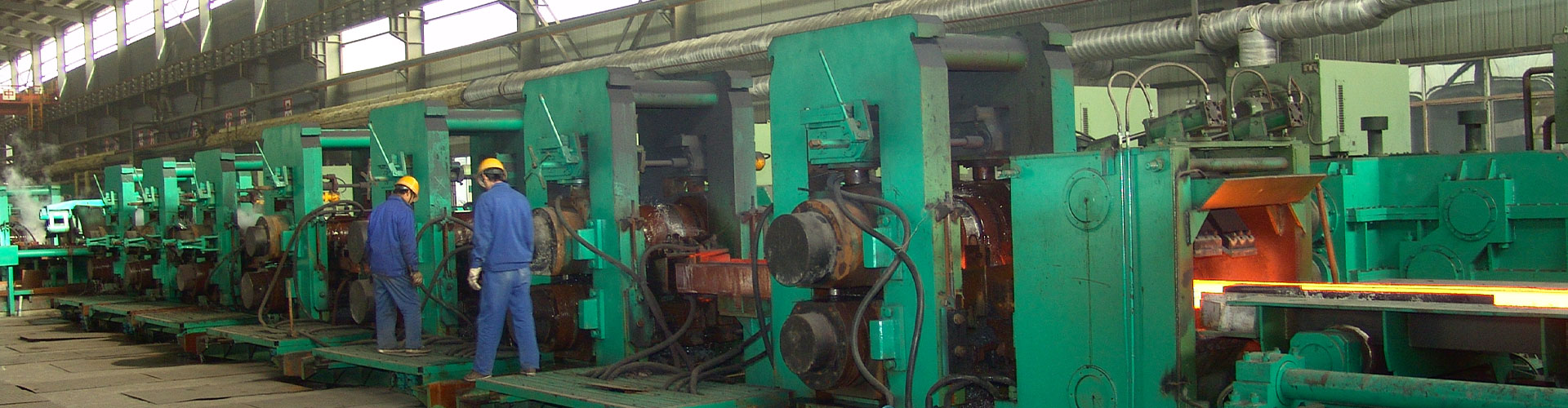
Introduction au laminoir à boucle verticale
Le laminoir à boucle verticale est un élément essentiel dans l'industrie du laminage des métaux, en particulier dans les procédés de laminage à chaud. Il joue un rôle central dans le contrôle de la tension et de la vitesse des bandes métalliques lors du laminage., garantir la qualité des produits et la stabilité des processus. Cet équipement est largement utilisé dans les aciéries et les installations de transformation des métaux pour maintenir un flux continu de bandes et réduire les défauts..
En substance, la boucle verticale fait office de tampon et de régulateur de tension entre les différentes cages de laminage, permettant un contrôle précis de l’allongement et de l’épaisseur de la bande. L'intégration de laminoirs à boucle verticale améliore l'efficacité globale des lignes de laminage, en particulier dans les laminoirs à bandes à chaud.
Principe de fonctionnement du laminoir à boucle verticale
La boucle verticale est formée en guidant la bande métallique à travers une série de rouleaux disposés verticalement., créer une boucle qui peut s'étendre ou se contracter en fonction des variations de vitesse de bande. Cette boucle absorbe les variations de vitesse entre les cages de laminage amont et aval, maintenir une tension constante.
En ajustant la hauteur de la boucle, le laminoir à boucle verticale contrôle dynamiquement la tension de la bande. Ce contrôle de tension est essentiel pour éviter la rupture de la bande, réduire les défauts de surface, et améliorer la précision dimensionnelle. La boucle est généralement surveillée par des capteurs et contrôlée par un système de rétroaction intégré à l’automatisation du laminoir..
Composants clés et caractéristiques de conception
- Rouleaux à boucle: Rouleaux conçus avec précision qui guident la bande verticalement, conçu pour minimiser la friction et l'usure.
- Capteurs de tension: Appareils qui mesurent la tension de la bande et la hauteur de la boucle en temps réel.
- Système d'entraînement: Moteurs et boîtes de vitesses qui ajustent la hauteur de la boucle et la vitesse de la bande de contrôle.
- Système de contrôle: Automatisation basée sur PLC ou DCS pour une régulation de tension et de vitesse en temps réel.
Des fabricants leaders comme Hani Tech fournir des solutions avancées de boucle verticale pour laminoirs, intégrant une conception mécanique robuste avec des systèmes de contrôle intelligents pour optimiser les performances de roulement.
Paramètres techniques du laminoir à boucle verticale
Comprendre les paramètres techniques est essentiel pour sélectionner et optimiser un laminoir à boucle verticale. Vous trouverez ci-dessous un tableau détaillé résumant les paramètres typiques basés sur les normes de l'industrie et les offres de produits HANI TECH.:
| Paramètre | Gamme typique | Unité | Description |
|---|---|---|---|
| Plage de réglage de la hauteur de la boucle | 0.5 – 3.0 | mètres | Plage de déplacement vertical de la boucle pour absorber les variations de vitesse de bande |
| Largeur de bande | 800 – 2200 | mm | Largeur maximale de la bande métallique traitée |
| Épaisseur de bande | 1.0 – 25.0 | mm | Plage d'épaisseur de bande compatible avec la boucle verticale |
| Diamètre du rouleau de boucle | 300 – 600 | mm | Diamètre des rouleaux guidant la bande dans la boucle verticale |
| Vitesse de bande maximale | 0 – 120 | MS | Vitesse de bande maximale prise en charge par le système de boucle verticale |
| Précision du contrôle de tension | ±1 | % | Précision de régulation de tension lors du laminage |
| Puissance du moteur d'entraînement | 15 – 75 | kW | Puissance nominale des moteurs contrôlant la hauteur de boucle et la vitesse de bande |
| Type de système de contrôle | API / DCS | – | Système d'automatisation utilisé pour le contrôle de boucle |
| Matériau du rouleau à boucle | Acier à haute résistance / Acier allié | – | Matériau utilisé pour les rouleaux pour assurer la durabilité et la résistance à l'usure |
| Température de fonctionnement | Jusqu'à 1200 | °C | Température maximale de la bande chaude traitée |
| Résolution du retour de position de boucle | 0.1 | mm | Précision des capteurs de mesure de hauteur de boucle |
| Plage de tension de bande | 5 – 150 | kN | Plage de tension de bande contrôlée par la boucle verticale |
Applications du laminoir à boucle verticale
Le laminoir à boucle verticale est principalement utilisé dans les laminoirs à bandes à chaud, lignes de laminage à froid, et usines de finition. Sa fonction principale est de maintenir la tension de la bande et la synchronisation de la vitesse entre les cages de laminage., ce qui est crucial pour:
- Prévention de la rupture des bandes lors du laminage à grande vitesse
- Réduire la variation de l'épaisseur des bandes et les défauts de surface
- Améliorer la précision dimensionnelle et la planéité
- Améliorer la productivité en permettant des vitesses de roulement plus élevées
En outre, le système de boucle verticale est essentiel dans les processus de laminage avancés tels que le laminage contrôlé et les traitements thermomécaniques, où un contrôle précis de la tension affecte la microstructure et les propriétés mécaniques du produit final.
Intégration avec l'équipement auxiliaire
Les fabricants aiment Hani Tech fournissent également des équipements complémentaires tels que des fours de fusion et des systèmes de manutention de bandes qui s'intègrent parfaitement aux laminoirs à boucle verticale. Cette intégration garantit un processus de production rationalisé depuis la fusion des matières premières jusqu'au laminage final de la bande..
Par exemple, la synergie entre la boucle verticale et le système de refroidissement par bandes permet des vitesses de refroidissement contrôlées, ce qui est essentiel pour obtenir les propriétés métallurgiques souhaitées.
Entretien et dépannage
Un bon entretien du laminoir à boucle verticale est essentiel pour garantir une fiabilité et des performances à long terme. Les principales pratiques de maintenance comprennent:
- Inspection et lubrification régulières des rouleaux à boucles pour éviter l'usure et réduire la friction
- Étalonnage des capteurs de tension et des appareils de mesure de hauteur de boucle
- Vérification du moteur d'entraînement et de la boîte de vitesses pour détecter les vibrations et la surchauffe
- Mises à jour logicielles et diagnostics du système de contrôle pour maintenir la précision de l'automatisation
Problèmes courants tels que le glissement des bandes, oscillations de boucle, ou les fluctuations de tension peuvent souvent être attribuées à des défauts de capteur, désalignement mécanique, ou erreurs du système de contrôle. La détection précoce et les actions correctives minimisent les temps d'arrêt et les pertes de production.
Tendances et innovations futures
Avec la demande croissante de produits en acier de meilleure qualité et de fabrication économe en énergie, le laminoir à boucle verticale évolue avec des innovations telles que:
- Technologies de capteurs avancées: Utilisation de capteurs laser et optiques pour une mesure plus précise de la hauteur et de la tension de la boucle.
- Intégration de l'IA et de l'apprentissage automatique: Algorithmes de maintenance prédictive et de contrôle adaptatif pour optimiser les paramètres de roulage en temps réel.
- Entraînements économes en énergie: Mise en place de servomoteurs et de systèmes de freinage régénératifs pour réduire la consommation d'énergie.
- Conceptions modulaires: Faciliter les mises à niveau et la personnalisation pour différentes configurations de laminoirs.
Ces avancées sont soutenues par des leaders de l'industrie comme HANI TECH, qui développe continuellement des systèmes à boucle verticale de laminoirs de pointe pour répondre aux besoins changeants de l'industrie métallurgique.
Conclusion
Le laminoir à boucle verticale est une technologie indispensable dans les processus modernes de laminage des métaux, fournissant un contrôle de tension et une synchronisation de vitesse essentiels. Son design sophistiqué, combiné à une automatisation précise, garantit une production de bandes de haute qualité et une efficacité opérationnelle.
En comprenant ses principes de fonctionnement, paramètres techniques, et les exigences d'entretien, les professionnels de l'industrie peuvent optimiser les performances des laminoirs et s'adapter aux futures tendances technologiques. Pour des solutions complètes et une assistance experte, des entreprises comme Hani Tech proposer des équipements de laminoirs à boucle verticale de pointe et des systèmes auxiliaires adaptés à diverses applications métallurgiques.