Le cœur de toute opération moderne de laminage de métaux réside dans sa capacité à réduire avec précision et efficacité la section transversale d’une pièce métallique.. Au cœur de ce processus se trouve bloc de réduction de taille de laminoir, un ensemble sophistiqué qui représente une évolution significative par rapport aux broyeurs monocage. Cet article propose un examen détaillé de bloc de réduction de taille de laminoir, ses composants, principes de travail, et les paramètres critiques qui définissent sa performance. Comprendre cette technologie est essentiel pour optimiser les lignes de production de barres, fil, et roulement de section.
Qu'est-ce qu'un bloc de réduction de taille de laminoir?
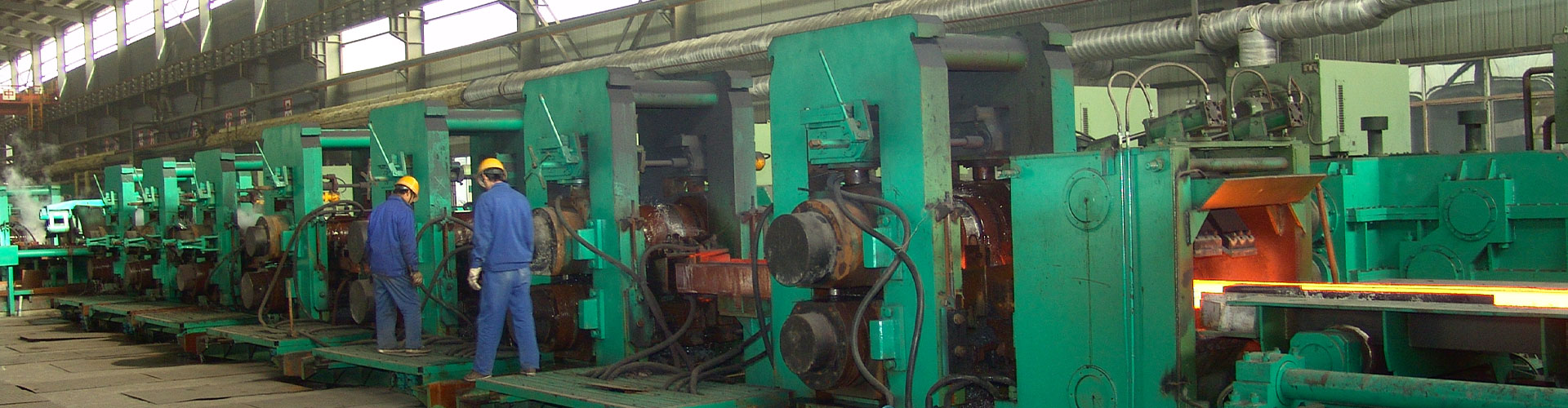
UN bloc de réduction de taille de laminoir, souvent simplement appelé bloc réducteur ou broyeur à mini-blocs, est un compact, unité de roulement multi-cages conçue pour obtenir une réduction transversale significative en un seul, passe continue. Contrairement aux laminoirs traditionnels où les cages sont espacées, les tribunes dans un bloc de réduction de taille de laminoir sont disposés de manière serrée, séquence consécutive. Cet arrangement à haute densité permet une séquence continue et rapide de réductions, ce qui le rend exceptionnellement efficace pour les cages intermédiaires et de finition d'une ligne de laminage. La fonction principale de ce bloc est de transformer une barre ou une billette entrante plus grande en une barre ou une billette plus petite., fini, ou produit semi-fini avec des tolérances dimensionnelles serrées et une qualité de surface améliorée.
La conception d'un bloc de réduction de taille de laminoir est un domaine d’expertise clé pour des entreprises comme HANI TECH, spécialisée dans la conception et la fabrication d'équipements de laminoirs et de pièces auxiliaires. Leur expertise garantit la robustesse de ces blocs, fiable, et capable de fonctionner à grande vitesse.
Composants de base et intégration avec le support du laminoir
L'efficacité d'un bloc de réduction de taille de laminoir repose sur l’intégration transparente de ses composants principaux, chacun jouant un rôle essentiel. Le plus critique d'entre eux est le support de laminoir. Dans un bloc réducteur, multiple supports de laminoir sont montés sur un seul, cadre rigide. Ces stands peuvent être horizontaux, verticale, ou une combinaison des deux (par ex., alternance de stands horizontaux et verticaux), ce qui permet une déformation sous différents angles sans avoir besoin de tordre la pièce entre les supports. Cela augmente non seulement l'efficacité, mais améliore également l'ovalité et la précision dimensionnelle du produit final..
Chaque support de laminoir à l'intérieur du bloc abrite une paire de rouleaux, quels sont les points de contact direct avec le métal. Les rouleaux sont entraînés par un moteur puissant, souvent via une boîte de vitesses spécialement conçue pour le bloc. La précision du système d'entraînement est primordiale pour maintenir une vitesse constante sur tous les stands, empêchant l'accumulation de tension ou de compression dans le matériau laminé. En outre, le bloc intègre un équipement de guidage sophistiqué pour diriger avec précision le stock d'un stand à l'autre, assurer la stabilité tout au long du processus de réduction. Les systèmes auxiliaires de refroidissement et de lubrification font également partie intégrante du fonctionnement du bloc., gérer l'immense chaleur générée par la déformation plastique et réduire l'usure des rouleaux.
La science de la réduction de taille: Comment fonctionne le bloc
Le fonctionnement d'un bloc de réduction de taille de laminoir est une merveille continue de l'ingénierie mécanique. Le processus commence lorsque la billette ou le produit intermédiaire préchauffé provenant d'un laminoir d'ébauche entre dans la première cage du bloc.. Lorsque le stock passe à travers l'espace entre les rouleaux de la première cage, sa section est réduite, et sa longueur augmente en conséquence. Immédiatement, le stock est engagé par le stand suivant, qui a un écart de rouleau légèrement plus petit, appliquer une réduction supplémentaire.
Cette séquence se répète à chaque étape suivante. support de laminoir dans le bloc. La clé d’un fonctionnement réussi est le roulage « sans tension » ou « micro-tension », où la vitesse de chaque support est méticuleusement synchronisée pour correspondre à l'allongement du matériau. Les blocs modernes utilisent des systèmes avancés d'automatisation et de contrôle pour ajuster dynamiquement la vitesse de chaque stand, assurer un déroulement fluide, flux continu de métal. Ce contrôle précis est ce qui permet au bloc de réduction de taille de laminoir pour atteindre des réductions aussi élevées avec une excellente qualité de produit. La nature compacte du bloc minimise la perte de température dans la pièce, ce qui est crucial pour maintenir des propriétés matérielles constantes et réduire la force de roulement.
Paramètres techniques clés d'un bloc de réduction de taille de laminoir
Sélection et fonctionnement d'un bloc de réduction de taille de laminoir nécessite une compréhension approfondie de ses spécifications techniques. Les paramètres ci-dessous définissent la capacité, capacité, et plage d'application de l'équipement. Ces spécifications sont essentielles pour permettre aux ingénieurs et aux directeurs d'usine d'adapter le bloc à leurs objectifs de production spécifiques., que ce soit pour l'acier au carbone, acier en alliage, ou métaux non ferreux.
| Paramètre | Description | Gamme typique / Exemple |
|---|---|---|
| Nombre de stands | Le nombre total de cages de laminoir intégrées au bloc. | 2, 4, 6, 8, 10 |
| Disposition des stands | L’orientation des stands consécutifs (par ex., Horizontal-Vertical). | H-V, V-H, H-V-H-V |
| Taille de la barre d'entrée | La dimension transversale maximale du matériau entrant. | Ø18mm – Ø60mm |
| Taille de la barre de sortie | La dimension finale du produit après passage dans le bloc. | Ø8mm – Ø40mm |
| Réduction totale maximale | La réduction maximale possible de la surface transversale réalisable. | Jusqu'à 85-90% |
| Diamètre du rouleau | Le diamètre des rouleaux de travail dans chaque support. | Ø180mm – Ø350mm |
| Matériau du rouleau | La composition matérielle des rouleaux pour la résistance à l'usure. | Fonte centrifuge, Carbure de tungstène, HSS |
| Puissance du moteur principal | La puissance totale du moteur d'entraînement pour l'ensemble du bloc. | 500 kW – 2500 kW |
| Vitesse de roulement maximale | La vitesse linéaire maximale de la barre en sortie de cage finale. | 10 MS - 45 MS |
| Rapport de boîte de vitesses | Le rapport de réduction de vitesse entre le moteur et les rouleaux. | Personnalisé par application |
| Type d'usine | La conception de base du stand dans le bloc. | Entrée supérieure, Entrée latérale, En porte-à-faux |
| Capacité du système de refroidissement | Le débit et la pression de l'eau de refroidissement des rouleaux. | par ex., 100 m³/h à 6 bar |
| Système de lubrification | Type de lubrification pour engrenages et roulements. | Brouillard d'huile ou graisse centralisé |
| Système de contrôle | Le système d'automatisation utilisé pour la synchronisation de la vitesse. | Automate avec interface SCADA |
| Conception du laissez-passer | La forme des rainures découpées dans les rouleaux pour chaque support. | Ovale-Rond, Carré-Ovale, etc.. |
| Dimensions hors tout (LxlxH) | L'empreinte physique de l'ensemble du bloc. | Varie considérablement selon le nombre de stands |
| Poids total | Le poids approximatif du bloc assemblé. | 10 Tonnes – 50 Tonnes |
Applications et avantages dans la métallurgie moderne
L'application du bloc de réduction de taille de laminoir est répandu dans la production de produits longs. Il est particulièrement dominant dans:
- Broyeurs de fil machine à grande vitesse: Ici, le bloc est utilisé comme unité de pré-finition et de finition pour produire des bobines de fil machine à partir de petits diamètres avec une précision et une qualité de surface élevées.
- Usines de barres et de barres d'armature: Le bloc garantit des dimensions finales constantes et des propriétés mécaniques améliorées pour les barres d'armature et les barres marchandes..
- Broyeurs de sections légères: Pour réaliser des angles, chaînes, et autres petites sections, le bloc réducteur offre une solution de formage efficace.
Les avantages d'utiliser un bloc de réduction de taille de laminoir sont nombreux. Sa conception compacte permet d'économiser beaucoup d'espace au sol par rapport aux broyeurs étalés traditionnels. L'efficacité de réduction élevée entraîne une consommation d'énergie inférieure par tonne d'acier produite. La qualité améliorée du produit, en termes de précision dimensionnelle et de finition de surface, est le résultat direct de la continuité, processus de laminage contrôlé. En outre, le degré élevé d'automatisation réduit les interventions manuelles et augmente la sécurité opérationnelle globale.
Des entreprises comme HANI TECH fournissent non seulement de nouveaux équipements, mais fournissent également des pièces de rechange essentielles et des services techniques pour les équipements existants. bloc de réduction de taille de laminoir installations. Cela inclut les rouleaux, boîtes de vitesses, guides, et composants d'entraînement, garantissant un temps d'arrêt minimal pour les laminoirs. De la même manière, pour le processus en amont de la fusion des métaux, Division métallurgie de HANI (hanmetallurgy.com) propose des fours à arc électrique, fours d'affinage en poche, et machines de coulée continue, qui sont essentiels à la préparation des billettes de haute qualité destinées aux laminoirs.
Conclusion
Le bloc de réduction de taille de laminoir est la pierre angulaire d’une production de laminage de métaux efficace et de haute qualité. Sa conception intelligente, qui intègre plusieurs supports de laminoir en un seul, unité synchronisée, permet un contrôle sans précédent sur le processus de réduction de taille. En comprenant les paramètres techniques complexes et les principes opérationnels du bloc de réduction de taille de laminoir, les fabricants peuvent améliorer considérablement leur productivité et la qualité de leurs produits. À mesure que la technologie progresse, nous pouvons nous attendre à ce que ces blocs deviennent encore plus efficaces, intégré à la maintenance prédictive et à l'optimisation basée sur l'IA, consolidant davantage leur rôle dans l’avenir du formage des métaux.