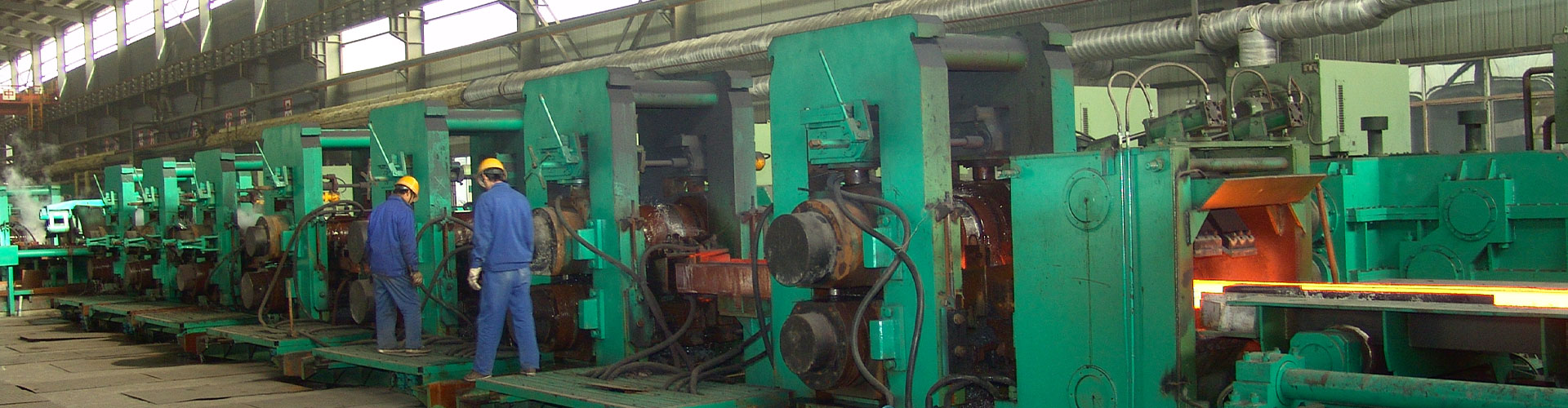
In the world of modern steel production, the Wire rod rolling mill stands as a cornerstone of efficiency and precision. Specifically, the finishing mill block is where speed meets accuracy, transforming hot steel into high-quality wire rod at incredible velocities. However, this high-speed operation introduces a significant challenge: vibration. Uncontrolled vibrations can compromise product quality, cause premature equipment wear, and even lead to catastrophic failures. Alongside this, the physical layout of the mill is equally critical for stable and efficient production.
So, how can a modern facility tackle these intertwined issues of vibration and layout to unlock its full potential? This guide provides a deep dive into the proven strategies and design principles that ensure a smooth, reliable, and high-performance wire rod rolling process.
Understanding and Taming Vibration in High-Speed Rolling
Vibration in a wire rod finishing mill is not just a minor annoyance; it’s a critical performance bottleneck. As rolling speeds climb past 100 m/s, even the slightest imbalance or structural weakness is magnified, leading to a phenomenon called resonance. This is where the operating frequency of the mill matches the natural vibration frequency of its components, causing oscillations to amplify dramatically.
The Consequences of Unchecked Vibration:
- Poor Product Quality: Inconsistent dimensions, out-of-roundness, and surface defects on the final wire rod.
- Equipment Damage: Accelerated wear on bearings, gears, and structural components, leading to frequent downtime.
- Reduced Mill Lifespan: Constant stress can cause fatigue and failure in critical parts of the mill.
The primary goal is to prevent resonance and dampen any vibrations that do occur. This is achieved through a multi-faceted approach focusing on intelligent design, precision manufacturing, and structural optimization.
1. Elevating the System’s Natural Frequency
The most effective strategy is to design the mechanical transmission system so that its natural frequency is significantly higher than the maximum operating frequency. By creating a wide gap between these two frequencies, the risk of resonance is virtually eliminated. This is a fundamental principle in the design of any modern high-speed wire rod rolling mill.
2. A Compact, Low-Profile Structure
Physics dictates that a lower center of gravity leads to greater stability. This principle is applied by:
- Reducing the overall height of the mill and minimizing the size of its components.
- Shortening the distance from rotating parts to the foundation, which provides a more rigid and direct path to absorb and dissipate energy.
- Decreasing the mass and volume of rotating bodies, which reduces the inertial forces that can induce vibration.
3. Eliminating Problematic Components
Traditional mill designs often included components like universal spindles, couplings, and sleeves to connect drive systems. While functional at lower speeds, these parts introduce mechanical play and are notoriously difficult to balance perfectly, making them primary sources of vibration. Modern finishing blocks eliminate these components in favor of a more direct, integrated drive system, significantly enhancing rotational stability.
4. Uncompromising Manufacturing and Balancing Standards
There is no substitute for precision. All rotating components, from the main shafts to the roll rings themselves, must be manufactured to exceptionally tight tolerances. After manufacturing, each component must undergo rigorous dynamic balancing tests to ensure its mass is distributed perfectly around its rotational axis. This minimizes inherent imbalances, which are the root cause of forced vibrations.
Optimizing the Mill Layout for Stability and Efficiency
A well-designed layout is not just about fitting equipment into a space; it’s about creating a synergistic system that promotes stability, simplifies maintenance, and ensures product quality. The modern high-speed no-twist finishing block is the culmination of decades of development, with several key features now considered industry standard.
Key Features of a Modern Finishing Mill Layout:
- Centralized Drive System: Instead of individual motors for each stand, the entire block is driven by one or two large motors through a common high-speed gearbox. This ensures perfect speed synchronization between stands and provides a powerful, stable source of torque.
- 90° No-Twist Configuration: The roll axes of adjacent stands are set at a 90° angle to each other (e.g., horizontal, then vertical). This allows the wire rod to be rolled without twisting between stands, which is crucial for maintaining dimensional accuracy and preventing defects.
- Compact Stand Spacing: Minimizing the distance between rolling stands reduces the length of the rod that is not actively being rolled. This makes it easier to control inter-stand tension, a critical factor for achieving tight product tolerances.
- Cantilevered Roll Design: Rolls are mounted on the end of a shaft (cantilevered) rather than between two housings. This open design, combined with plug-in type roll boxes, allows for extremely fast and easy roll changes, maximizing mill uptime.
Critical Components and Parameters for Success
The performance of a wire rod rolling mill is ultimately determined by the quality of its components and the precision of its operating parameters. Achieving the required product tolerances—often as tight as ±0.1mm—demands the best in materials and engineering.
Core Component Spotlight:
- Rolls: Modern mills use small-diameter rolls (typically 150-230 mm). The roll rings are made of ultra-hard, highly wear-resistant tungsten carbide. This material maintains its profile for longer, ensuring consistent product quality over extended production runs.
- Bearings: To handle the extreme speeds and loads, high-precision oil film bearings are used. These bearings support the roll shaft on a thin, pressurized film of oil, providing excellent load capacity, stiffness, and damping properties, which are essential for vibration control.
- Adjustment System: A symmetrical screw-down mechanism is used to adjust the roll gap. This design ensures that when an adjustment is made, both rolls move equally, keeping the pass line (the path of the steel) constant. A stable pass line is fundamental to achieving consistent product dimensions.
To put this into perspective, here is a table of typical parameters for a modern high-speed wire rod finishing mill:
| Parameter | Typical Value / Type |
|---|---|
| Max. Finishing Speed | > 100 m/s |
| Finished Product Diameter | 5.5 mm – 16.0 mm |
| Product Tolerance (5.5-8mm) | ± 0.10 mm |
| Product Tolerance (9-16mm) | ± 0.20 mm |
| Out-of-Roundness | ≤ 80% of total tolerance |
| Roll Ring Diameter | 150 mm – 230 mm |
| Roll Ring Material | Tungsten Carbide |
| Roll Shaft Bearing | Oil Film Bearing |
Ultimately, solving the vibration and layout challenges in a Wire rod rolling mill is not about a single solution, but a holistic philosophy. It combines robust theoretical design to avoid resonance, a compact and rigid physical layout to enhance stability, and the use of high-precision, high-performance components to deliver the final product quality. By integrating these strategies, mills can operate at higher speeds, produce superior quality wire rod, and achieve a level of reliability that is essential in today’s competitive market.