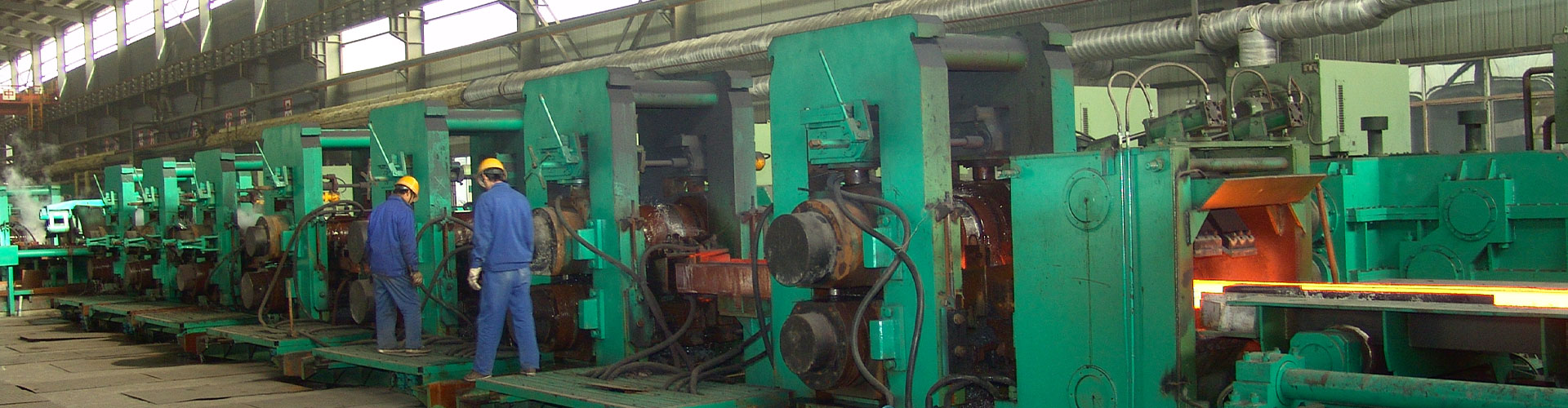
High-speed wire rod mills with 1 million tons annual capacity represent the most advanced production technology in the steel wire manufacturing industry. These massive industrial facilities transform raw steel billets into high-quality wire rods used in construction, automotive, machinery, and countless other applications. Understanding the complete process flow helps engineers, plant managers, and industry professionals optimize their operations and achieve maximum efficiency.
What Makes a 1 Million Ton Wire Rod Mill Special?
A wire rod production line with 1 million tons annual capacity operates approximately 7,200 hours per year. This means the mill must process around 139 tons of steel every hour, requiring precise coordination between all equipment and systems.
Stage 1: Raw Material Preparation
The journey of wire rod production begins with high-quality steel billets. For a million-ton capacity high-speed wire rod mill, raw material quality directly affects the final product performance.
Billet Production Methods
Steel billets arrive at the wire rod mill through two primary manufacturing routes:
- Continuous Casting: Molten steel flows into water-cooled copper molds where it solidifies into continuous strands. This method produces approximately 95% of billets used in modern wire rod mills.
- Electric Arc Furnace (EAF): Recycled scrap metal melts in high-temperature electric arcs, then gets cast into billets. This eco-friendly approach reduces carbon emissions by up to 75% compared to traditional blast furnace methods.
Standard Billet Specifications
Billet Inspection Requirements
Before entering the production line, each billet undergoes rigorous inspection:
Dimensional Check
Automatic laser measurement systems verify billet dimensions at multiple points along the length.
Chemical Analysis
Spectrometer testing confirms carbon, manganese, silicon, and other element contents match specifications.
Surface Quality
Visual and magnetic particle inspection identifies cracks, seams, and other surface defects.
Stage 2: Billet Heating in Reheating Furnace
The reheating furnace serves as the heart of the high-speed wire rod mill heating section. Cold billets enter the furnace and exit at temperatures between 1,050°C and 1,200°C, ready for rolling.
Walking Beam Furnace Technology
Modern million-ton wire rod mills use walking beam reheating furnaces. This design offers several advantages over older pusher-type furnaces:
- Uniform heating across the entire billet length
- Reduced scale formation (less than 1% material loss)
- Better temperature control with ±10°C accuracy
- Higher fuel efficiency (up to 55% thermal efficiency)
- Flexible production scheduling with cold/warm/hot charging capability
Furnace Zone Configuration
💡 Production Tip: For a 1 million ton annual capacity wire rod mill, the reheating furnace must handle 140-150 tons per hour. This requires a furnace with at least 200 t/h rated capacity to allow maintenance windows and production flexibility.
Stage 3: Rolling Mill Process
The rolling process in high-speed wire rod mills transforms square billets into round wire rods through a series of carefully designed roll passes. A typical million-ton capacity line features three main rolling sections.
Roughing Mill Section
The roughing mill receives hot billets directly from the furnace and begins the size reduction process. Key characteristics include:
Intermediate Mill Section
The intermediate mill continues the rolling process with smaller roll diameters and higher speeds. This section typically contains 6 to 8 stands arranged in horizontal-vertical configuration.
Intermediate Mill Specifications
- Roll Diameter: Ø400 mm – Ø450 mm
- Motor Power: 600 kW – 1,000 kW per stand
- Rolling Speed: 5 m/s – 15 m/s
- Total Reduction: 75% – 85%
- Exit Size: Ø18 mm – Ø22 mm round
Pre-Finishing and Finishing Mill Blocks
The finishing section of a high-speed wire rod mill determines the final product quality. Modern mills use no-twist finishing blocks that achieve remarkable precision.
Rolling Speed by Wire Rod Diameter
High-speed wire rod mills adjust finishing speeds based on the target wire rod diameter. Here are typical speeds for different product sizes:
Stage 4: Controlled Cooling System (Stelmor Line)
The Stelmor controlled cooling system represents one of the most critical sections in high-speed wire rod mills. This system directly controls the metallurgical properties of the final product.
Laying Head Operation
After leaving the finishing block, the wire rod passes through a laying head that forms continuous loops (coils) on the cooling conveyor. The laying head rotates at speeds matching the wire speed, creating uniform loops with diameters between 1,050 mm and 1,200 mm.
Stelmor Conveyor Specifications
Cooling Modes for Different Steel Grades
Different steel grades require specific cooling strategies to achieve desired mechanical properties:
🔵 Standard Cooling
Cooling Rate: 5 – 10°C/s
Applications: Low carbon steel, construction rebar
Fan Operation: 40% – 60% capacity
🟠 Delayed Cooling
Cooling Rate: 1 – 3°C/s
Applications: Cold heading steel, welding wire
Method: Insulated covers closed
🟣 Rapid Cooling
Cooling Rate: 15 – 25°C/s
Applications: High carbon steel, spring wire
Fan Operation: 80% – 100% capacity
Stage 5: Coil Formation and Handling
After cooling, the wire rod loops collect in the reform chamber where they stack into compact coils. The coil handling system in high-speed wire rod mills must work efficiently to match the high production rate.
Reform Chamber and Coil Formation
The reform chamber uses a rotating iris mechanism or drop tube to collect the wire rod loops into vertical coils. Key specifications include:
- Coil Inner Diameter: 850 mm – 900 mm
- Coil Outer Diameter: 1,200 mm – 1,350 mm
- Coil Height: 1,800 mm – 2,500 mm
- Coil Weight: 2,000 kg – 2,500 kg
- Coil Density: 350 kg/m³ – 450 kg/m³
Coil Compacting and Tying
The compacting station compresses loose coils to increase density and facilitate handling. Modern compactors reduce coil height by 30% to 40%, creating tight packages for efficient storage and shipping.
Tying System: Automatic tying machines apply 4 to 6 steel straps around each coil. Strap material typically consists of 32 mm × 0.8 mm high-strength steel band with tensile strength exceeding 700 MPa.
Stage 6: Quality Control and Inspection
Quality control in high-speed wire rod mills involves continuous monitoring throughout the production process plus final inspection before shipping.
In-Line Measurement Systems
Laboratory Testing Requirements
Every production batch undergoes laboratory testing to verify mechanical and chemical properties:
- Tensile Testing: Measures yield strength, tensile strength, and elongation
- Chemical Analysis: Spectrometer verification of C, Mn, Si, P, S, and other elements
- Metallographic Examination: Microstructure evaluation for grain size and phase distribution
- Surface Quality Check: Visual and dimensional inspection of samples
- Hardness Testing: Rockwell or Vickers hardness measurement
Complete Wire Rod Mill Equipment List
A high-speed wire rod mill with 1 million tons annual capacity requires extensive equipment investment. Below is the complete equipment list with typical specifications:
Product Range and Applications
High-speed wire rod mills with 1 million ton capacity produce wire rods for diverse industrial applications. The product range covers multiple steel grades and sizes.
Standard Product Specifications
Energy Consumption and Utilities
Operating a high-speed wire rod mill with 1 million tons annual capacity requires significant energy and utility resources. Understanding these requirements helps in planning and cost estimation.
Layout and Space Requirements
Planning a high-speed wire rod mill requires careful consideration of space and layout. A million-ton capacity line typically requires:
Packaging and Shipping
The final stage of the wire rod production process involves proper packaging to protect the product during storage and transportation.
Standard Packaging Configuration
- Steel Strapping: 4-6 circumferential straps plus 2 radial straps per coil
- Protective Wrapping: VCI (Vapor Corrosion Inhibitor) paper or plastic film for export orders
- Edge Protection: Cardboard or plastic corner guards prevent strap damage
- Identification Tags: Weather-resistant tags with heat number, grade, size, and weight information
Warehouse and Logistics
A million-ton wire rod mill requires substantial warehouse capacity and efficient logistics systems. Typical requirements include:
- Finished product storage area: 10,000 – 15,000 m² (7-10 days production capacity)
- Overhead crane capacity: 20 – 30 tons with coil handling attachments
- Truck loading bays: 6 – 10 positions for 30-ton capacity trucks
- Rail siding capability: Optional for bulk shipments
- Coil inventory tracking system: RFID or barcode-based digital management
Key Takeaways for Wire Rod Mill Operations
High-speed wire rod mills with 1 million tons annual capacity represent sophisticated manufacturing systems that require careful engineering, precise process control, and continuous quality monitoring. Success depends on:
- Consistent raw material quality from billet suppliers
- Optimal furnace operation with uniform temperature distribution
- Precise rolling mill setup and maintenance
- Appropriate cooling strategies for different steel grades
- Rigorous quality control throughout the entire process
The process flow described above represents current best practices in the wire rod manufacturing industry. Actual parameters may vary based on specific equipment configurations, product requirements, and local operating conditions. Engineers and plant managers should consult equipment suppliers and technical experts when designing or optimizing their production lines.