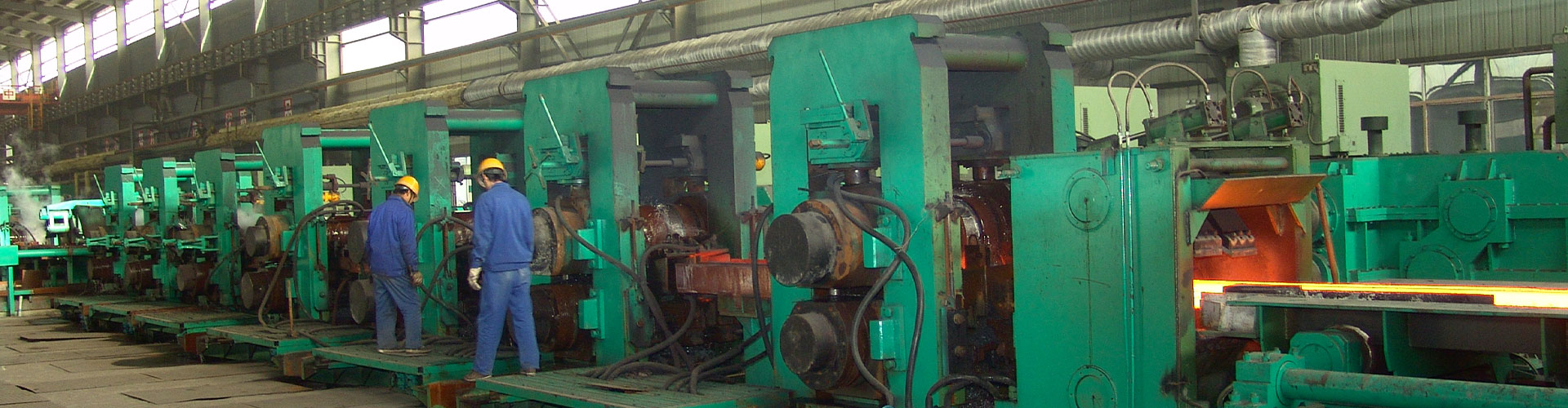
A mill had rolls as soon as it had stands. The first rolls came from a sand mould, cast in one piece. Metal moulds followed. Then came the step that changed the trade: pouring the iron into the mould from the bottom through a tangential gate. From that point the roll-making art had to satisfy two sets of demands that pull against each other. The centrifugal composite roll is how the industry resolved them. Kubota announced the first centrifugal composite roll, a cast iron one, в 1968. Over the thirty-five years that followed, the process went through eight generations. Each generation is defined by the single problem it had to solve.
Two Demands That Pull Against Each Other
As the rolling industry grew, mills asked more of every roll. The body needed high hardness and good wear resistance. It also needed resistance to impact and to thermal cracking, plus enough grip to stop the stock from slipping. The core needed high strength, freedom from breakage, and small deformation. Those two sets of properties contradict each other inside one piece of iron. Roll makers answered the contradiction with a composite roll.
Semi-Flush and Full-Flush Casting
Two casting methods opened the composite route. Both pour alloy iron into the mould from the bottom.
Semi-flush casting
Pour the alloy iron in from the bottom of the mould. Stop pouring once the iron reaches the junction between the top neck and the body. Let the mould stand for a while. By then the body has formed a shell. Add a measured amount of ferrosilicon powder to the iron left in the ladle, stir it, and continue pouring. The core ends up stronger than a plain pour would give.
Full-flush casting
Start the same way. Pour from the bottom, stop at the junction of the top neck and the body, and hold. Once the body has formed a shell, switch to a second ladle of high-strength core iron and pour it through the bottom gate. The new iron drives the original core iron up and out through the riser end. In this way one casting carries two chemistries. The birth of the composite roll set off another leap in roll production.
1968 and the Centrifugal Route
Kubota of Japan announced the first successful centrifugal composite cast iron roll in 1968. That announcement brought composite roll manufacturing to full development. Progress after it ran fast. Within thirty-five years the industry counted eight generations of the centrifugal composite roll.
The Eight Generations of the Centrifugal Composite Roll
Первый: chill and indefinite chill composite
The first centrifugal composite roll carried chill cast iron or indefinite chill cast iron on the outside, with grey cast iron in the core. The technical key of this generation lay in three places. One was the centrifugal composite process itself. The other two were the protective slag and the chill mould coating.
Второй: nodular core
The outer layer stays chill or indefinite chill cast iron. The core becomes nodular cast iron. The technical key shifted to the black line at the bond layer between shell and core. The question was how that line affects spalling behaviour.
Третий: nodular composite iron
Both layers are nodular iron, with an alloyed nodular iron on the outside. The technical key here is how to stop the outer nodular iron from losing its nodularisation and from remelting.
Четвертый: high-chromium composite iron
The outer layer is high-chromium cast iron, the core nodular iron. The technical key is to prevent or reduce chromium diffusion from the shell into the core, which causes roll breakage. Because that diffusion proved hard to hold, some makers had to move to a three-layer composite.
Пятый: high-chromium composite cast steel
The outer layer is high-chromium steel. The core is nodular iron or graphitic steel. The technical key stays the same. One task is to cut chromium diffusion into the core. The other is to fix the parameters of the centrifugal composite process.
Шестой: composite cast steel or semi-steel
The outer layer is alloy steel or semi-steel, the core plain cast steel or graphitic steel. Two tasks define this generation. One is to fix the centrifugal composite process parameters. The other is to develop a protective slag that melts at high temperature.
Seventh: high-speed steel or semi-high-speed steel composite
The outer layer is high-speed steel or semi-high-speed steel. The core is nodular iron, graphitic steel or forged steel. The technical key is to fix the centrifugal composite process parameters and to settle the heat treatment schedule.
Eighth: tungsten carbide composite
The outer layer is tungsten carbide, ceramic steel or a similar non-crystalline material. The core is nodular iron or cast steel. The technical key is to fix the centrifugal process parameters. A second task is to control the casting cracks that shrinkage stress produces.