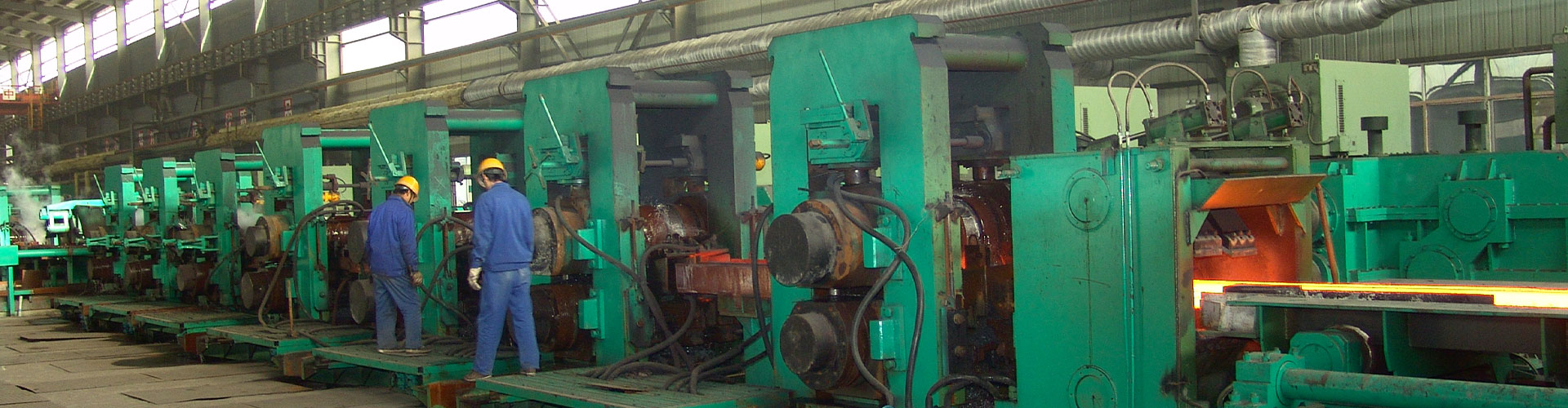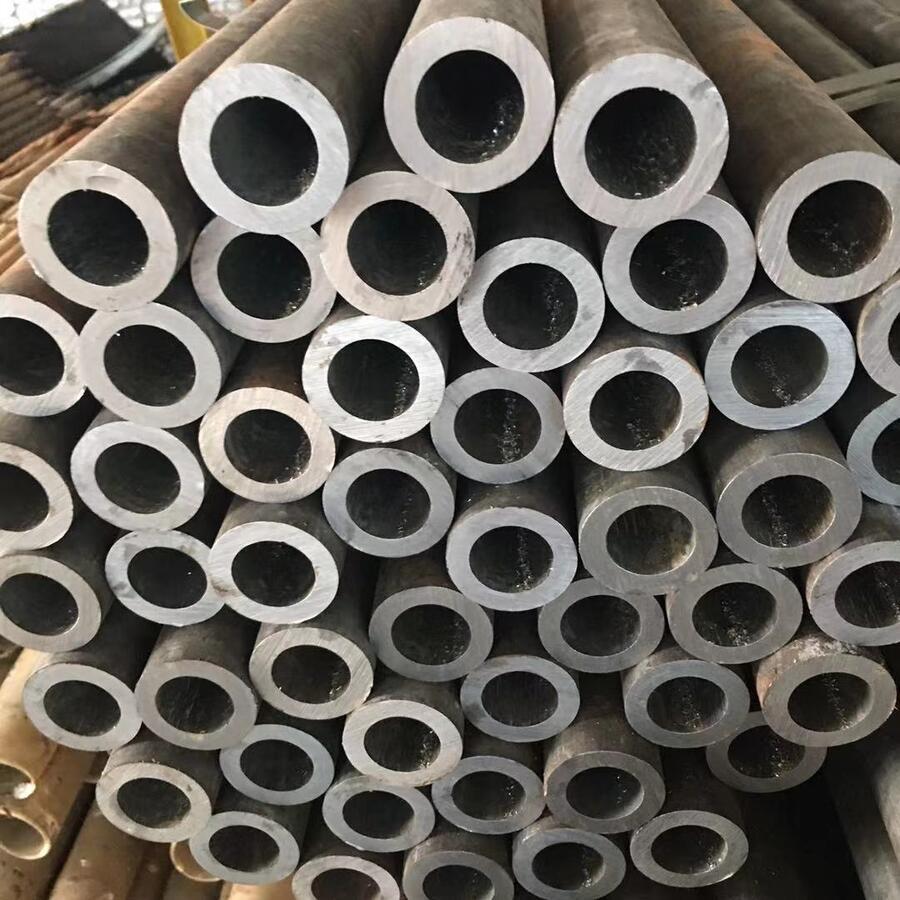
Roll body length and diameter are the two dimensions that fix everything else on a mill roll. Body length also marks the size class of the mill itself. The order of work matters: settle the body length first, then derive the diameter from strength, stiffness and the rolling process.
Strip Mills: Roll Body Length From Strip Width
On a strip or plate mill, the body must be longer than the widest plate the mill will roll. The relation is simple.
L = bmax + а
Here L is the body length, bmax is the maximum plate width, and a is a constant that depends on how wide the plate runs. For plate from 400 к 1200 мм, a is about 100 мм. For plate from 1000 к 2500 мм, a runs 150 к 200 мм. For plate wider than that, a runs 200 к 400 мм.
Two-High Mills: Diameter From Bite and Strength
Once the roll body length is fixed, a two-high mill takes its roll diameter from two conditions: whether the rolls can bite the workpiece, and whether the roll can carry the load. Both must hold at the same time.
Four-High Mills: A Small Work Roll, a Stiff Backup Roll
A four-high stand splits the job. Rolling force falls as the work roll gets smaller, so the work roll should be as small as the duty allows. The minimum is not free, though. Neck and wobbler torsional strength set one floor, and the bite condition sets another.
The backup roll answers a different question. Its diameter follows stiffness and strength, and once the body length is fixed, a standard chart gives both the work roll diameter D1 and the backup roll diameter D2.
What L/D2 tells you
The ratio L over D2 expresses the bending stiffness of the roll system. A smaller ratio means a stiffer system. В общем, a long body calls for a larger ratio.
Choosing the ratio D2/D1
Process conditions decide the ratio between backup and work roll. Thick workpiece means a large bite angle, which forces a larger work roll, so the mill runs a smaller D2/D1. Thin workpiece allows the opposite. For that reason, plate mills and the roughing stands of a hot strip mill carry a smaller ratio than finishing stands. Hot mills also carry a smaller ratio than cold mills. A four-high stand with backup drive normally runs D2/D1 between 3 и 4.
Cold Thin Strip: The Flattening Limit
A cold mill rolling thin strip carries very high rolling force. If the work roll grows too large, elastic flattening grows with it, and the mill can no longer reach the thin gauges it was bought for. The maximum work roll diameter therefore also has a floor set by the thinnest strip. Experience puts it at D1 below 1500 к 2000 times the minimum strip thickness.
Blooming and Section Mills: Nominal Diameter
On a blooming mill or a section mill, the roll body carries passes, so the nominal diameter needs a precise definition before it means anything.
A section mill takes the centre distance of the gear housing as the nominal diameter. A blooming mill takes the outside diameter of the roll collar. Either way, a grooved roll has a nominal diameter larger than its working diameter. To keep the grooves from cutting too deep, the ratio of nominal to working diameter normally stays at or below 1.4.
Working diameter from bite and strength
The working diameter D1 follows the maximum bite angle and the strength requirement. The strength condition is straightforward: calculated stress anywhere in the roll must stay below the allowable stress. Allowable stress is the strength of the material divided by a safety factor. Roll practice normally sets that factor at 5. The bite condition then fixes the working diameter, with the maximum bite angle taken from the standard table for each mill type. That angle depends on the friction coefficient between roll and workpiece.
Body length with passes
On a grooved roll, roll body length answers to pass arrangement first, then to bending strength and stiffness. A roughing mill therefore runs a long body, so that it can hold enough passes. A finishing mill, and above all a finished-product stand, runs a short body. The short body stiffens the roll and tightens dimensional accuracy. Every mill type keeps a customary ratio of body length to diameter, and the standard table carries the values.
Standard Series
A calculated diameter then converts to a nominal diameter. That nominal figure has to land on the national series for the mill type. The Chinese blooming mill series runs 750, 850 и 1150. The open-train section mill series runs φ500/300, 650 и 3800.