Deformation cracks during rebar production represent one of the most frustrating challenges for rolling mill operators. These defects not only reduce product quality but also lead to significant material waste and production delays. In this guide, we explore the root causes of these issues and provide practical solutions based on real-world experience from steel plants around the world.
Understanding Deformation Cracks in Rebar Rolling
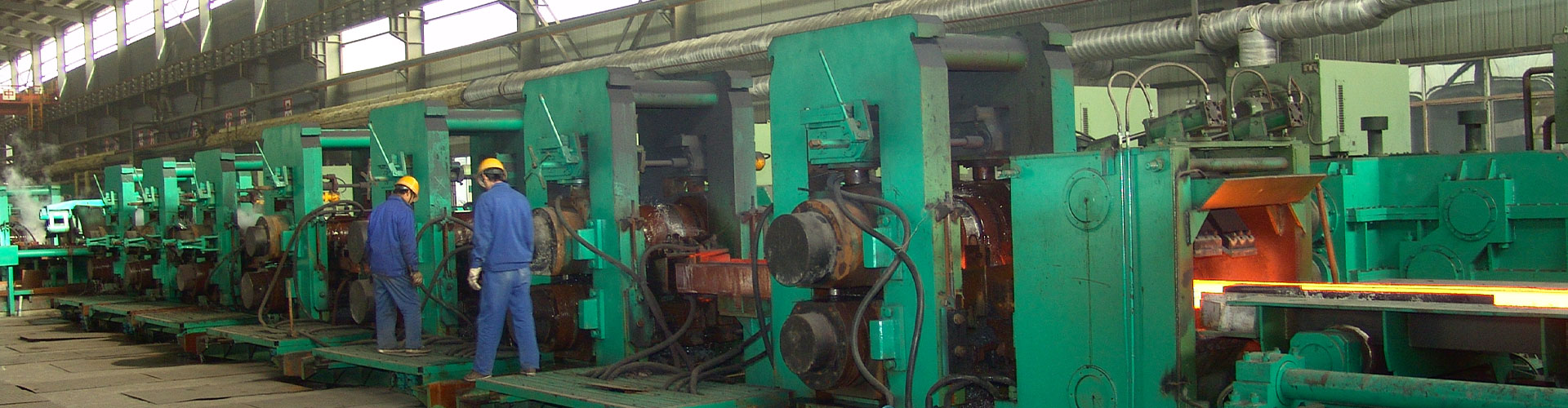
When hot steel billets pass through the rolling mill stands, they undergo tremendous pressure and temperature changes. Under ideal conditions, the steel deforms uniformly and exits as high-quality rebar. However, when something goes wrong in this process, cracks and deformations appear on the surface or inside the finished product.
These defects typically show up as longitudinal cracks along the rebar length, transverse cracks across the ribs, surface seams, or internal voids that compromise structural integrity. For construction applications, such defective rebar poses serious safety risks and must be rejected during quality inspection.
Quick Facts About Rebar Defects
- Surface cracks account for 35-40% of all rebar quality rejections
- Improper roll gap settings cause approximately 25% of deformation issues
- Billet quality problems contribute to 20-30% of crack formations
- Production losses from these defects can reach 2-5% of total output
Main Causes of Deformation and Cracks in Rolling Mills
1. Improper Roll Gap Adjustment
The roll gap is the space between two working rolls in a rolling stand. When this gap is set incorrectly, serious problems occur. A gap that is too small creates excessive pressure on the steel, causing surface cracks and internal stress fractures. A gap that is too large results in incomplete deformation, leading to dimensional inaccuracies and weak spots in the rebar structure.
Experienced mill operators know that roll gap tolerances for rebar production typically need to stay within ±0.3mm for finishing stands. Even small deviations beyond this range can trigger quality issues, especially when producing smaller diameter rebar like 8mm or 10mm sizes.
2. Poor Billet Quality
The quality of incoming billets directly affects the final rebar quality. Billets produced from scrap steel melting often contain higher levels of impurities such as sulfur, phosphorus, and non-metallic inclusions. These impurities create weak points in the steel matrix that crack under the stress of rolling.
Common billet defects that lead to rebar cracks include:
- Internal porosity and shrinkage cavities from casting
- Surface scale and oxide inclusions
- Segregation of carbon and other alloying elements
- Cracks formed during continuous casting
- Excessive sulfur content above 0.045%
3. Worn Roll Pass Design
Roll passes wear down over time due to the abrasive action of hot steel and thermal cycling. When the groove profile deviates from its original design, the steel flow pattern changes during rolling. This uneven deformation creates stress concentrations that manifest as surface cracks or internal defects.
For typical rebar rolling operations, intermediate roll passes can process around 15,000-20,000 tons before requiring regrinding. Finishing passes handling the final rib formation usually need attention after 8,000-12,000 tons, depending on the steel grade and rolling speed.
4. Incorrect Rolling Temperature
Steel behaves very differently at various temperatures. Rolling at temperatures that are too low increases deformation resistance and can cause surface tearing. Rolling at temperatures that are too high promotes excessive scale formation and grain growth, weakening the final product.
| Rolling Stage | Optimal Temperature Range | Critical Low Limit | Critical High Limit |
|---|---|---|---|
| Furnace Discharge | 1150-1200°C | 1100°C | 1250°C |
| Roughing Mill Entry | 1100-1150°C | 1050°C | 1180°C |
| Intermediate Mill | 1000-1080°C | 950°C | 1100°C |
| Finishing Mill Entry | 950-1020°C | 900°C | 1050°C |
| Finishing Mill Exit | 850-950°C | 800°C | 1000°C |
5. Uneven Cooling Conditions
After leaving the finishing stands, rebar passes through water cooling boxes before reaching the cooling bed. If cooling is uneven across the bar cross-section, thermal stresses develop that can cause warping, bending, or even cracking. This problem becomes more severe with larger diameter rebar due to the greater temperature differential between surface and core.
Practical Solutions for Eliminating Deformation Cracks
Solution 1: Systematic Roll Pass Inspection and Maintenance
Establish a regular inspection schedule for all roll passes in your rolling mill. Use profile gauges to measure groove dimensions and compare them against original specifications. When wear exceeds acceptable limits, schedule immediate regrinding or roll replacement.
Practical Tip: Keep spare roll sets pre-ground and ready for quick changeover. This minimizes production downtime when worn rolls need replacement. Most efficient mills maintain at least two complete spare sets for each stand.
Key inspection points include:
- Groove depth variation (should not exceed 0.5mm from design)
- Groove width uniformity across the roll face
- Surface roughness of groove walls
- Presence of heat checking or fatigue cracks on rolls
- Alignment between top and bottom roll grooves
Solution 2: Precise Roll Gap Calibration
Before starting each production campaign, calibrate roll gaps using lead impression tests or laser measurement systems. Document the settings for each stand and compare them against proven parameters from successful production runs.
| Rebar Size | Finishing Pass Gap | Pre-finishing Gap | Tolerance | Typical Rolling Speed |
|---|---|---|---|---|
| 8mm | 0.8-1.0mm | 2.5-3.0mm | ±0.2mm | 85-95 m/s |
| 10mm | 1.0-1.2mm | 3.0-3.5mm | ±0.25mm | 55-65 m/s |
| 12mm | 1.2-1.5mm | 3.5-4.0mm | ±0.25mm | 38-45 m/s |
| 16mm | 1.5-1.8mm | 4.5-5.0mm | ±0.3mm | 22-28 m/s |
| 20mm | 1.8-2.2mm | 5.5-6.0mm | ±0.3mm | 14-18 m/s |
| 25mm | 2.2-2.5mm | 6.5-7.0mm | ±0.35mm | 9-12 m/s |
| 32mm | 2.8-3.2mm | 8.0-9.0mm | ±0.4mm | 5.5-7.5 m/s |
Solution 3: Incoming Billet Quality Control
Implement strict incoming inspection procedures for all billets entering your rolling mill. This should include visual inspection for surface defects, dimensional checks, and periodic chemical analysis to verify composition.
| Chemical Element | Maximum Content (%) | Effect if Exceeded |
|---|---|---|
| Carbon (C) | 0.22-0.25 | Increased brittleness, higher crack risk |
| Sulfur (S) | 0.045 | Hot shortness, surface tearing |
| Phosphorus (P) | 0.045 | Cold brittleness, reduced ductility |
| Nitrogen (N) | 0.012 | Strain aging, embrittlement |
| Copper (Cu) | 0.50 | Surface hot shortness at high temps |
Reject any billets showing visible cracks, deep surface defects, or excessive scale buildup. The cost of rejecting a bad billet is far less than the cost of producing defective rebar that must be scrapped.
Solution 4: Optimize Reheating Furnace Operation
Proper billet heating is essential for successful rolling. The reheating furnace must bring billets to the correct temperature while minimizing scale formation and avoiding overheating.
Best practices for furnace operation include:
- Maintain furnace atmosphere slightly reducing to minimize scale
- Allow sufficient soaking time (typically 45-60 minutes for 130mm billets)
- Ensure temperature uniformity across billet cross-section (variance <30°C)
- Monitor and control discharge temperature with pyrometers
- Avoid cold spots in furnace that create uneven heating
Recommended Heating Cycle for Standard Carbon Steel Billets
Preheating Zone: 800-950°C for 15-20 minutes
Heating Zone: 1100-1180°C for 20-25 minutes
Soaking Zone: 1150-1200°C for 15-20 minutes
Solution 5: Control Inter-Stand Tension
In continuous rolling mills, the tension between stands significantly affects product quality. Excessive tension stretches the bar and can cause necking or cracking. Insufficient tension allows looping that leads to cobbles and surface damage.
Modern rolling mills use automatic loopers or tension meters to maintain optimal conditions. For mills without such equipment, careful speed matching between stands is critical. The speed increase from one stand to the next should match the area reduction ratio as closely as possible.
Solution 6: Water Cooling System Optimization
For TMT (Thermo-Mechanically Treated) rebar production, the water cooling system plays a dual role. It provides the rapid quenching needed to form the hardened surface layer while controlling the final temperature for proper self-tempering.
| Parameter | Target Value | Effect of Deviation |
|---|---|---|
| Water Pressure | 8-12 bar | Low pressure = insufficient cooling; High = thermal shock cracks |
| Water Temperature | 28-35°C | Hot water reduces cooling rate, affecting martensite formation |
| Quench Box Length | Variable by size | Too long = excessive core cooling; Too short = soft surface |
| Equalization Zone | 15-25 meters | Too short = inadequate tempering; thermal stress cracks |
Troubleshooting Guide: Identifying Crack Types and Their Causes
Different types of cracks indicate different root causes. Learning to identify these patterns helps pinpoint the source of problems quickly.
| Crack Type | Appearance | Primary Cause | Recommended Action |
|---|---|---|---|
| Longitudinal Surface Cracks | Long, straight lines along bar length | Billet surface defects or worn roll passes | Check billet quality; inspect roll grooves |
| Transverse Cracks | Short cracks across the bar, often at ribs | Rolling temperature too low; excessive tension | Increase furnace temperature; adjust speeds |
| Alligator Cracks | Network pattern resembling alligator skin | High sulfur content in steel | Reject billet batch; check supplier quality |
| Corner Cracks | Cracks at corners of bar cross-section | Uneven cooling or improper pass design | Balance water flow; review roll pass design |
| Lap Seams | Overlapping metal folds on surface | Overfilling in previous pass; worn guides | Adjust roll gaps; replace entry guides |
| Internal Voids | Not visible externally; found in testing | Billet internal porosity; insufficient reduction | Improve casting quality; increase total reduction ratio |
Preventive Maintenance Schedule for Rolling Mills
Prevention is always better than troubleshooting. A well-planned maintenance schedule helps avoid many crack and deformation problems before they occur.
| Component | Inspection Frequency | Key Checkpoints |
|---|---|---|
| Roll Passes | Every shift | Groove profile, surface condition, wear pattern |
| Roll Bearings | Weekly | Temperature, noise, play/clearance |
| Entry/Exit Guides | Daily | Alignment, wear, proper positioning |
| Roll Gap Settings | Each size change | Actual vs. target gap, parallelism |
| Cooling Water System | Daily | Pressure, flow rate, nozzle condition |
| Furnace Thermocouples | Monthly | Calibration accuracy, response time |
| Descaling System | Weekly | Nozzle blockage, pressure, spray pattern |
Case Study: Reducing Crack Rate from 3.2% to 0.4%
A medium-sized rebar rolling mill producing 400,000 tons annually was experiencing a persistent crack defect rate of 3.2%. This translated to approximately 12,800 tons of rejected material per year, representing significant financial losses.
After systematic analysis, the following issues were identified and corrected:
Problem 1: Roll passes in stands 14-16 were being used beyond their service life. Groove wear exceeded 1.2mm from design specifications.
Solution: Implemented strict tonnage tracking for each roll set. Established maximum tonnage limits of 10,000 tons for finishing passes before mandatory regrinding.
Problem 2: Billet supplier quality had deteriorated. Sulfur content averaging 0.052% exceeded specifications.
Solution: Added incoming chemical analysis requirement. Rejected non-conforming heats and negotiated quality improvement with supplier.
Problem 3: Furnace discharge temperatures varied by up to 80°C between billets in the same batch.
Solution: Recalibrated furnace zone thermocouples. Adjusted billet spacing and pushing rhythm to ensure uniform heating.
After implementing these changes over a three-month period, the crack rejection rate dropped to 0.4%. Annual savings exceeded $800,000 in reduced scrap and improved production efficiency.
Quality Testing Methods for Detecting Cracks
Reliable quality testing is essential for catching defects before rebar reaches customers. Several methods are commonly used in rolling mill quality laboratories:
Visual Inspection
Trained inspectors examine rebar samples under good lighting. This catches obvious surface defects but may miss fine cracks. Sample at least 3 bars per hour of production from each strand.
Bend Testing
Rebar is bent around a mandrel of specified diameter. The bend surface is examined for cracks. For rebar up to 16mm diameter, 180° bend tests use a mandrel diameter of 3 times the bar diameter. Larger sizes typically use 4-5 times bar diameter.
Ultrasonic Testing
For critical applications, ultrasonic testing can detect internal defects invisible to visual inspection. Modern inline ultrasonic systems can test 100% of production at rolling speeds up to 15 m/s for larger diameter bars.
Magnetic Particle Inspection
Surface and near-surface cracks can be highlighted using magnetic particle inspection. The bar is magnetized and iron particles applied to the surface concentrate at crack locations, making them visible.
Advanced Technology Solutions
Modern rolling mills are increasingly adopting advanced technology to prevent and detect quality issues. These investments often pay back quickly through reduced defects and higher productivity.
Automatic Gap Control Systems
Hydraulic gap control (HGC) systems can adjust roll gaps automatically during rolling based on rolling load feedback. This compensates for thermal expansion of rolls and maintains consistent product dimensions throughout the production campaign.
Hot Metal Detectors and Pyrometers
Infrared pyrometers positioned throughout the mill provide continuous temperature monitoring. When temperatures drift outside acceptable ranges, operators can take immediate corrective action before defects occur.
Surface Inspection Systems
Camera-based surface inspection systems can detect surface defects at rolling speed. These systems use image processing algorithms to identify cracks, seams, and other defects, enabling automatic marking or sorting of defective bars.
Training and Operator Skills
Even the best equipment cannot produce quality rebar without skilled operators. Investment in training pays dividends in reduced defects and improved productivity.
Key training topics for rolling mill operators include:
- Understanding roll pass design and how deformation occurs
- Recognizing early signs of developing quality problems
- Proper procedures for roll changing and gap setting
- Furnace operation and temperature control
- Cooling system adjustment for different bar sizes
- Quality standards and testing procedures
Final Recommendations for Rolling Mill Operators
Successfully eliminating deformation cracks from your rebar production requires a systematic approach addressing all potential causes. Here are the most important actions to take:
- Establish strict incoming quality control for billets with chemical analysis verification
- Implement regular roll pass inspection and enforce maximum tonnage limits
- Calibrate roll gaps before each production campaign using measurement tools
- Monitor and control temperatures at all critical points in the process
- Maintain cooling systems to ensure uniform and consistent quenching
- Train operators to recognize early warning signs of quality problems
- Document all settings and parameters from successful production runs
- Investigate every defect to identify and eliminate root causes
By following these guidelines and maintaining consistent attention to process control, rolling mills can achieve defect rates well below 1% and produce rebar that meets the highest quality standards for construction applications worldwide.
Remember that quality improvement is an ongoing process. Regular review of production data, continuous training of personnel, and investment in modern technology all contribute to long-term success in rebar manufacturing. The solutions presented here have been proven effective across many rolling mills and provide a solid foundation for achieving excellence in rebar production.