Understanding the Core Machinery: Flying Shears and Laying Heads in Steel Rolling
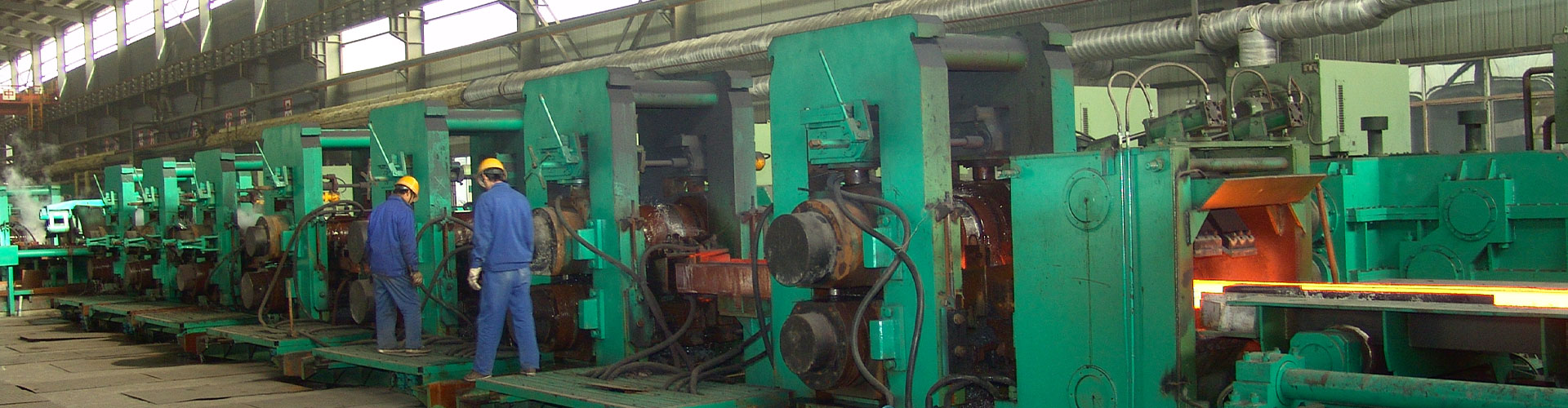
In the fast-paced world of modern steel rolling, efficiency, precision, and speed are paramount. High-speed wire rod mills operate continuously, transforming hot steel billets into finished wire rods at incredible velocities. At the heart of this process are two critical pieces of equipment: the flying shear and the laying head. While they perform different tasks, their seamless integration is essential for maintaining production flow, ensuring product quality, and maximizing output. This article delves into the structure, function, and layout of these indispensable machines.
The Flying Shear: Precision Cutting in Motion
A flying shear is a marvel of mechanical engineering designed to cut material while it is moving. In a steel rolling line, stopping the fast-moving hot steel rod for cutting is impractical and would disrupt the entire production process. The flying shear solves this by synchronizing its blade speed with the speed of the rolled product, performing a clean cut “on the fly.”
Primary Functions of a Flying Shear:
- Head and Tail Cropping: The front (head) and end (tail) of a rolled bar are often irregular in shape and temperature. The flying shear trims these imperfect sections to ensure only high-quality material proceeds to the next stage.
- Emergency Cutting: If a problem occurs downstream (e.g., a cobble or jam in the finishing mill), the flying shear can instantly cut the bar to prevent a major pile-up, minimizing damage and downtime.
- Dividing for Cooling: In some bar mills, the flying shear cuts the long, finished bar into predetermined, optimized lengths suitable for the cooling bed.
Structural Components and Types
A typical flying shear consists of a robust frame, a drive system (often electric motors with gearboxes), one or two rotating drums or cranks holding the shear blades, and a sophisticated control system for synchronization. They are generally categorized into several types, with the most common being:
- Crank-Lever Shears: These use a crankshaft mechanism to move the blades in an elliptical path, achieving a horizontal speed component that matches the bar’s speed during the cut.
- Rotary Shears: Featuring two rotating drums with blades, these are common in high-speed applications. The blades are mounted on the drums, which spin in opposite directions to cut the bar as it passes between them.
The layout of a flying shear is strategic. It is typically installed after the roughing or intermediate rolling stands but before the high-speed finishing block. This position allows it to perform head cropping and provide emergency protection for the most critical and fastest part of the mill.
| Parameter | Value / Range | Significance |
|---|---|---|
| Max Rolling Speed | Up to 40 m/s | Defines the upper limit of the production line speed it can serve. |
| Material Cross-section | Ø 30 – 150 mm (Round) or equivalent | Indicates the size of the billet or bar it is designed to cut. |
| Material Temperature | 950 – 1150 °C | Blades and components must withstand extreme heat. |
| Cutting Accuracy | ± 50 mm | Crucial for minimizing waste during cropping and dividing. |
| Blade Material | High-Alloy Tool Steel | Requires high hardness, wear resistance, and toughness at high temperatures. |
The Laying Head: Forming Perfect Coils at High Speed
After the wire rod exits the final stand of the finishing block at speeds that can exceed 100 m/s, it must be cooled in a controlled manner. To do this, the straight rod is formed into a series of rings or loops. This is the job of the laying head, also known as a coiler or laying cone. It lays these rings onto a moving cooling conveyor (like a Stelmor conveyor) in a specific pattern to ensure uniform air cooling.
Evolution and Working Principle
Early laying heads were vertical, dropping coils downwards. However, as rolling speeds increased beyond 30 m/s, these became inadequate. The modern standard is the horizontal, or slightly inclined, laying head. Speeds for these machines have evolved from 40 m/s to over 140 m/s in the latest designs.
The working principle is elegant. The hot wire rod is fed into a curved pipe (the laying pipe) mounted on a rapidly rotating hollow shaft. As the shaft spins, centrifugal force presses the rod against the outer wall of the pipe. The friction and the pipe’s curve cause the rod to bend. When it exits the pipe, it has formed a loop and is thrown forward onto the cooling conveyor in a continuous spiral pattern.
Key Structural Components
The laying head is a high-precision assembly that must operate with extreme stability at very high rotational speeds. Its main parts include:
- Drive System: A powerful motor connected via a gearbox (often spiral bevel gears) to drive the main shaft.
- Hollow Shaft: The main rotating component through which the wire rod passes before entering the laying pipe.
- Laying Pipe: A specially shaped, wear-resistant pipe with a spiral curve that forms the coil. Its geometry is critical for coil shape.
- Laying Cone/Head: The assembly at the end of the shaft that holds the laying pipe.
- Bearing Housing: A rigid box containing high-precision bearings (like angular contact ball bearings and cylindrical roller bearings) to support the hollow shaft. Some advanced models use oil-film bearings for superior stability at ultra-high speeds.
Due to the high speed and cantilevered mass of the laying head, dynamic balancing is absolutely critical. The entire rotating assembly is balanced to a very high precision grade (e.g., ISO G13.4 or better) by adding counterweights to prevent vibration, which would otherwise destroy the machine and affect coil quality. The layout places the laying head immediately after the finishing block and water-cooling boxes, with its output aligned to deposit coils perfectly onto the start of the cooling conveyor. The inclination angle, typically 15°–20°, ensures a smooth transition of the coils onto the conveyor.
| Parameter | Value / Range | Importance |
|---|---|---|
| Max Design Speed | 90 m/s, 105 m/s, 120 m/s, up to 140+ m/s | Determines the maximum production rate of the wire rod mill. |
| Wire Rod Diameter | Ø 5.5 – 25 mm | Defines the range of product sizes the machine can handle. |
| Coil Outer Diameter | ~1050 – 1250 mm | Affects cooling efficiency and subsequent handling. |
| Laying Temperature | 750 – 950 °C | The temperature at which the rod is formed into coils. |
| Dynamic Balance Grade | ISO G13.4 or better | Essential for stable, vibration-free operation at high RPM. |
Ultimately, the flying shear and the laying head are not just individual machines but integral parts of a sophisticated production system. The shear ensures that a clean, continuous length of steel is fed into the finishing block, while the laying head takes the final, high-speed product and prepares it perfectly for the critical cooling phase. Advances in materials, drive technology, and control automation for both these units continue to push the boundaries of steel rolling, enabling higher speeds, better quality, and greater operational reliability in mills around the world.