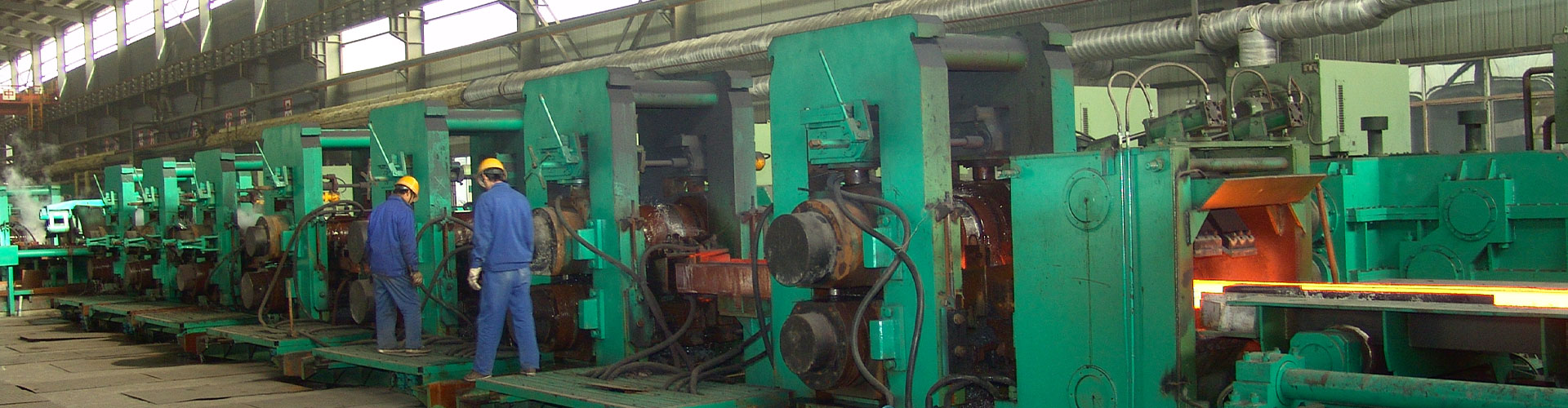
Motor power selection is one of the most critical decisions when designing or upgrading a rolling mill. Choosing the wrong motor can lead to equipment failure, production downtime, or wasted energy costs. In this guide, we will explore the fundamental methods engineers use to determine the right motor power for different types of rolling mill applications.
Understanding Rolling Mill Load Characteristics
Before selecting motor power for a rolling mill, engineers must first understand how the load behaves during operation. The rolling process creates different load patterns depending on the material being processed, rolling speed, and reduction ratio. These load characteristics directly influence which calculation method works best.
Rolling mills can be classified into three main categories based on their operational load patterns:
| Category | Load Behavior | Common Motor Types | Typical Applications |
|---|---|---|---|
| Type 1 | Steady load with minor variations | AC Induction Motor, Synchronous Motor | Continuous hot strip mills, wire rod mills |
| Type 2 | Large load fluctuations with peak demands | AC Motor with Flywheel, Compound DC Motor | Blooming mills, slabbing mills |
| Type 3 | Frequent speed changes and reversing | DC Shunt Motor, AC Variable Frequency Motor | Reversing cold mills, plate mills |
Method 1: Static Load Calculation
The static load method is the simplest approach and works well for rolling mills where the load remains relatively constant during operation. This method calculates motor power based on the rolling force required to deform the metal without considering acceleration or deceleration loads.
Basic Formula for Static Power Calculation
P = M × n / 9550
Where:
P = Motor power (kW)
M = Rolling torque (N·m)
n = Roll speed (rpm)
9550 = Conversion constant
The rolling torque consists of several components that must be calculated separately:
- Deformation torque: The force needed to plastically deform the metal
- Friction torque: Resistance from roll neck bearings
- Transmission losses: Energy lost in gearboxes and couplings
Typical Static Power Requirements
| Rolling Mill Type | Roll Diameter (mm) | Typical Motor Power (kW) | Speed Range (rpm) |
|---|---|---|---|
| Hot Strip Mill | 600-800 | 5,000-10,000 | 50-200 |
| Cold Strip Mill | 400-600 | 3,000-8,000 | 100-500 |
| Plate Mill | 800-1200 | 8,000-15,000 | 30-120 |
| Wire Rod Mill | 200-350 | 500-2,000 | 300-1000 |
| Section Mill | 500-900 | 2,000-6,000 | 60-180 |
Method 2: Dynamic Load Calculation with Flywheel
When a rolling mill experiences large load variations between passes, engineers often add a flywheel to the drive system. This method requires more complex calculations because the flywheel stores and releases kinetic energy during operation.
How Flywheels Work in Rolling Mills
During the rolling pass (when metal is being deformed), the flywheel slows down and releases stored energy to help the motor overcome peak loads. During the gap between passes (no load), the flywheel speeds up again and stores energy for the next pass. This system allows engineers to use a smaller motor than would otherwise be needed.
Important Note: Using a flywheel introduces additional energy losses due to the constant acceleration and deceleration. This trade-off must be considered when calculating overall system efficiency.
Dynamic Torque Components
For flywheel-equipped rolling mills, the total motor torque includes:
| Torque Component | Description | Typical Range (%) |
|---|---|---|
| Static Rolling Torque | Force required for metal deformation | 60-75% |
| Flywheel Acceleration Torque | Energy to restore flywheel speed | 15-25% |
| Friction and Losses | Bearing friction, windage, transmission | 10-15% |
Flywheel Sizing Parameters
The flywheel moment of inertia (GD²) is calculated based on the required energy storage capacity. Here are typical values for different rolling mill sizes:
| Motor Power (kW) | Flywheel GD² (kg·m²) | Speed Drop (%) | Recovery Time (s) |
|---|---|---|---|
| 500-1,000 | 2,000-5,000 | 8-12% | 1.5-2.5 |
| 1,000-3,000 | 5,000-15,000 | 10-15% | 2.0-3.5 |
| 3,000-6,000 | 15,000-40,000 | 12-18% | 3.0-5.0 |
Method 3: Equivalent Load Method for Reversing Mills
Reversing rolling mills present the most challenging motor selection scenario. These mills must frequently accelerate, decelerate, and reverse direction, creating significant dynamic loads. The equivalent load method accounts for these varying conditions by calculating an average power requirement over a complete rolling cycle.
Root Mean Square (RMS) Power Calculation
Prms = √[(P₁²t₁ + P₂²t₂ + … + Pₙ²tₙ) / (t₁ + t₂ + … + tₙ)]
Where:
Prms = Root mean square power (kW)
P₁, P₂…Pₙ = Power during each phase of the rolling cycle
t₁, t₂…tₙ = Duration of each phase
Typical Rolling Cycle Phases
A complete cycle for a reversing rolling mill includes these distinct phases:
| Phase | Duration (s) | Power Level | Motor Load (%) |
|---|---|---|---|
| Forward Acceleration | 0.5-2.0 | Peak | 180-250% |
| Forward Rolling | 2.0-8.0 | High | 80-120% |
| Deceleration | 0.3-1.5 | Regenerative | -50 to -150% |
| Gap Time (Reversal) | 0.5-1.5 | Idle | 5-10% |
| Reverse Acceleration | 0.5-2.0 | Peak | 180-250% |
| Reverse Rolling | 2.0-8.0 | High | 80-120% |
Motor Load Diagram Analysis
Regardless of which calculation method you use, drawing a motor load diagram is an essential step. This diagram shows how motor torque or power varies throughout the rolling cycle. Engineers use this information to verify that the selected motor can handle both average and peak loads.
Steps to Create a Load Diagram
- Calculate the rolling torque for each pass based on reduction ratio and material properties
- Determine acceleration and deceleration torques based on system inertia
- Add friction and transmission losses to each phase
- Plot torque or power against time for a complete rolling cycle
- Identify peak values and calculate the RMS equivalent
Motor Thermal Verification
After calculating the required power, engineers must verify that the motor can handle the thermal load without overheating. This check is especially important for rolling mills with high duty cycles or frequent overloads.
Thermal Verification Checklist
- RMS current must not exceed motor rated current
- Peak current must be within motor overload capacity (typically 150-250% for 10-60 seconds)
- Duty cycle must match motor rating (S1 continuous, S3 intermittent, S6 continuous operation with intermittent load)
- Ambient temperature and altitude must be within motor specifications
- Cooling system capacity must be adequate for expected heat generation
Motor Types for Rolling Mill Applications
The choice of motor type significantly affects the power selection calculation. Different motor technologies have varying overload capabilities, speed control ranges, and efficiency characteristics.
| Motor Type | Overload Capacity | Speed Range | Efficiency | Best Application |
|---|---|---|---|---|
| AC Induction Motor | 150-200% | 1:10 with VFD | 92-96% | Continuous mills, steady load |
| Synchronous Motor | 200-250% | 1:20 with cycloconverter | 95-97% | Large mills, high power |
| DC Shunt Motor | 200-300% | 1:20 base speed, 1:3 field weakening | 90-94% | Reversing mills, precise control |
| Permanent Magnet Motor | 180-220% | 1:1000+ | 95-98% | Modern high-efficiency mills |
Practical Example: Hot Strip Mill Motor Selection
Let us walk through a simplified example of motor power selection for a hot strip finishing mill stand.
Given Parameters:
- Work roll diameter: 700 mm
- Strip width: 1,500 mm
- Entry thickness: 25 mm
- Exit thickness: 12 mm
- Rolling speed: 5 m/s
- Material: Low carbon steel at 950°C
- Flow stress: 120 MPa
Calculation Results:
- Contact length: 95.4 mm
- Rolling force: 18,500 kN
- Rolling torque: 880 kN·m (per roll)
- Roll speed: 136 rpm
- Static power: 6,270 kW (per stand)
- With 15% safety margin: 7,200 kW
Factors That Affect Motor Power Requirements
Several factors can increase or decrease the actual motor power needed for a rolling mill. Understanding these variables helps engineers make better selection decisions.
Material Properties
Higher strength materials require more rolling force. Temperature significantly affects flow stress—hot rolling requires less power than cold rolling for the same reduction.
Reduction Ratio
Larger reductions per pass increase rolling force and torque. The relationship is not linear—doubling the reduction more than doubles the required power.
Roll Diameter
Smaller rolls require less torque but create higher contact stresses. Roll diameter affects the contact geometry and friction conditions.
Rolling Speed
Higher speeds require more power even at constant torque. Speed also affects strain rate sensitivity in some materials.
Friction Conditions
Lubrication reduces friction and power consumption. Hot rolling typically operates with higher friction than cold rolling with lubricant.
Drive Train Efficiency
Gearbox efficiency (typically 96-98% per stage) and bearing losses add to the required motor power. Multiple gear stages compound these losses.
Safety Margins and Design Factors
Engineers typically add safety margins to their calculated power requirements to account for uncertainties and future capacity needs. The table below shows recommended safety factors for different applications.
| Application Type | Safety Factor | Reasoning |
|---|---|---|
| Well-defined continuous process | 1.10-1.15 | Stable conditions, known loads |
| Variable product mix | 1.15-1.25 | Different materials and sizes |
| Reversing operation | 1.20-1.30 | Dynamic loads, frequent starts |
| Future capacity expansion | 1.25-1.40 | Room for growth without motor replacement |
Common Mistakes to Avoid
Based on field experience, here are some frequent errors that lead to incorrect motor sizing for rolling mills:
- Ignoring dynamic loads: Using only static calculations for reversing mills leads to undersized motors
- Forgetting transmission losses: A two-stage gearbox can add 4-8% to required motor power
- Wrong duty cycle rating: Specifying S1 (continuous) when the actual operation is S6 (intermittent)
- Neglecting altitude effects: Motors lose cooling capacity at high altitudes—derate by 1% per 100m above 1000m
- Oversizing too much: Motors running at very light loads have poor efficiency and power factor
Summary of Selection Process
The motor power selection process for any rolling mill follows this general sequence:
- Classify the rolling mill by its load characteristics (steady, fluctuating, or reversing)
- Calculate rolling forces and torques for all operating conditions
- Add dynamic loads (acceleration, deceleration) where applicable
- Include transmission and friction losses
- Draw the complete motor load diagram over one rolling cycle
- Calculate equivalent (RMS) power for thermal sizing
- Check peak loads against motor overload capacity
- Apply appropriate safety factors
- Verify thermal capability through heating calculations
- Select the motor from available standard sizes
Proper motor power selection ensures reliable operation, optimal energy efficiency, and long equipment life. Taking time to accurately analyze load requirements and apply the correct calculation method pays dividends throughout the rolling mill’s service life.
Final Tip: When in doubt, consult with motor manufacturers who have experience in rolling mill applications. They can provide application-specific recommendations and help verify your calculations against their motor performance curves.