Updated on July 2024 | Practical insights for steel production engineers and plant operators
Rolling mills are at the heart of modern steel manufacturing. Whether producing flat sheets, الحزم الهيكلية, or rebar, the way a mill operates directly affects product quality, energy use, and equipment lifespan. Among different operational setups, ال non-reversible system in rolling mill operation stands out for its simplicity, مصداقية, and cost-effectiveness—especially in continuous production lines.
What Is a Non-Reversible Rolling Mill?
In a non-reversible system, the rolls rotate in one fixed direction. Once set, they do not reverse during normal operation. This is different from reversible mills, where the roll direction changes to allow multiple passes through the same stand.
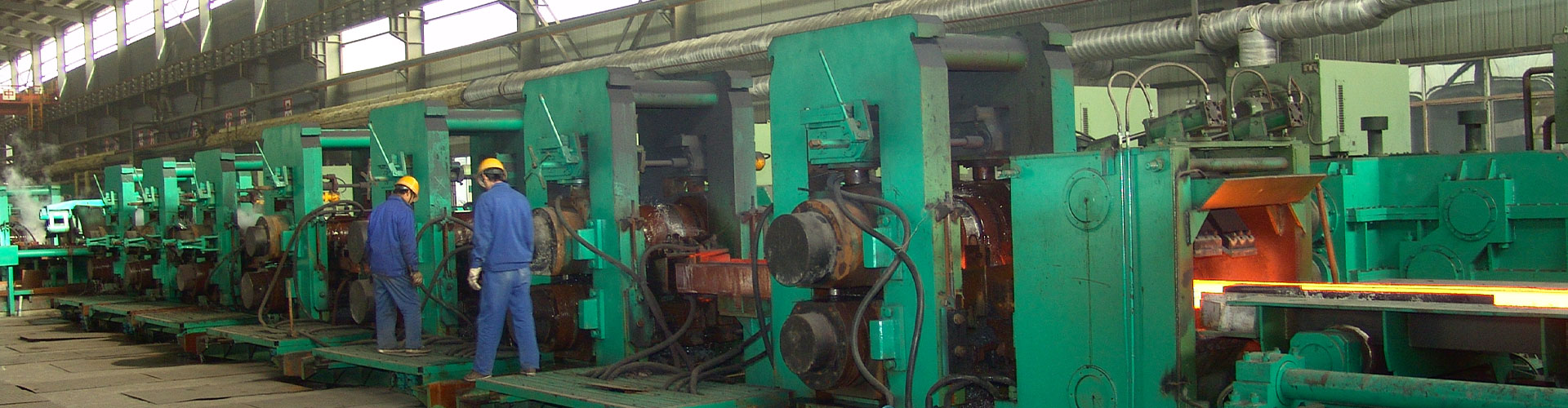
This setup is commonly used in continuous bar mills, wire rod production lines, and some مطاحن الشريط الساخن. Because it runs continuously in one direction, it’s ideal for high-speed, uninterrupted processing of long products like rods, لفائف, and strips.
How Does It Work? The Core Principle
The key idea behind a non-reversible rolling mill is that each pass happens in a separate roll stand. Instead of flipping the metal back and forth through the same rolls (like in reversible systems), the material moves forward through a series of stands—each reducing thickness or changing shape slightly.
على سبيل المثال, in a 10-stand wire rod mill, the billet enters the first stand hot and gets thinner with every subsequent pass. By the time it exits the last stand, it may be as thin as 5 mm in diameter—all without any reversal of roll direction.
Types of Non-Reversible Operation Modes
Not all non-reversible systems work the same way. Depending on speed control and mechanical design, there are several subtypes:
1. Constant Speed Mode
The rolls turn at a fixed RPM throughout operation. Simple to maintain and operate, this mode suits applications where incoming material size and temperature are highly consistent.
Best for: Small section mills, pre-finishing stands
2. Flywheel-Equipped System
A heavy flywheel stores kinetic energy. When a cold or oversized billet enters the roll gap, the sudden resistance causes a small drop in speed—but the flywheel helps recover momentum quickly.
This prevents stalling and protects motors from overload.
Typical flywheel mass: 5–15 tons depending on mill size
Speed dip range: 3%–8% under load
3. Infrequent Speed Adjustment
The mill has variable speed capability but only adjusts between different product batches. على سبيل المثال, switching from 12 mm rebar to 16 mm might require lowering the exit speed by 15%.
Adjustments are made manually or via preset recipes.
4. Frequent In-Process Speed Control
Advanced non-reversible mills can adjust roll speed dynamically during a single pass. This allows:
- Lower entry speed for better bite-in
- Higher mid-pass speed for productivity
- Reduced exit speed to avoid coiling issues or damage
This type uses AC vector drives and real-time feedback sensors.
Why Choose a Non-Reversible Setup?
While reversible mills offer flexibility, non-reversible systems win in many industrial scenarios due to their efficiency and stability. Here’s why plants choose them:
ملحوظة: Table data based on field reports from integrated mills and EPC contractors across Asia and Eastern Europe.
Real-World Application: Wire Rod Mill Example
Let’s look at how a typical non-reversible system works in a modern wire rod mill:
- حجم الخام: 150 مم × 150 مم × 12 م
- Starting Temp: ~1100°C after reheating
- عدد المدرجات: 28 (التخشين, متوسط, التشطيب)
- Final Diameter: 6.5 مم (coiled)
- Line Speed: Starts at 1.2 آنسة, reaches up to 110 m/s in final stand
- قوة المحرك: 3,500 KW (main drive), 400–800 kW per finishing stand
In this setup, each stand reduces the cross-section gradually. Because the system is non-reversible, tension is carefully controlled between stands using loopers or活套器 (loop setters). Too much tension risks breaking the bar; too little causes slack and misalignment.
Modern systems use laser gauges و infrared pyrometers to monitor dimensions and temperature in real time. If a deviation occurs, automatic adjustments are made within seconds—often before an operator even notices.
Common Challenges and How to Solve Them
مشكلة: Poor Bite-In at Entry Stand
If the billet doesn’t enter the roll gap smoothly, it can cause jamming or surface defects.
حل: Use low initial speed (0.5–0.8 m/s) and ensure proper roll groove alignment. Some mills add small hydraulic pushers to assist entry.
مشكلة: Temperature Drop Between Stands
As the bar travels down the line, it loses heat—especially in open-air sections.
حل: Install insulated tunnels or induction heaters between critical stands. Keep inter-stand distance short where possible.
مشكلة: Vibration and Chatter Marks
High-speed rolling can induce resonance in roll stands, leaving periodic marks on the surface.
حل: Balance backup rolls regularly, check bearing clearance, and use damping pads under housings. Consider segmented roll cooling for better thermal control.
Maintenance Tips for Long-Term Reliability
A well-maintained non-reversible mill can run for years with minimal downtime. Here are proven practices from experienced plant engineers:
- يوميًا: Check oil levels in gearboxes, inspect cooling water flow, verify sensor readings.
- أسبوعي: Measure roll wear using profilometers, clean scale buildup in chutes.
- شهريا: Perform vibration analysis on main motors and pinions.
- ربع سنوية: Replace worn roll bearings, test emergency stops, calibrate tension control systems.
- سنويا: Realign entire mill line, inspect foundation bolts, update drive software.
One steel plant in Turkey reported a 40% reduction in unplanned stops after implementing monthly laser alignment checks across all 18 stands of their rebar line.
When Not to Use a Non-Reversible System
Despite its advantages, this system isn’t always the best choice. Avoid it when:
- You need to roll very thick slabs with only 2–3 passes (reversible is more efficient)
- Product mix changes frequently (على سبيل المثال, switching between thick plate and thin strip daily)
- Space is extremely limited (non-reversible lines are longer)
- You’re doing experimental rolling or R&D work requiring flexible pass schedules
For batch production of specialty alloys or custom profiles, a reversible two-high mill often makes more sense.
الاتجاهات المستقبلية: Where Is This Technology Going?
Even though the basic concept is decades old, innovation continues in non-reversible rolling:
التحكم الذكي في فجوة اللفة
AI-powered systems now predict roll wear and adjust gaps automatically, maintaining consistent output even as tools degrade.
Digital Twin Integration
Full virtual replicas of the mill simulate rolling conditions before actual production, reducing trial runs and scrap.
أنظمة القيادة الهجينة
New installations combine AC motors with supercapacitor banks to handle transient loads—improving efficiency over traditional flywheels.
Final Thoughts for Operators and Engineers
The non-reversible system in rolling mill operation remains a cornerstone of efficient steel shaping. Its strength lies not in complexity, but in steady, predictable performance. Whether you’re running a small rebar line or a large-scale rod mill, understanding how to optimize speed, توتر, and maintenance will directly impact yield, جودة, and bottom-line results.
By combining classic engineering principles with modern monitoring tools, today’s mills achieve levels of precision that were unthinkable just 20 years ago. And while new technologies emerge, the core advantage of unidirectional, continuous rolling remains as relevant as ever.