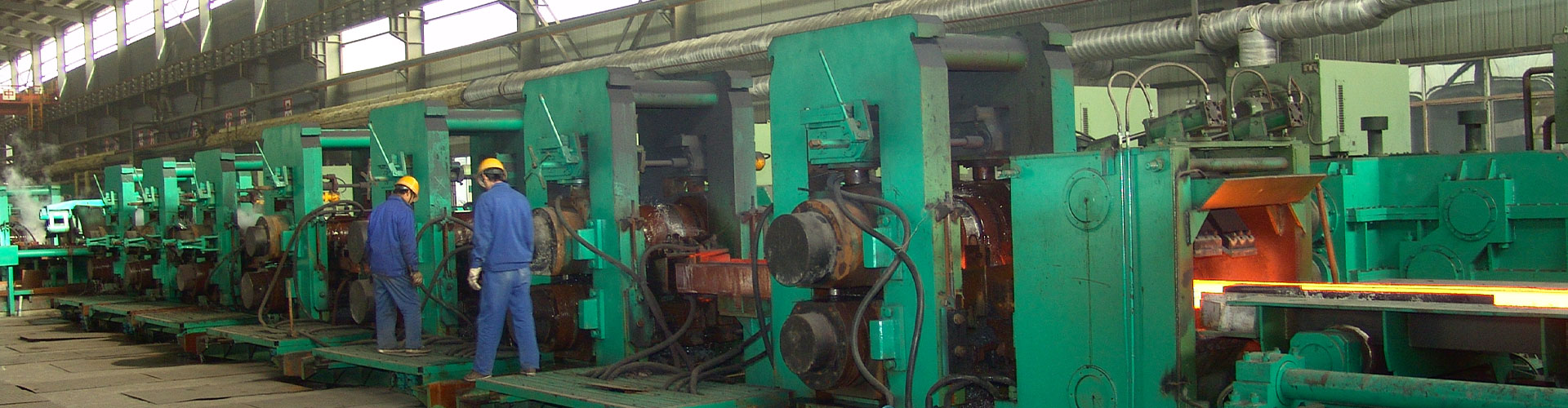
Productos laminados en frío de alta gama, como láminas para electrodomésticos., Las chapas para automóviles y el acero eléctrico requieren una calidad de forma de tira extremadamente estricta.. Por lo tanto, El control de la forma de las bandas se ha convertido en una tecnología central en la optimización del proceso de laminación en frío., Investigación de equipos y control inteligente.. Los métodos tradicionales de ajuste de forma incluyen el doblado simétrico del rodillo., Inclinación de rodillos y enfriamiento segmentado.. Sin embargo, Estos métodos tienen limitaciones obvias cuando se manejan defectos de tiras asimétricas.. Como resultado, El desarrollo y la aplicación del control de doblado de rodillos de trabajo asimétricos proporciona una solución eficaz para los problemas comunes de formas asimétricas en la producción de laminado en frío..
## 1. Situación actual y limitaciones del control tradicional de la forma de la tira
### 1.1 Peligros de defectos de tiras asimétricas
En la producción de laminación en frío, Muchos factores causan una deformación desigual de la tira.. Por ejemplo, espesor entrante desigual, Las propiedades inconsistentes de los materiales y el funcionamiento asimétrico del equipo en ambos lados del molino conducen fácilmente a defectos de onda de un solo borde.. Estos problemas asimétricos típicos reducen el rendimiento del material., aumentar los costos de producción y debilitar la competitividad del producto. En casos severos, Los defectos también pueden provocar que la superficie del rodillo se despegue y falle el equipo..
Los defectos simétricos, como las ondas centrales y las ondas de doble filo, se pueden eliminar mediante flexión simétrica convencional.. En contraste, Las ondas asimétricas de un solo borde no se pueden corregir con precisión con los métodos tradicionales., y durante mucho tiempo han restringido la mejora de la calidad de la tira en frío..
### 1.2 Deficiencias de los métodos tradicionales de ajuste de forma
Los laminadores en frío modernos se basan principalmente en la inclinación de los cilindros., Doblado simétrico del rodillo de trabajo y enfriamiento segmentado para control de forma.. La flexión simétrica es el método de ajuste más utilizado y sensible., pero sólo mejora las desviaciones simétricas de forma secundaria y de cuarto grado.. No puede abordar errores de franjas asimétricas.
La mayor parte de la corrección asimétrica actualmente depende de la inclinación del rodillo y del enfriamiento local.. La inclinación del rollo tiene desventajas inherentes. Primero, Provoca una fluctuación repentina de la forma y una baja precisión de ajuste.. No puede eliminar por completo los defectos asimétricos e incluso puede provocar nuevos problemas de forma o rotura de la tira.. Además, La posición del circuito cerrado y la fuerza de rodadura del circuito cerrado producen interferencias en el acoplamiento durante pequeños ajustes de inclinación.. Este problema provoca una mala estabilidad del sistema y grandes errores estáticos..
## 2. Principio y estructura del sistema de control de doblado de rodillos de trabajo asimétrico
### 2.1 Principio de control central
El doblado del rodillo de trabajo cambia la deflexión del rodillo mediante empuje hidráulico en los extremos del rodillo.. Reforma la separación entre rodillos y ajusta el espesor de salida de la tira y la distribución de tensión transversal para lograr el control de la forma..
La flexión simétrica tradicional aplica la misma fuerza de flexión en el lado de transmisión y en el lado de operación. La deformación del rollo es simétrica a lo largo de la línea central de rodamiento., por lo que el ajuste de un solo lado afecta inevitablemente al lado opuesto. Por otro lado, El control asimétrico de flexión del rodillo de trabajo rompe el límite de fuerza igual.. Aplica diferentes fuerzas de flexión en ambos lados del rodillo de trabajo para producir una deflexión asimétrica del rodillo.. Este método cambia la distribución de presión entre rodillos y forma un espacio entre rodillos asimétrico., que compensa eficazmente la desviación del espesor de la cuña y los defectos de onda de un solo borde.
### 2.2 Transformación del sistema de control
Los laminadores en frío tradicionales adoptan control sincrónico para el doblado de rodillos de trabajo. Mientras tanto, El control de doblado asimétrico del rodillo de trabajo mejora el sistema original mediante la instalación de bucles de control independientes para el lado de transmisión y el lado de operación..
El sistema mejorado admite dos modos de trabajo.. Mantiene la misma fuerza de flexión para la corrección de forma simétrica convencional., y también permite el ajuste de fuerza independiente para lograr un ajuste asimétrico. En general, Esta transformación aumenta la libertad de control de la forma a bajo costo sin reemplazar equipos de laminación de alta gama..
## 3. Análisis teórico y métodos de cálculo.
Analizar con precisión el rendimiento del control de doblado de rodillos de trabajo asimétrico., Investigadores de la industria han establecido un modelo completo de control de forma.. Este modelo cubre la deformación elástica del rollo., deformación plástica de la tira y pandeo de la tira. Los métodos de cálculo numérico maduros garantizan la viabilidad de la ingeniería.
Se adopta el método de función de influencia de unidad segmentada para el cálculo de la deformación del rollo.. Equilibra la precisión y la eficiencia del cálculo. Además, Evita la baja precisión de los métodos analíticos y el problema de no convergencia de la simulación de elementos finitos para tiras delgadas.. En condiciones de trabajo asimétricas, Se analiza todo el cuerpo del rodillo basándose en el teorema de Castigliano..
El método variacional se utiliza para el cálculo de la deformación plástica de las tiras para adaptarse a las características de deformación tridimensional de las tiras laminadas en frío.. Se construye un algoritmo iterativo de ciclos múltiples para revisar la presión entre rodillos., fuerza de rodadura, Espesor y tensión de salida.. El sistema introduce un flujo de metal transversal y utiliza un ajuste estriado cúbico para simular la distribución del espesor transversal.. Finalmente, el sistema de cálculo optimizado predice con precisión la distribución de la presión, Espesor de salida y variación de la tensión transversal bajo diferentes fuerzas de flexión asimétricas..
## 4. Ventajas técnicas y efectos de aplicación del control de doblado de rodillos de trabajo asimétrico
### 4.1 Optimice la presión entre rodillos y extienda la vida útil de los rodillos
El control asimétrico de flexión de los rodillos de trabajo equilibra eficazmente la presión de contacto entre los rodillos de trabajo., rodillos intermedios y rodillos de respaldo. Reduce la presión máxima en los extremos de los rollos y mejora la distribución desigual de la presión.. La tecnología alivia el desgaste asimétrico de los rodillos y evita el pelado de la superficie de los rodillos., reduciendo así los costos de mantenimiento del equipo y las tasas de falla.
### 4.2 Elimine el espesor asimétrico y la desviación de tensión
Las bandas entrantes con espesor de cuña siempre causan tensiones transversales desequilibradas y ondas de un solo borde.. La flexión simétrica no puede resolver la diferencia de espesor unilateral. Sin embargo, El control asimétrico de doblado del rodillo de trabajo corrige la desviación del espesor transversal y logra una distribución uniforme de la tensión en la salida de la tira.. Elimina fundamentalmente los defectos de forma asimétrica..
### 4.3 Reemplace la inclinación del rodillo para un ajuste fino de alta precisión
Utilizando la desviación estándar de Bessel como índice de evaluación, Una comparación práctica muestra que pequeños ajustes de inclinación del rollo provocan una gran fluctuación de la desviación estándar y una mala estabilidad de la forma.. Cuando los usuarios reemplazan la inclinación con un control de doblado de rodillos de trabajo asimétrico, la desviación de la forma y el rango de fluctuación disminuyen significativamente. Mejora en gran medida la uniformidad de la tira y la precisión general del control bajo defectos asimétricos menores..
## 5. Resumen técnico
El control de doblado asimétrico del rodillo de trabajo rompe la limitación del doblado simétrico tradicional. Forma un sistema teórico y práctico completo para la corrección de la forma de tiras asimétricas.. La tecnología optimiza la distribución de la tensión del rollo., Reduce el desgaste de los rodillos y reduce los riesgos de producción.. Reemplaza la inclinación inestable del rollo en escenarios de ajuste fino y logra un control de forma de alta precisión con un bajo costo de renovación..
Compatible con HC, UC, CVC y laminadores en frío convencionales de cuatro alturas, El control de doblado de rodillos de trabajo asimétrico presenta una lógica simple y umbrales de aplicación bajos.. Se ha convertido en una tecnología práctica clave para eliminar defectos asimétricos en las bandas y cumplir con los requisitos de producción de laminado en frío de alta gama..