A forged cold rolling work roll fails for reasons that were decided long before the roll reached the finishing grinder. Inclusiones, liquation carbides and randomly distributed surface defects all originate in melting and solidification. This article therefore traces those three defect families back to the electroslag remelting stage. It then shows what three process changes did to the defect rates on a production line. For an electroslag remelting roll, these three families cover most of the metallurgical risk a buyer carries.
The material in question is MC5, corresponding to grade 9Cr5Mo1V, selected under GB/T 15547-2012 for forged cold roll blanks. De hecho, the grade descends from GCr15 bearing steel, which carries 1.0% C y 1.5% Cr and corresponds to AISI 52100.
The manufacturing route and where quality is fixed
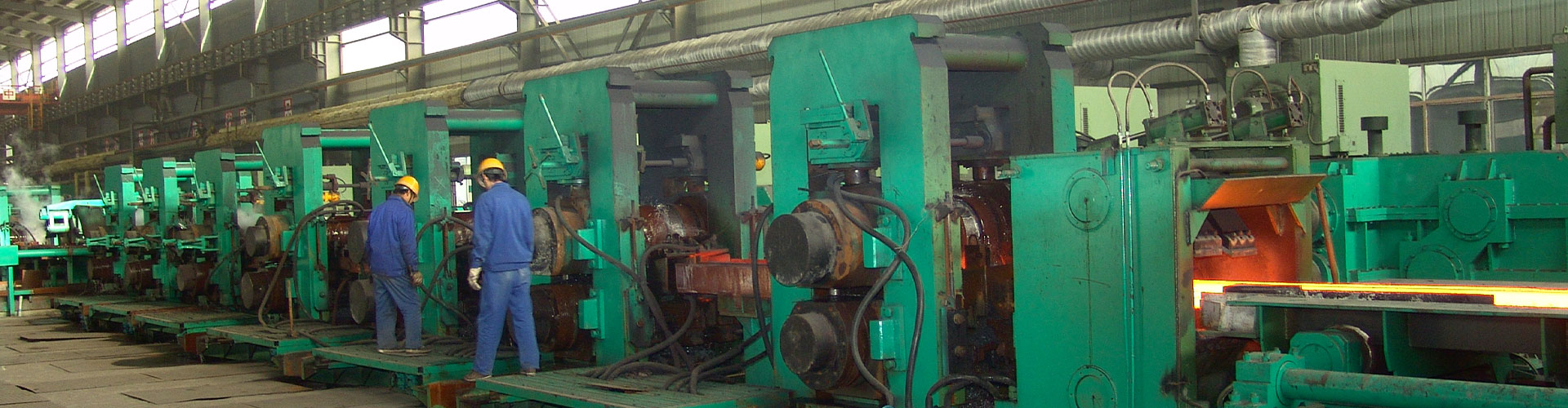
Típicamente, the mature route runs: melting and casting, refundición de electroescoria, forja, post-forge heat treatment, rough machining, dual-frequency hardening, final machining.
Sin embargo, three of those steps decide metallurgical quality. They are melting and casting, refundición de electroescoria, and forging. The rest of the route can hold a good roll together, but it cannot repair what those three steps got wrong.
The trial roll followed a specific route worth recording. It began with 30 t EAF primary melting plus 45 t LF/VD refining. Then came mould casting into a 10 t electrode ingot of ϕ750 mm, followed by 10 t ESR into a ϕ950/1000 mm electroslag ingot. A 45 MN forging press then produced a roll of ϕ470 mm diameter with a 1780 mm body length. Rough machining opened the section for inclusion and carbide inspection, and final machining allowed surface wave testing for DRS.
What an electroslag remelting roll changes in inclusions
en servicio, a cold rolling work roll carries bending load, torsional load and impact from the incoming strip. That load path makes matrix cleanliness critical, and cleanliness is largely a question of non-metallic inclusions.
Inicialmente, sectioning the ϕ750 mm electrode ingot radially showed large inclusions with sharp angular shapes. Por el contrario, sectioning the ϕ950/1000 mm electroslag ingot radially showed a clear reduction in both count and size, with the particles dispersed and rounded. Slag washing during remelting produced that change.
Además, SEM and EDX analysis of a single spherical DS-type inclusion after remelting identified O, Mg, Al and Ca as the main elements. These form calcium aluminate (CaO+Al2O3) and magnesia-alumina spinel (MgO+Al2O3), which are typical oxide inclusions.
Como resultado, remelting lowers total inclusion content and removes the large particles. It does not change the inclusion type. That is why an electroslag remelting roll still needs inclusion inspection after rough machining. It does, sin embargo, raise the proportion of aluminium-bearing spherical inclusions. En producción, oxygen content rises after remelting and then combines with aluminium to form calcium aluminate. Those particles become nucleation sites for other inclusions, and the result is a grade that exceeds specification.
Atmosphere protection during remelting is therefore the main countermeasure. Lowering the oxidising potential of the melt space reduces both the re-formation and the growth of inclusions after remelting.
Liquation carbides: segregation that survives forging
Beyond inclusions, liquation carbides above specification are a structural defect with consequences at both ends of the roll life. During manufacture they raise the risk of quench cracking. In service they reduce wear resistance and fatigue limit.
Como consecuencia, the defect concentrates in the transition layer between the working layer and the core. As the working layer is consumed, the accumulated carbides appear at the surface. Because carbide hardness and wear resistance exceed those of the normal structure, the roll face shows bright patches, and strip surface quality suffers. The same carbides are a leading cause of spalling and roll scrapping.
Además, SEM and EDS analysis of an out-of-specification region showed chromium segregation. That segregation forms pseudo-eutectic liquation carbides, and the resulting elemental segregation during solidification is difficult to remove by later forging and heat treatment.
En este sentido, electroslag remelting is the last melting step available to correct segregation. Lowering melting rate and strengthening water cooling both help. Faster solidification compresses the time window for eutectic carbide precipitation. Less time to precipitate means less carbide forms. It also lowers the eutectic carbide rating and the maximum carbide size in the finished electroslag remelting roll.
Surface random defects: DRS
A cold rolling work roll consumes its working layer continuously. Debido a esto, any small defect inside the specified working layer affects strip quality.
En general, DRS splits into two families. Crack-type open defects, and volumetric closed defects such as pores and slag inclusions. Apart from open defects created by finishing grinding and by roll-shop grinding after service, the rest therefore trace back to roll-making metallurgy.
For the trial, the roll measured ϕ470 mm × 1780 mm. Surface wave testing found a defect indication at 137.11 mm from the probe position. It sat within 2λ≈3 mm of the roll body surface, with a reflected wave of DAC+4.8 dB. Además, magnetic particle inspection confirmed crack indications on the surface. Direct examination of the defect site found a micro-crack type open defect.
metalúrgicamente, the roll surface corresponds to the columnar crystal zone of the electroslag ingot. Improving the solidification structure in that zone, and controlling forging deformation, both reduce the probability of micro-crack open defects. That makes the columnar zone a metallurgical quality factor that cannot be ignored.
Three electroslag changes
For that reason, the work identified three dimensions for improvement: atmosphere protection, solidification cooling, and ingot slenderness.
Atmosphere protection. For scale, a 10 t ingot of 9Cr5Mo1V takes 14 a 16 hours to remelt. Without protection of the melt space, free oxygen from the environment crosses the slag pool into the metal pool and DS inclusions keep growing.
Mientras tanto, CaF2-based slag releases HF and SiF4 during remelting, which puts atmosphere protection and dust extraction in direct conflict. One needs positive pressure from protective gas, the other needs negative pressure to capture fume. The solution, then, was a sealed hood combining both functions. It forms a closed annular space between the slag pool, the mould and the argon seal. Argon injected through 45° nozzles creates slight positive pressure, so the melt stays under argon throughout.
For flow control, argon is drawn from the steelworks pipeline through a thermal mass flow meter of the AF200 series. The meter range is 0 a 50 m³/h at standard conditions. De este modo, with the sealed hood and the corrected argon pressure and flow, measured oxygen concentration in the protected space sits near 0.0010%. Como consecuencia, the DS inclusion over-specification rate after forging fell by 4% a 5% against the unprotected process. DS inclusion ratings dropped noticeably as well.
Cooling intensity. Similarmente, cooling strength governs ingot density, crack tendency and segregation. en esta linea, the relevant variables were water flow stability in the mould, water quality, and inlet temperature.
On the cooling side, production statistics showed that holding inlet temperature near 25 °C raises the share of grade 0 liquation carbides. Respectivamente, the cooling circuit was rebuilt around a closed-loop tower system into an internal-plus-external circulation arrangement with temperature control. A softened-water unit was added, and variable-frequency fans were added to regulate the external loop.
The improved system holds mould inlet temperature between 15 y 35 °C, with the inlet-to-outlet difference stable at 4 a 5 °C. Como resultado, the qualified rate for liquation carbide segregation approached 100%.
Ingot slenderness. El 10 t ingot geometry was changed, with matching ESR adjustments and a 10% a 15% reduction in slag volume. That produced the ϕ470 mm × 1780 mm MC5 electroslag remelting roll body.
Across 110 consecutive rolls made on the slender ingot, surface wave testing pass rate rose from 85% a 92% against the previous geometry.
Three mechanisms explain the gain. Primero, a smaller mould diameter concentrates heat in the slag pool, which improves slag melting and reduces gas and unstable oxides in the slag. A lower fill ratio reduces average turbulent kinetic energy across the slag pool section. Less turbulence means weaker disturbance of the metal pool. That lowers the probability of slag and gas entrapment in the columnar zone at the ingot edge.
Segundo, a smaller cross section raises relative cooling intensity, which favours a shallow, flat molten pool and a denser columnar zone. That improves metallurgy in the surface and columnar regions and gives forging and heat treatment better material to work with.
Finalmente, the slender ingot improves forging ratio control. Cold roll forging calls for a body upsetting ratio of at least 2. Comparing 2.5 against 2.0 showed a clear difference. The higher ratio removes the axial defect zone completely. It also improves plastic deformation in the columnar zone, which lowers the probability of micro-crack formation.
What the results support
Taken together, the three changes act on different defect families, and each one shows up in a different measurement. Atmosphere protection reduces regenerated DS inclusions, with oxygen near 0.0010% and an over-specification rate down 4% a 5%. Cooling improvement acts on segregation. It holds inlet water at 15 a 35 °C with a 4 a 5 °C differential, and it brings liquation carbide qualification close to 100% on the electroslag remelting roll. Ingot slenderness acts on the columnar zone and the surface, lifting DRS pass rate from 85% a 92%.
For a roll buyer, por lo tanto, the practical lesson is that metallurgical quality claims should be tied to a named process step. En breve, a supplier describing an electroslag remelting roll should be able to name the atmosphere, the cooling window and the ingot geometry behind it. Those three describe the defect rates the roll will actually deliver.