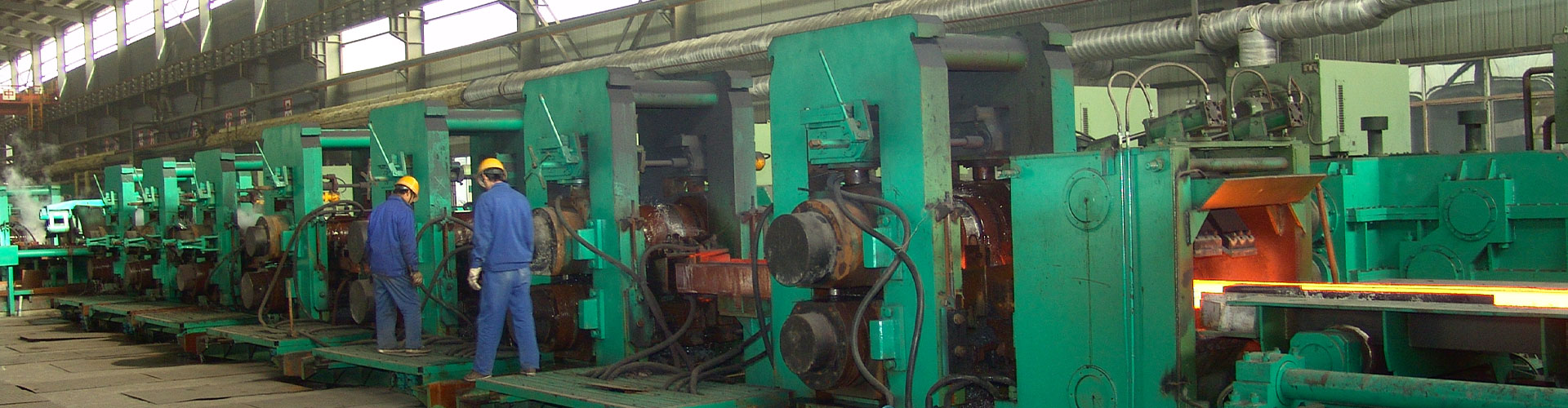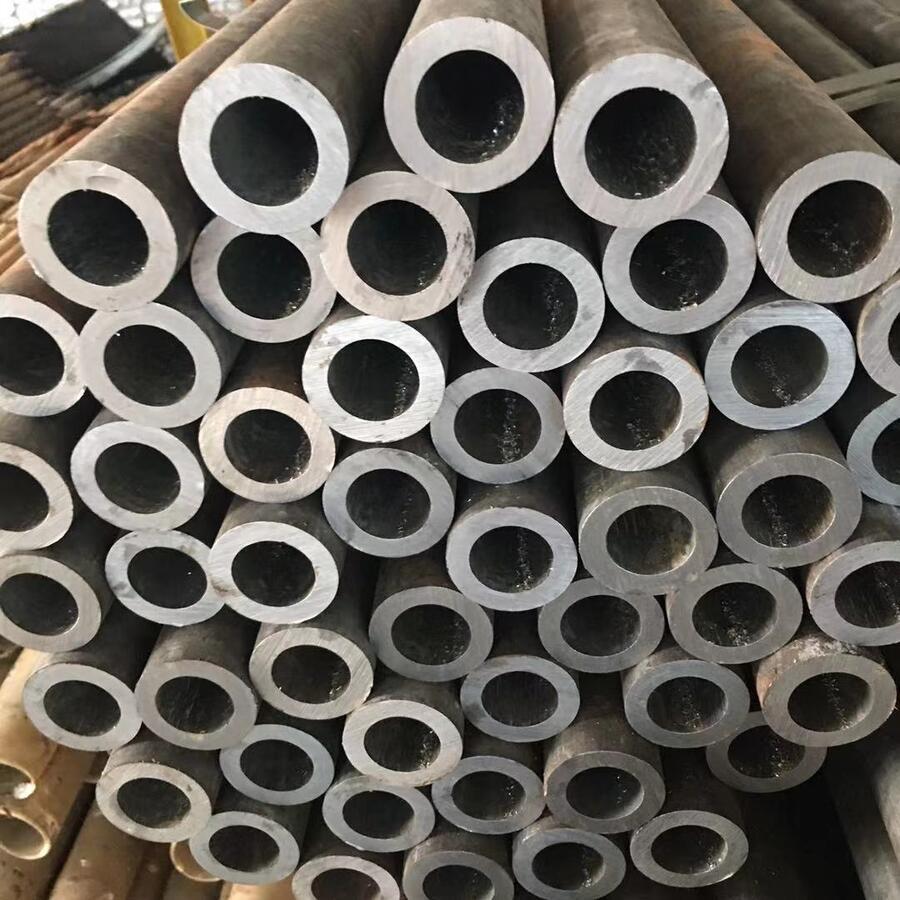
Rolls are essential and consumable core components of all rolling mill equipment. They serve a vital role in both metallurgical and non-metallurgical rolling production. With the rapid development of the steel industry, China’s annual steel output has exceeded 800 millones de toneladas. Mientras tanto, upgrading quality standards for automotive, mechanical and high-end manufacturing products raise stricter requirements for steel dimensional accuracy, surface finish and mechanical performance. These changes further demand advanced roll manufacturing technology and treatment process for rolling mill rolls.
Roll consumption per ton of steel acts as a key indicator to evaluate roll manufacturing quality. The average roll consumption of domestically produced metallurgical rolls reaches 2.46kg per ton of steel. This figure is much higher than the advanced international standard of 1kg per ton. Por esta razón, most large domestic steel mills rely heavily on imported high-performance rolls. Some large steel enterprises spend over 200 million RMB on roll procurement every year. Imported rolls account for 70% of the total purchase volume, while domestic products only occupy 30%. This gap clearly reflects the backwardness of China’s high-end roll manufacturing industry. Por lo tanto, optimizing roll manufacturing technology and treatment process has become a core task for upgrading the domestic steel rolling industry.
1. Conventional Roll Manufacturing Technology
According to the material structure of roll barrel, roll core and roll neck, industrial rolls are divided into integral rolls and composite rolls. Conventional integral roll manufacturing technology mainly includes casting and forging processes. Casting technology covers integral casting, overflow casting and centrifugal casting.
1.1 Integral Casting Technology
Integral casting rolls adopt an integral mold structure consisting of a riser, upper roll neck and lower roll neck. Manufacturers mainly use circular sand boxes and dry sand molds for production. The roll barrel requires rapid cooling, so workers apply metal lining and surface coating and adopt bottom pouring casting mode.
Sin embargo, rolls made by integral casting have low core toughness. They cannot adapt to the working conditions of high-speed and heavy-load rolling mills, so they only apply to ordinary low-demand rolling production lines.
1.2 Overflow Casting Technology
Overflow casting technology improves the low core toughness defect of integral casting rolls. The production process follows a two-step pouring mode. Workers first pour molten metal for the roll working layer. After fully filling the mold, they pause for a certain period and then pour core molten metal.
The newly injected core metal pushes out the unsolidified central metal through overflow grooves. Workers block the overflow ports after the mold is completely filled. This method effectively optimizes the internal structure and significantly enhances the core toughness of finished rolls.
1.3 Centrifugal Casting Technology
Centrifugal casting supports vertical and horizontal pouring modes. Compared with integral casting and overflow casting, this roll manufacturing technology and treatment process has prominent comprehensive advantages. It greatly improves the molten metal yield and saves alloy raw materials.
Centrifugal force makes the roll working layer form a dense and uniform structure. It optimizes roll surface quality, improves overall roll strength and extends service life. Además, this technology features simple operation, high production efficiency and stable quality control. Actualmente, most domestic roll factories adopt centrifugal casting as the mainstream production process for composite rolls.
1.4 Forging Technology
Forging technology produces high-quality integral rolls without composite bonding layer defects. The complete process includes small ingot casting, electroslag remelting, forging forming, pre-heat treatment roughing, heat treatment and finish machining.
Forged rolls have uniform internal structure and excellent toughness. But the whole manufacturing process is complicated with high production costs. It is only suitable for manufacturing high-end precision rolls with strict performance requirements.
2. Advanced New Roll Manufacturing Technology
To further improve roll wear resistance, strength and toughness, new composite manufacturing technologies have been widely promoted in roll production. These innovative processes break through the performance limitations of conventional casting and forging rolls.
2.1 Continuous Casting Composite (Partido Comunista de China) Tecnología
The CPC technology uses a forged steel mandrel as the roll core. Workers coat flux on the mandrel surface and preheat the surface through induction coils. Then they pour molten working-layer metal between the mandrel and the intermediate induction coil device.
The induction coil keeps the molten metal at a constant temperature to realize tight metallurgical bonding with the core. A small amount of core material melts during bonding to form a stable transition layer. Workers must strictly control the melting volume to avoid working layer material pollution. The mandrel descending speed determines bonding quality and overall production efficiency, so CPC technology has relatively low output capacity.
2.2 Electroslag Remelting (ESR) Surfacing Technology
ESR technology uses resistance heat generated by current passing through molten slag to melt metal materials. Roll blanks processed by electroslag remelting do not require forging. They directly complete annealing, mechanical processing, heat treatment and finishing to form finished rolls.
Similar to CPC technology, ESR replaces induction heating with electroslag heating. It preheats and cleans the mandrel surface without pre-coating flux. Molten metal agitation under electroslag promotes uniform bonding layer formation. Strict process control is necessary to prevent material pollution, which limits its production efficiency.
2.3 Powder Metallurgy + Hot Isostatic Pressing (CADERA) Tecnología
This new composite technology fixes a forged steel shaft inside a sealed container filled with metal powder. The whole device conducts hot isostatic pressing under high temperature and high pressure. The metal powder compresses to 75% of the original volume and forms a dense composite roll structure.
This process creates an ultra-high-quality defect-free bonding layer. Sin embargo, it requires large-scale professional HIP equipment. The equipment cost is high, so it cannot adapt to the production of large-size rolls and only applies to small and medium high-precision rolls.
2.4 Spray Forming Technology
Spray forming technology shares similar principles with powder metallurgy. It uses inert gas acceleration to form oscillating waves and atomize molten metal into fine droplets. These droplets spray onto the receiver surface and solidify rapidly to form roll working layers.
Droplet solidification depends on thermal convection during flight and thermal conduction after deposition. Workers control the deposition surface shape to guarantee overall quality. The final deposition has two states: granular and non-granular precipitation.
Precise equipment control keeps droplets in a semi-solid state during collision. The liquid phase forms a uniform paste layer, while solid particles disperse and bond tightly. The finished roll has a dense segregation-free microstructure and finer grain size than traditional cast rolls.
2.5 Electroslag Liquid Metal Composite (ESLM) Tecnología
ESSLM technology is an efficient innovative process completed in a custom water-cooled copper mold. Workers place the roll core shaft in the mold and inject molten steel through the gap between the core shaft and the mold wall.
The water-cooled copper mold solidifies the outer molten metal to form a composite layer. It also acts as a non-consumable electrode to provide stable electric heat for the slag pool. A thin layer of the core shaft melts and fuses with the injected outer layer metal to form a seamless metallurgical bonding layer.
The whole process supports continuous pouring and segmented forming. Its production efficiency is dozens of times higher than traditional electroslag remelting. Lo más importante, ESSLM supports composite forming of special materials including cast iron, acero de alta velocidad, acero para herramientas, stainless steel and nickel-based alloy. It can process materials that cannot form through traditional hot and cold working.
Actualmente, ESSLM technology manufactures new high-speed steel composite rolls with total carbide-forming elements exceeding 25%. These rolls have multiple improved service lives, excellent thermal fatigue resistance and comprehensive corrosion resistance.
2.6 Cast-In-Carbide (CIC) Composite Roll Technology
CIC combination roll technology integrates cemented carbide roll rings and ductile iron roll bodies through one-piece casting metallurgical bonding. Torque transfers evenly through the internal metallurgical layer, which minimizes the stress of the carbide roll ring.
Compared with mechanical fixed carbide rolls, CIC composite rolls have stronger structural stability and load-bearing capacity. They show more prominent application advantages in large-scale and high-intensity rolling production scenarios.
3. Roll Surface Treatment Process
Rolls bear continuous bending, friction and impact loads during rolling operation. The main failure forms include surface wear and peeling. De este modo, roll surfaces require high strength, dureza, wear resistance and fatigue limit. These key performance indicators depend on both roll material quality and professional roll manufacturing technology and treatment process. The mainstream surface treatment technologies include overall quenching, induction quenching, surfacing, thermal spraying, thermal spray welding and laser surface modification.
3.1 Overall Quenching Process
Overall quenching uniformly heats the entire roll to austenitizing temperature for integral quenching. Workers wrap roll necks with thermal insulation materials to retain original toughness. This process forms high residual compressive stress on the roll surface.
Sin embargo, it has obvious defects such as shallow hardened layer, weak matrix strength and poor accident resistance. It only suits ordinary low-load roll surface reinforcement treatment.
3.2 Induction Heating Quenching Process
Induction heating quenching uses high-frequency alternating magnetic fields for two-stage continuous heating. It rapidly heats the roll surface above the critical temperature and forms martensite structure after rapid cooling.
The matching power frequency and intermediate frequency induction coils ensure uniform heating depth and temperature. Domestic steel mills widely adopt Belgian OSB dual-frequency quenching equipment and self-developed Beiman Special Steel quenching machines.
This technology only heats the shallow surface layer, while the internal roll temperature remains low. It cannot form a fully uniform hardened layer, which limits its further popularization and application.
3.3 Surfacing Process
Surfacing is a common roll repair and reinforcement process. It melts metal materials through electric welding or gas welding and stacks them on the worn roll surface to restore size and wear resistance.
This process can effectively improve roll surface hardness, but it has disadvantages including complex operation, low production efficiency and high technical requirements for workers. Además, surfacing layers easily produce defects such as pores, cracks and slag inclusions, which affect roll service life.
3.4 Thermal Spraying Process
Thermal spraying sprays molten or semi-molten alloy materials onto the roll surface at high speed. It forms a mechanical or micro-metallurgical composite coating. The coating has low bonding strength with the substrate and contains internal voids and residual stress.
These defects reduce roll toughness and machinability. Mientras tanto, thermal spraying has low material utilization rate and certain health hazards to operators.
3.5 Thermal Spray Welding Process
Thermal spray welding optimizes and upgrades the thermal spraying process. It conducts secondary remelting treatment on the sprayed coating. The self-fluxing alloy powder fully melts and infiltrates the substrate surface to form tight metallurgical bonding.
This composite process integrates the advantages of alloy spraying and metal surfacing. It solves the problems of low bonding strength and low hardness of thermal spraying layers. High-alloy powder materials endow the spray welding layer with special wear resistance and corrosion resistance that ordinary surfacing layers cannot achieve.
3.6 Laser Surface Modification Process
Laser surface modification uses high-energy density laser beams to instantly heat the roll surface and realize microstructure reorganization and performance optimization. It includes laser phase transformation hardening, laser melting, laser cladding, laser alloying and laser texturing.
This advanced technology features high processing precision, refined strengthened microstructure and small thermal deformation. It forms a flexible discrete strengthened layer with balanced hardness and toughness. It effectively improves roll surface hardness, wear resistance and fatigue resistance, and greatly extends the service life of rolling mill rolls.
4. Conclusión
With the continuous upgrading of metallurgical technology, roll manufacturing technology and treatment process have achieved rapid iterative development. Domestic roll manufacturing and R&D capabilities have made remarkable progress in recent years. Sin embargo, there is still a clear gap compared with international advanced levels in high-end composite roll manufacturing and precision surface treatment.
En el futuro, scientific research institutions, manufacturing enterprises and steel mills need to cooperate closely. Continuous optimization of roll composite forming technology and intelligent surface treatment processes will help narrow the international gap, improve domestic roll manufacturing level, and provide high-quality core components for the high-quality development of the steel rolling industry.