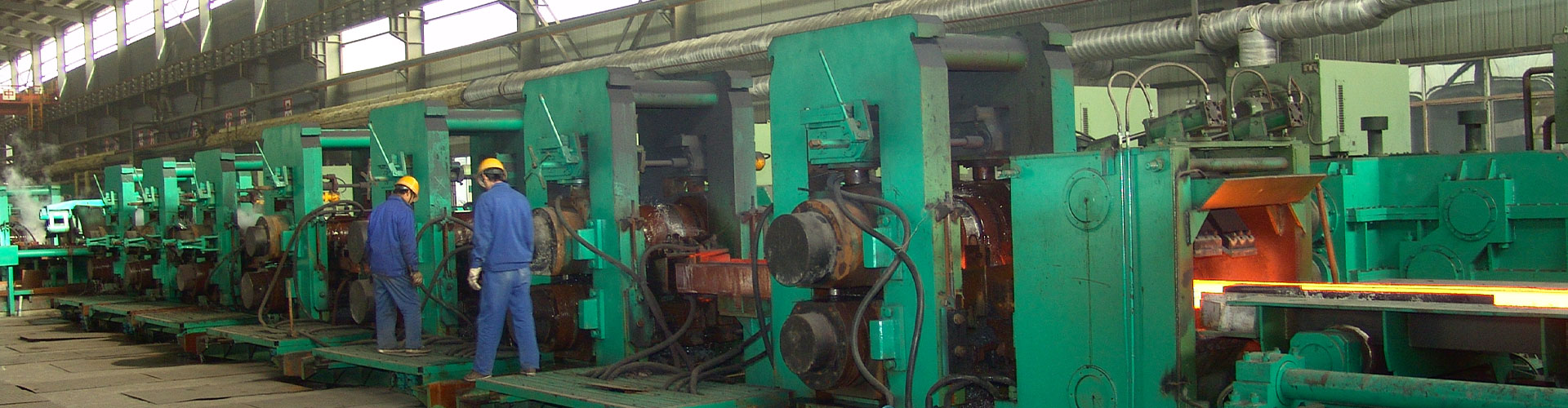
Rolls are the core components of rolling mill equipment. They directly determine rolling efficiency, finished steel quality and overall production costs. Reasonable roll material selection and usage specification can effectively reduce roll consumption, cut down equipment downtime and improve production capacity. This article systematically introduces the characteristics, applicable scenarios, selection methods and standardized maintenance rules of mainstream roll materials. It provides practical technical reference for steel mill operators and technicians.
1. Classification and Core Properties of Mainstream Roll Materials
Different roll materials have distinct mechanical properties, wear resistance and thermal fatigue resistance. Choosing suitable roll materials according to rolling conditions is the core of scientific roll material selection and usage specification.
1.1 Forged Steel Rolls
Forged steel rolls adopt high-temperature forging technology. They feature dense internal structure and refined grain organization. The overall mechanical properties are excellent with high strength, good toughness and strong thermal crack resistance.
Common materials include 55Mn2, 55cr, 60CrMnMo and 60SiMnMo for hot rolling. 9Cr2Mo, 9CrV and high-carbon chromium steel are widely used for cold rolling. The hardness ranges from 45–60HSD for hot rolling rolls and 85–100HSD for cold rolling work rolls.
These rolls apply to hot rolling roughing stands, backup rolls and blooming mill rolls. They also serve high-load key positions such as cold rolling work rolls and backup rolls. They show strong fracture resistance, adapt to heavy rolling force conditions and reduce unit rolling costs with long service life.
1.2 Alloy Cast Steel Rolls
Alloy cast steel rolls are produced by electric furnace smelting, integral casting and professional heat treatment. They own high strength and good toughness. Their wear resistance is significantly better than ordinary cast steel rolls.
This roll material contains alloy elements such as Cr, Mes, Ni and V, with a hardness range of 50–70HSD. It is suitable for rough and intermediate rolling stands of section steel, as well as hot strip roughing stands and backup rolls.
Alloy cast steel rolls balance toughness and wear resistance for medium-load rolling conditions. They cost less than forged steel rolls with high production efficiency and short delivery cycle.
1.3 High-Chromium Iron Rolls
High-chromium iron rolls are manufactured by centrifugal casting. The outer working layer is made of high-chromium white wear-resistant cast iron with 10–30% chromium content. A large number of Cr7C3 hard carbides form inside the material, bringing excellent wear resistance and oxidation resistance.
Common types include high-chromium composite cast iron and semi-steel composite cast iron. The hardness ranges from 60–95HSD, and the cold rolling type can reach HRC60–65.
They are widely used in finishing work rolls of hot strip continuous rolling mills, cold strip work rolls and temper rolls. Their wear resistance is 3–5 times that of ordinary cast iron rolls. The smooth roll surface effectively improves the surface quality of finished steel products.
1.4 Adamite Rolls (Semi-Steel Rolls)
The carbon content of semi-steel rolls is between cast steel and cast iron, ranging from 1.8% a 3.0%. They combine the high toughness of cast steel and the good wear resistance of cast iron with moderate price.
The hardness range is 55–80HSD. They adapt to post-roughing and pre-finishing stands of hot strip mills, intermediate and finishing stands of section steel mills, and intermediate rolling stands of bar and wire rod mills. With high cost performance, they perfectly match medium-load and medium wear-resistant working conditions.
1.5 Special Material Rolls
In addition to conventional rolls, special rolling scenarios require high-performance special material rolls. The performance and application differences are shown in the table below.
Tipo de material
Core Characteristics
Application Scenarios
Ceramic Rolls
High temperature resistance, excellent chemical stability, low friction coefficient
High-temperature hot rolling section, high-precision rolling and special steel production
Cemented Carbide Rolls
Extremely high hardness (HRC90+), superior wear resistance and anti-seizure performance
Ultra-thin strip rolling, high-precision pipe rolling and cold drawing dies
High-Speed Steel Rolls
Excellent red hardness, strong wear resistance and thermal fatigue resistance
Post-finishing stands of hot strip mills and high-carbon steel rolling production
2. Core Principles and Practical Guidelines for Roll Selection
Scientific roll selection must match rolling technology, product characteristics and cost control. Three core elements determine the final selection scheme.
2.1 Three Key Selection Elements
Rolling Process Matching: Hot rolling prioritizes thermal fatigue resistance and toughness with balanced wear resistance. Cold rolling focuses on high hardness and wear resistance to guarantee steel surface quality. Rough rolling requires high strength and impact resistance with allowable moderate wear. Finishing rolling demands high hardness and ultra-precise surface with strict wear control.
Product Characteristic Adaptation: High-strength steel requires high-hardness and wear-resistant materials such as high-chromium cast iron and high-speed steel. Thin-gauge strip steel prefers high-chromium composite cast iron with excellent surface smoothness. Special steel types adopt high-temperature resistant and anti-sticking materials including ceramic and cemented carbide rolls.
Cost-Benefit Balance: Evaluate comprehensive costs including procurement, usage and maintenance instead of initial price only. High-load key stands adopt high-cost-performance forged steel or high-chromium composite rolls to reduce unit rolling cost. Low-load auxiliary stands select economical alloy cast steel or semi-steel rolls to control overall investment.
2.2 Quick Roll Selection Comparison Table
This table summarizes the matching relationship between rolling processes and roll materials, which is convenient for on-site rapid selection.
Proceso de rodadura
Material recomendado
Hardness Range
Core Advantages
Hot Rolling Blooming / Desbaste
Acero forjado / Alloy Cast Steel
45–60HSD
High toughness, impact resistance and thermal fatigue resistance
Hot Rolling Intermediate Rolling
Semi-Steel / High-Chromium Composite Cast Iron
55–75HSD
High cost performance, balanced wear resistance and toughness
Hot Rolling Finishing
High-Chromium Cast Iron / Acero de alta velocidad
75–95HSD
Ultra-high wear resistance, excellent finished surface quality
Cold Rolling Work Roll
High-Chromium Cast Iron / Acero forjado
85–100HSD
Extremely high hardness, wear resistance and rolling precision
Cold Rolling Backup Roll
Acero forjado
45–60HSD
High strength, high rigidity and fracture resistance
Temper Mill
High-Chromium Cast Iron / Ceramic
80–95HSD
Smooth surface, wear resistance and anti-sticking performance
3. Standard Usage and Maintenance Specifications of Rolls
Correct operation and scientific maintenance are important supplements to roll material selection and usage specification. They effectively extend roll service life and stabilize rolling quality.
3.1 Installation and Commissioning Standards
Inspect new rolls comprehensively before online operation. Ensure no cracks, scratches or indentations on the roll barrel, with qualified dimensional accuracy and uniform hardness. Keep precise positioning during installation. Guarantee the parallelism, horizontality and roll gap clearance meet process standards to avoid eccentric load.
Adopt step-by-step pressure boosting for initial loading. Gradually increase the rolling force from 50% to the target value to prevent thermal and mechanical impact. Equip a stable cooling system to ensure uniform spraying and avoid local overheating and thermal cracks.
3.2 Operation Process Control
Strictly control technical parameters during operation. Limit the bending roll force within 90% of the rated equipment value to prevent uneven bearing stress and roll surface deformation. Follow standard rolling passes to avoid fatigue failure caused by over-service.
Control the rolling temperature within the process window to reduce thermal stress damage. Establish real-time temperature and vibration monitoring mechanisms. Stop the machine immediately for inspection once abnormal conditions occur. Regularly clean oxide scale on the roll surface to prevent surface scratches. Record rolling tonnage and take offline maintenance when reaching the preset limit.
3.3 Offline Maintenance and Inspection Standards
Thoroughly clean oil stains and oxide scale after roll offline, and conduct non-destructive testing. The grinding amount per time shall not be less than 0.2mm to completely remove surface fatigue layers and microcracks. Ensure the roll surface roughness Ra ≤ 0.8μm to avoid stress concentration. Detect surface hardness after grinding to guarantee overall uniformity.
Store rolls in a dry and ventilated environment with anti-rust oil coating. Place rolls horizontally to prevent deformation and rotate regularly to avoid local long-term compression.
4. Common Roll Faults and Solutions
Summarize common roll failure phenomena, root causes and targeted solutions to guide on-site troubleshooting and improve roll material selection and usage specification execution.
Fault Phenomenon
Causas principales
Soluciones
Roll Surface Thermal Cracks
Enfriamiento desigual, thermal fatigue and excessive bending force
Optimize cooling system, stabilize rolling temperature and control bending roll force
Roll Surface Peeling
Material fatigue, excessive rolling force and surface micro defects
Select high-toughness roll materials, standardize rolling parameters and strictly inspect before use
Unilateral Deviation Wear
Installation deviation, unparallel rolling line and incoming material deviation
Recalibrate equipment parallelism, adjust rolling line and optimize material positioning
Bearing Locking
Poor lubrication, roll neck deformation and overload operation
Strengthen lubrication management, control rolling load and inspect bearings regularly
5. Three-Step Roll Selection Decision Process
Paso 1: Clarify actual demand. Confirm rolling type (hot/cold rolling), stand type (rough/intermediate/finishing), product specification, steel material characteristics and annual output targets.
Paso 2: Match roll materials. Initially screen applicable materials through the selection table, and comprehensively evaluate performance advantages and comprehensive costs.
Paso 3: Verify and optimize. Conduct small-batch trial operation. Compare roll consumption, product quality and downtime data to determine the optimal matching scheme.
6. Conclusión
Roll material selection is a systematic project integrating process adaptation, performance matching and cost control. Scientific roll material selection and usage specification combined with standardized daily maintenance can increase roll service life by 30–50% and reduce roll consumption cost by 20–30%. It also greatly improves the stability of finished steel quality.
Steel enterprises should establish a full-life-cycle roll management system. Continuously optimize selection strategies and maintenance schemes through operational data analysis to reduce production costs and create greater economic benefits.