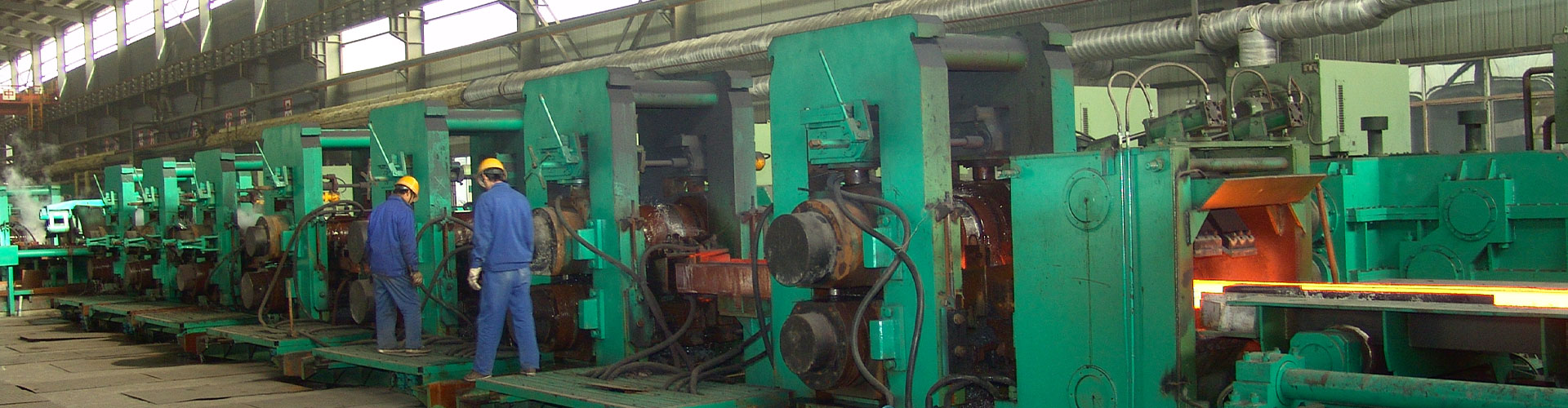
Le laminoir à froid décalé de huit hauteurs est un dispositif spécial de laminage à froid multi-rouleaux. Il utilise des rouleaux de travail de petit diamètre et une structure mécanique unique. Il est développé sur la base de laminoirs à quatre hauteurs entraînés par des rouleaux de secours. Cette usine ajoute des structures de support latérales indépendantes pour les rouleaux de travail. La structure optimise la rigidité du système de roulement et la stabilité au roulement.
La structure du châssis du laminoir à froid décalé à huit hauteurs est similaire à celle des laminoirs conventionnels à quatre hauteurs.. Cependant, il adopte des rouleaux de travail plus petits et des dispositifs professionnels de réglage du profil des rouleaux. Cette conception stabilise le positionnement du rouleau de travail et améliore la rigidité horizontale. Sa rigidité structurelle globale dépasse les moulins ordinaires à quatre hauteurs.
Il peut produire des produits partiels qui nécessitent généralement un équipement roulant de vingt hauteurs.. L'usine prend en charge une conversion structurelle flexible en deux hauteurs, quatre-hauts, modes huit hauteurs et double huit hauteurs. Il s'adapte aux demandes de production diversifiées. Donc, il est également connu comme laminoir à froid polyvalent.
## 1. Caractéristiques structurelles du laminoir à froid offset huit hauteurs
Le laminoir à froid décalé de huit hauteurs adopte le mode d'entraînement des rouleaux de secours. Sa principale caractéristique est l'installation décalée des rouleaux de travail. Les rouleaux de travail s'écartent de la ligne centrale des rouleaux de sauvegarde. Cette disposition unique supprime les restrictions de couple et de flexion horizontale sur la réduction du diamètre du rouleau de travail.
Le diamètre du rouleau de travail n'est qu'environ la moitié de celui des laminoirs conventionnels à quatre hauteurs.. Cela représente 15% à 20% du diamètre du rouleau d'appui. La force de roulement globale diminue jusqu'à presque 50% de moulins à quatre hauteurs.
Cette structure permet au laminoir à froid décalé de huit hauteurs de traiter des bandes ultra fines et des métaux difficiles à déformer.. Il fonctionne comme les broyeurs multi-rouleaux traditionnels dans ces aspects. Entre-temps, il conserve la structure simple d'un équipement à quatre hauteurs. Cette conception permet de maintenir les coûts d'investissement et de maintenance relativement bas.
Tous les rouleaux de travail, des rouleaux intermédiaires et des rouleaux de support latéraux sont installés sur les bras de support. Les bras de support tournent autour de l'axe du rouleau de support latéral. Les rouleaux de support latéraux s'adaptent parfaitement aux grands rouleaux de secours. Cette structure évite une consommation supplémentaire de couple de friction. Il protège également les conditions de fonctionnement des rouleaux de travail.
Pendant le roulage, la charge verticale des rouleaux de support est transférée au cadre via des boulons à visser. La force latérale des rouleaux de support latéraux est transmise au châssis via les poutres latérales. Les dispositifs à ressort maintiennent un contact stable entre les rouleaux de support latéraux et les rouleaux de secours. Les rouleaux de support latéraux utilisent des roulements à rouleaux et des manchons de mandrin. Cette disposition garantit un fonctionnement flexible et stable.
Le laminoir à froid décalé de huit hauteurs est doté d'un système de rouleaux rigides. Il dispose également de dispositifs fiables de réglage du profil de rouleau. Il produit de petites valeurs de retour élastique. Il prend en charge l'optimisation de la forme des rouleaux en temps réel pendant le fonctionnement. Ces caractéristiques améliorent efficacement la précision de l'épaisseur de la bande et la qualité de la planéité..
L'entraînement indépendant des rouleaux de secours permet une plus large gamme de différences de diamètre des rouleaux de travail. La structure simple de support du rouleau de travail simplifie le remplacement du rouleau. Cela réduit également l’usure des rouleaux. La faible perte de friction entre les espaces entre les rouleaux permet une lubrification et un refroidissement par émulsion. Cette disposition réduit encore la résistance au roulement.
## 2. Composition de l'équipement et caractéristiques techniques
La cage principale du laminoir à froid décalé de huit hauteurs se compose de plusieurs éléments clés. Il comprend un système de rouleau complet, mécanisme à vis, dispositif de maintien du col roulé, système de réglage du portail battant et du profil à enroulement. Par rapport aux moulins traditionnels à quatre hauteurs, il présente trois caractéristiques techniques marquantes.
### 2.1 Structure de support décalée unique
Le laminoir à froid décalé de huit hauteurs est équipé d'un système de support latéral indépendant. Les rouleaux de travail obtiennent un support vertical des rouleaux de secours supérieurs et inférieurs. Ils reçoivent également un support latéral provenant de composants de support latéraux.
Les rouleaux de support latéraux et les rouleaux intermédiaires s'assemblent dans des structures d'arc fixes. Ils sont ensuite montés sur des cales de rouleaux de support latéral. Transferts de force latérale à la poutre de support latérale via des supports d'arbre concentriques.
Cette structure garantit une précision coaxiale des rouleaux de travail, rouleaux intermédiaires et rouleaux de support latéraux. Il maintient une rigidité élevée du système de rouleau intégral. La structure de support latérale transmet le couple via les rouleaux intermédiaires pendant le fonctionnement. Il augmente la réduction du roulement et réduit le glissement entre les rouleaux. Cela réduit également le risque de rayer la surface du rouleau.
En outre, la conception d'installation décalée et le dispositif de maintien du col roulé maintiennent un fonctionnement stable du rouleau de travail. Il garantit une précision de laminage fiable lors des processus de laminage réversibles et à grande vitesse.
### 2.2 Dispositif de réglage indépendant du profil de rouleau
Le laminoir à froid décalé de huit hauteurs est équipé d'un système hydraulique dédié de réglage du profil des rouleaux. Le vérin hydraulique entraîne quatre cales mobiles via des bielles. Les cales utilisent différents angles d'inclinaison.
Les deux cales du milieu ont une inclinaison de 5°. Les deux cales latérales ont une inclinaison de 3°. Des blocs plats fixes facilitent le positionnement des deux côtés. Le mouvement vertical des cales pousse les rouleaux de support latéraux et les rouleaux intermédiaires. Ce mouvement produit une déformation de flexion contrôlable sur les rouleaux de travail.
Ce réglage en temps réel corrige précisément les défauts de planéité de la bande lors du laminage continu. Il permet également un contrôle flexible du profil du rouleau.
### 2.3 Exigences de correspondance des dimensions des rouleaux
Le rapport longueur/diamètre du corps de laminoir à froid décalé de huit hauteurs varie de 3 à 10. Le système de support latéral, surtout les rouleaux intermédiaires, a une rigidité locale relativement faible. Une mauvaise correspondance des paramètres provoque facilement un glissement entre les rouleaux de sauvegarde et les rouleaux de travail.. Cela peut également provoquer des rayures sur la surface du rouleau..
La précision coaxiale des rouleaux de travail, les rouleaux intermédiaires et les rouleaux de support latéraux affectent directement la stabilité au roulement. Ce moulin nécessite des normes de fabrication plus strictes que les moulins ordinaires à quatre hauteurs. Il nécessite également une installation et un calibrage des paramètres plus stricts. L'appariement professionnel du diamètre des rouleaux et le réglage précis sont essentiels pour un fonctionnement stable.
## 3. Caractéristiques du processus du laminoir à froid offset à huit hauteurs
Le processus de laminage du laminoir à froid décalé à huit hauteurs est similaire à celui des laminoirs à quatre hauteurs. Il est spécialement optimisé pour le laminage de l'acier inoxydable et des métaux de haute dureté.. Il suit le principe de roulement à pression égale pour la distribution de réduction de passage.
La réduction relative diminue au fur et à mesure. Cette méthode s'adapte aux caractéristiques élevées de résistance à la déformation et d'écrouissage de l'acier inoxydable.. Les différences de composition chimique et de structure métallographique nécessitent également un ajustement ciblé des paramètres de roulement.
### 3.1 Contrôle flexible et précis du profil des rouleaux
Le laminoir à froid décalé de huit hauteurs combine plusieurs méthodes de contrôle de planéité. Il comprend une conception originale de couronne de rouleau de travail et un contrôle de débit d'émulsion segmenté. Il utilise également des dispositifs mécaniques uniques de réglage des cales.
Quatre ensembles de forces de flexion générées par des cales hydrauliques ajustent la déflexion du rouleau de travail de manière uniforme le long du corps du rouleau.. La plage de déflexion s'adapte aux différents matériaux et spécifications des bandes. La couronne de meulage des rouleaux de travail va de 0.05 mm à 0.22 mm.
Pour 1000 bandes de mm de large, la plage de réglage dynamique de la couronne atteint ±0,05 mm avec une force de roulement croissante. Le panneau de réglage sur site affiche les paramètres en pourcentage. Le maximum 100% l'ajustement correspond à un 0.10 variation de la couronne en mm. Ce système offre un contrôle de planéité flexible et de haute précision.
### 3.2 Assemblage de rouleaux scientifiques et correspondance de décalage
La distance de décalage du rouleau de travail détermine la stabilité de roulement pendant les opérations en marche avant et arrière. La conception décalée raisonnable garantit que les rouleaux de travail s'adaptent parfaitement au système de support latéral. Cette condition doit être respectée même sous une différence de tension maximale.
Pendant le montage, les opérateurs sélectionnent les diamètres de rouleaux de travail adaptés et les valeurs de décalage optimales. Ils se réfèrent aux dimensions de meulage des rouleaux d'appui, rouleaux de support latéraux et rouleaux intermédiaires. La structure décalée génère une force de composante latérale provenant de la charge roulante. Il presse fermement les rouleaux de travail contre les rouleaux de support latéraux et améliore la stabilité latérale.
La force motrice de friction des rouleaux d'appui produit une force tangentielle vers l'extérieur lors du roulement vers l'avant.. Cette tendance affaiblit la stabilité du support latéral. Donc, la distance de décalage doit garantir une force d'appui positive des rouleaux de support latéraux aux rouleaux de travail pendant le roulement vers l'avant. Cette norme élimine les risques de glissement et d'instabilité en roulage réversible.
## 4. Conclusion
Avec la mise à niveau continue de la technologie moderne de contrôle de l'épaisseur et de la planéité, le champ d'application du laminoir à froid offset huit hauteurs est confronté à certaines restrictions. Il conserve toujours des avantages uniques dans le laminage de bandes fines et de métaux durs.
S’adapter aux exigences de qualité de plus en plus strictes du marché, le laminoir à froid décalé de huit hauteurs nécessite une optimisation supplémentaire. Cela devrait améliorer la précision du contrôle de planéité et la stabilité du système de roulis. Après une amélioration technique ciblée, cet équipement roulant polyvalent conservera une valeur d'application élevée. Il aura également de larges perspectives de promotion dans la production de laminage à froid de haute précision..