Le défi de la précision dans la fabrication de manchons excentriques pour laminage d'acier
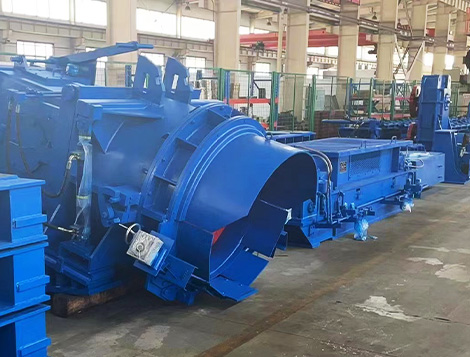
Dans le monde exigeant de la production d’acier, chaque composant joue un rôle essentiel. Parmi les plus essentiels se trouve le Manchon excentrique roulant en acier. Ce robuste, une pièce de haute précision est fondamentale au bon fonctionnement des laminoirs, influençant directement la qualité et la cohérence du produit en acier final. La fabrication de ces manchons est une tâche d'une immense précision, où même des écarts microscopiques de géométrie peuvent conduire à des défaillances opérationnelles, temps d'arrêt coûteux, et sortie compromise.
Le principal défi ne réside pas seulement dans le processus d'usinage mais également dans la phase de vérification et d'inspection.. Garantir que chaque manchon répond à des dimensions et à des tolérances géométriques strictes (DG&T) les spécifications ne sont pas négociables. Traditionnellement, cela a constitué un goulot d'étranglement important dans le flux de production, un processus lent et laborieux qui a souvent du mal à suivre le rythme de la fabrication.
L'ancienne méthode: Une lente marche d’inspections un par un
Pendant des années, la procédure standard d'inspection d'un Manchon excentrique roulant en acier impliquait un fixe, Machine de mesure de coordonnées à grande échelle (MMT). Bien qu'incroyablement précis, cette méthode présentait plusieurs obstacles opérationnels:
-
»
Manutention de matériaux à forte intensité de main d'œuvre: Chaque manchon excentrique, souvent lourd et encombrant, devait être soulevé individuellement par une grue ou un palan, soigneusement transporté vers la salle CMM, et soigneusement installé sur la table en granit de la machine. -
»
Processus chronophage: Après la longue configuration, le CMM exécuterait sa routine d'inspection programmée. Une fois terminé, tout le processus a été inversé: la manche a été retirée et une nouvelle a été apportée. Cette approche ponctuelle a créé un grave goulot d'étranglement, avec des pièces finies qui s'empilent, en attente de vérification de la qualité. -
»
Problèmes de sécurité: Le levage répété de composants lourds en acier présente des risques inhérents pour la sécurité du personnel impliqué dans les opérations de levage et de déplacement..
Cette méthode traditionnelle, bien que fiable dans ses mesures, constituait un obstacle évident à l'efficacité. Le service d'inspection n'a pas pu égaler le rendement de l'atelier d'usinage, entraînant des retards et une réduction de la productivité globale de l’usine.
Un changement de paradigme: Adopter le bras articulé
La solution à ce problème de longue date est venue d'un changement de pensée et de technologie.: l’adoption d’un système de mesure portable à bras articulé. Contrairement à son homologue stationnaire, un bras articulé est une MMT portable qui apporte la capacité de mesure directement sur la pièce à usiner, pas l'inverse.
Cette innovation révolutionne complètement le workflow. Au lieu de bouger une manche lourde à la fois, un lot de 6 à 8 les manchons peuvent être disposés sur une palette ou sur une surface stable directement dans l'atelier. Le poids léger, le bras articulé flexible est ensuite amené au lot. Un opérateur peut alors passer librement d’un manchon à l’autre, capturer des données de coordonnées 3D précises avec une simple sonde tactile. Le lot entier peut être inspecté en une seule configuration, éliminant la grande majorité du temps perdu auparavant dans la manutention.
Tolérances géométriques clés sous surveillance
Le bras articulé est parfaitement adapté à la vérification des caractéristiques géométriques critiques d'un Manchon excentrique roulant en acier. Il ne s’agit pas de simples contrôles de diamètre; ce sont des relations complexes entre différentes caractéristiques qui déterminent les performances du manchon.
- Excentricité: Le paramètre fonctionnel de base. C'est le décalage précis entre les centres des diamètres intérieur et extérieur. Le bras peut établir rapidement ces lignes centrales et calculer le décalage avec une grande précision.
- Cylindricité & Rondeur: Garantit que le manchon est un cylindre parfait, sans aucune conicité, tonnerre, ou ovalité, ce qui est crucial pour une répartition uniforme de la charge.
- Coaxialité: Vérifie que plusieurs entités cylindriques partagent un axe commun. Un mauvais alignement peut provoquer de graves vibrations et une usure prématurée du laminoir..
- S'épuiser (Circulaire et Total): Contrôle la variation d'une surface lorsque la pièce tourne autour de son axe central, un indicateur clé de la stabilité dynamique.
Quantifier le saut d’efficacité: Un regard comparatif
La différence entre les deux méthodes n’est pas seulement incrémentale; c'est transformateur. Les données montrent clairement une amélioration massive du débit et une réduction des efforts inutiles.. Comparons l’inspection d’un lot typique de 8 manchons excentriques.
| Paramètre | Méthode MMT traditionnelle | Méthode du bras articulé |
|---|---|---|
| Temps de manutention des matériaux (par lot de 8) | ~120 minutes (15 min/pièce) | ~10 minutes (pour tout le lot) |
| Temps de configuration de la mesure | ~80 minutes (10 min/pièce) | ~15 minutes (une fois pour le lot) |
| Temps de mesure actif (par lot de 8) | ~160 minutes (20 min/pièce) | ~70 minutes (~9 min/pièce) |
| Durée totale pour 8 Manches | ~360 minutes (6 heures) | ~95 minutes (~1,6 heures) |
| Amélioration de l'efficacité | – | Au moins 3 fois plus rapide |
L'impact plus large d'un flux de travail plus intelligent
Les avantages de cette approche moderne s'étendent bien au-delà d'une seule mesure sur une feuille de calcul. Cela crée un effet d’entraînement positif sur l’ensemble de l’écosystème de production..
- Boucle de rétroaction plus rapide: Les données de contrôle qualité sont désormais disponibles presque en temps réel. Si un processus d'usinage commence à sortir des tolérances, il peut être identifié et corrigé au sein d'un seul lot, plutôt qu’après une journée complète de production de pièces défectueuses. Cela réduit considérablement les rebuts et les retouches.
- Débit et capacité accrus: En supprimant le goulot d’étranglement de l’inspection, toute la ligne de production peut fonctionner à une capacité plus élevée. Cela permet une exécution plus rapide des commandes et une plus grande production globale de l'usine..
- Assurance qualité améliorée: La facilité et la rapidité de la mesure peuvent permettre d'inspecter un pourcentage plus élevé de pièces, voire 100% inspection - offrant une plus grande confiance dans la qualité de chaque Manchon excentrique roulant en acier qui quitte l'établissement.
- Ergonomie du lieu de travail améliorée: Éliminer la constante, le fait de soulever des manches lourdes et répétitives améliore considérablement l'environnement de travail et réduit le risque de blessures au travail.
Ce cas est une illustration puissante de la manière dont la recherche active et la mise en œuvre d’améliorations de processus peuvent générer des résultats substantiels.. En remettant en question la « façon dont cela a toujours été fait » et en tirant parti des outils de métrologie modernes comme le bras articulé, fabricants de composants critiques comme le Manchon excentrique roulant en acier peut non seulement accroître leur efficacité, mais également élever leurs normes de qualité et de sécurité, assurer un avantage concurrentiel plus fort sur un marché mondial.