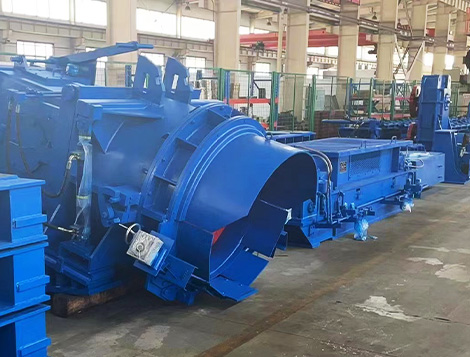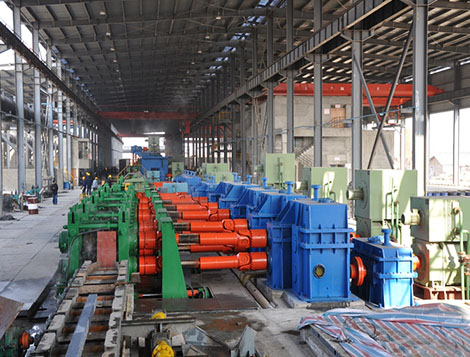
El 320 El laminador en voladizo es un laminador de tamaño mediano a grande ampliamente utilizado., Diseñado para la producción a alta velocidad de productos largos como barras de refuerzo., varilla de alambre, y perfiles pequeños. En comparación con principios 285 unidades voladizas, Ofrece mayor capacidad de laminación., resistencia estructural mejorada, y mejor intercambiabilidad, manteniendo los tamaños de interfaz compatibles con las líneas existentes.
Este concepto de diseño serializado significa que 320 El molino se puede configurar en múltiples versiones y capacidades en una plataforma unificada.. Para ingenieros de laminadores, compradores de equipos, y gerentes de planta, esto hace que la línea se expanda, La actualización y el mantenimiento son mucho más fáciles y económicos..
1. Posicionamiento del 320 laminador voladizo en líneas de producción
En una típica línea de laminación de productos largos, el 320 El laminador en voladizo generalmente se coloca en:
- Soportes intermedios para molinos de barras y barras
- Soportes de acabado para barras pequeñas de hasta 25–32 mm
- Secciones de alta velocidad en molinos continuos o semicontinuos
Con la optimización adecuada, el 320 La unidad puede laminar barras simples de acero al carbono hasta ø25mm como estándar, y hasta ø32mm para grados específicos y diseños de pases. La velocidad de rodadura normalmente no es menor que 14 EM, y en algunas aplicaciones de varillas de alta velocidad, La velocidad real de trabajo puede ser ligeramente superior dependiendo del motor y de las relaciones de reducción..
2. Principales parámetros técnicos del 320 laminador en voladizo
| Artículo | Valor típico | Observaciones |
|---|---|---|
| Tipo de molino | Viga voladiza, dos-alto | Disposición de soporte horizontal o vertical |
| Tamaño nominal | 320 mm | Se refiere al rango de diámetro nominal del cilindro del rodillo. |
| máx.. diámetro de rodadura (estándar) | ø25mm | Barra de acero al carbono simple |
| máx.. diámetro de rodadura (optimizado) | Hasta φ32 mm | Depende del diseño de la pasada y del grado del acero. |
| velocidad de rodadura | ≥ 14 EM | Para laminación continua de alta velocidad |
| Potencia del motor principal (soporte único) | ≈ 400-630 kilovatios | Depende del producto y del programa de reducción. |
| Rango de diámetro del rollo | 280–360 milímetros | Diámetro del cuerpo del rodillo de trabajo |
| Longitud del cilindro del rollo | ≈ 500–700 milímetros | Adaptable a diferentes secuencias de pases. |
| Tipo de rodamiento | Cojinetes antifricción | Adaptado a alta velocidad y carga |
| Gama de productos típica | Refugio, varilla de alambre, barra de sección pequeña | Acero al carbono y acero de baja aleación |
Los valores de la tabla son valores de ingeniería representativos basados en prácticas industriales comunes.. Los proyectos específicos deben ajustar estos parámetros según la capacidad del horno., tamaño de la palanquilla, grado de acero, y objetivo de producción anual.
3. Concepto de diseño serializado del 320 laminador
El diseño serializado significa una plataforma, muchas variantes. Para el 320 laminador en voladizo, este concepto cubre:
- Dimensiones de interfaz y carcasa base común
- Múltiples relaciones de transmisión y combinaciones de módulos de transmisión
- Diámetros de rollo y longitudes de cilindro alternativos
- Diferentes esquemas de rodamientos y lubricación.
- Variantes de soporte horizontal y vertical en la misma plataforma
El objetivo principal es mantener todos tamaños de interfaz externa sin alterar: posiciones de los pernos de cimentación, centros de acoplamiento, alturas de las líneas de paso de entrada y salida, y puertos de refrigeración y lubricación. Esto permite que el nuevo 320 molino para reemplazar directamente 285 o unidades anteriores con mínima revisión de obra civil y tuberías.
3.1 Interfaces externas e intercambiabilidad.
Al actualizar desde un 285 a un 320 laminador en voladizo, una planta suele estar preocupada:
- Si el nuevo soporte encaja en la base antigua
- Si la altura de la línea de pase cambia
- Si la longitud y el ángulo del acoplamiento universal siguen siendo adecuados
- Si el agua existente, Los sistemas de aceite y aire se pueden reutilizar.
En el diseño serializado del 320 molino, Las siguientes dimensiones generalmente se mantienen idénticas a las 285 molino:
| Elemento de interfaz | 285 (referencia) | 320 serializado | Compatibilidad |
|---|---|---|---|
| Patrón de pernos de base | Arreglo existente | Mismo patrón mantenido | Reemplazo directo del soporte |
| Altura de la línea de pase | Fijado | Se mantiene sin cambios | No hay cambios en las mesas de rodillos ni en las guías. |
| Centro de acoplamiento de motores | Línea central original | Misma línea central | Motor y caja de cambios reutilizados. |
| Entrada/salida de agua de refrigeración | Diseño de tubería existente | Mismas posiciones de interfaz | Modificación menor o nula de la tubería |
| Conexiones de lubricación | colector original | Conexiones compatibles | Estación de lubricación existente utilizable |
Controlando estas dimensiones de la interfaz, el 320 El molino se puede cambiar durante las paradas de mantenimiento programadas con tiempo de inactividad limitado., lo cual es muy valioso para molinos que funcionan a una alta capacidad anual.
3.2 Opciones modulares dentro del 320 serie
Bajo la misma envoltura exterior, Se pueden ofrecer una serie de configuraciones.:
- Estándar 320: Para barras de hasta φ25 mm a ≥14 m/s
- Reforzado 320: Engranaje y carcasa reforzados para una mayor reducción y un rodamiento de φ32 mm
- Alta velocidad 320: Rodamientos y lubricación optimizados para un funcionamiento prolongado a velocidad elevada
- Versión rodante termomecánica: Enfriamiento y rigidez mejorados para la laminación controlada de grados de baja aleación
Este enfoque serializado significa que una planta puede comenzar con una configuración básica y luego pasar paso a paso a una mayor velocidad o a laminar secciones más grandes sin reconstruir toda la línea..
4. Optimización estructural de la 320 laminador en voladizo
Para soportar mayores fuerzas de rodadura y velocidad en comparación con el 285 unidad, el 320 El molino voladizo se ha optimizado en varias partes clave..
4.1 Estructura de carcasa y caja.
La carcasa del molino es la columna vertebral del tren de laminación.. Para el 320 molino, las mejoras incluyen:
- Secciones de pared más gruesas en zonas de alta tensión cerca de las cuñas antivuelco
- Disposición optimizada de las nervaduras para distribuir cargas de flexión y torsión.
- Radios de filete mejorados en las esquinas para reducir la concentración de tensiones.
- Uso de estructura de placa de acero soldada o acero fundido de alta resistencia
El análisis de elementos finitos se utiliza comúnmente para verificar la rigidez de la carcasa bajo fuerzas de rodadura de diseño.. El objetivo es mantener el alargamiento del espacio entre rodillos dentro de un rango controlado para que se mantenga la precisión dimensional de la barra o varilla., especialmente a altas velocidades donde las fluctuaciones de tensión son más sensibles.
4.2 Dimensionamiento de engranajes y optimización de la transmisión.
Conduciendo un 320 rollo voladizo en 14 m/s con una relación de reducción importante exige engranajes fuertes y fiables. La actualización de 285 a 320 normalmente involucra:
- Módulo de engranaje y ancho de cara más grandes para aumentar la resistencia de los dientes.
- Acero de aleación de mayor calidad con endurecimiento superficial para los dientes del engranaje.
- Perfil de diente refinado y acabado para reducir el ruido y la vibración.
- Relación de transmisión optimizada para igualar la velocidad del motor con la velocidad de rollo deseada
El cálculo de ingeniería utiliza métodos de diseño de engranajes AGMA o ISO., considerando el par transmitido, factor de sobrecarga, factor dinámico, y margen de seguridad. Para laminadoras que planean laminar barras de hasta φ32 mm, Es común diseñar engranajes con reserva de torque adicional para evitar picaduras de dientes y daños durante cargas máximas..
4.3 Resistencia de la caja enrollable y del voladizo
La estructura en voladizo significa que un extremo del rollo está soportado y el otro está libre durante la operación.. Esto simplifica el cambio de rollo pero también aumenta las cargas de flexión en el calzo y la carcasa.. El 320 El diseño mejora la caja del rollo al:
- Aumento del área de la sección transversal en la raíz del voladizo
- Selección de rodamientos de alta capacidad con mejor distribución de carga
- Mejora del bloqueo axial y radial de calzos a la carcasa.
- Diseño de un mecanismo de ajuste de rollo más rígido
Esta mayor rigidez no sólo permite laminar diámetros más grandes sino que también reduce la variación de la apertura de pasada., lo que mejora el control del calibre y la calidad de la superficie., especialmente para tamaños más pequeños a alta velocidad.
5. Mejora del rendimiento sobre 285 molinos en voladizo
La actualización de 285 a 320 Los trenes de laminación en voladizo aportan varios beneficios mensurables. Basado en la experiencia práctica de muchas plantas., Los cambios se pueden resumir de la siguiente manera..
| Aspecto | 285 molino voladizo | 320 molino voladizo | Mejora típica |
|---|---|---|---|
| máx.. diámetro de la barra | ø20mm | ø25mm (hasta φ32 mm optimizado) | 25–60% de aumento en el tamaño de la sección |
| velocidad de rodadura | ≈ 10-12 m/s | ≥ 14 EM | Mayor velocidad de línea y productividad |
| Rigidez de la carcasa | Más bajo | Más alto, estructura optimizada | Mejor control de calibre y estabilidad. |
| Capacidad de engranaje | Reserva de par limitada | Mayor capacidad de par | Menor desgaste del engranaje y tiempo de inactividad |
| Disponibilidad del molino | Moderado | Mayor debido a componentes más fuertes | Operación más estable a largo plazo |
Para muchos productores de varillas de refuerzo y alambrón, Estas mejoras se traducen directamente en un mayor tonelaje de laminación por hora y un menor consumo de energía específica por tonelada de acero., especialmente cuando se combina con un diseño de paso optimizado y recalentamiento.
6. Escenarios de aplicación típicos y diseño de líneas.
El 320 El laminador en voladizo es lo suficientemente flexible para varias configuraciones.. A continuación se presentan algunos escenarios prácticos que ayudan a ilustrar su uso..
6.1 Línea de producción de varillas de refuerzo de alta velocidad
En una línea de armadura de alta velocidad, billetes de 130×130 milímetros o 150×150 mm se calientan en un horno de recalentamiento y luego se laminan mediante desbaste, stands intermedios y finales. Un diseño común es:
- Desbaste: 2–3 puestos (dos de alto o tres de alto)
- Intermedio: 4–6 soportes usando 320 molinos en voladizo
- Refinamiento: 4–6 soportes de alta velocidad (puede incluir 320 molinos)
El 320 Los stands en grupos intermedios y de acabado son los encargados de alcanzar altas velocidades de salida y alcanzar las dimensiones finales.. Con barra de refuerzo de acero al carbono simple de grado similar a HRB400, Los datos típicos pueden parecer:
| Parámetro | Valor típico | Notas |
|---|---|---|
| Tamaño del billete | 150 × 150 × 6 metro | Acero al carbono simple, ~0,2–0,25% C |
| Rango de tamaño del producto | Barra de refuerzo de φ12–φ32 mm | Depende del diseño del pase |
| Velocidad de línea al terminar | 14–18 m/s | 320 los soportes pueden funcionar a ≥14 m/s |
| Producción horaria típica | 60–90 t/h | Varía según la mezcla de productos. |
| Capacidad anual | 300,000–700.000 t/año | Con funcionamiento en varios turnos |
En este escenario, el 320 El molino en voladizo contribuye a la formación de nervaduras estables y a una tolerancia de diámetro ajustada, que son esenciales para la calidad del acero de construcción.
6.2 Molinos combinados de alambrón y barras pequeñas
Un requisito común en muchas regiones es una línea capaz de producir alambrón y barras pequeñas.. En tales molinos combinados, el 320 El laminador en voladizo se utiliza a menudo en la sección intermedia compartida.:
- Para alambrón: 320 Los soportes alimentan un bloque de alta velocidad o un grupo de acabado.
- para barra: 320 Los soportes actúan como fresadoras de acabado hasta φ25–φ32 mm.
Este acuerdo de doble propósito es atractivo porque el mismo conjunto de 320 Los stands pueden manejar ambas rutas de proceso cambiando guías y horarios de pase mientras mantienen el mismo equipo base..
6.3 Proyectos de actualización: de 285 a 320
Para molinos existentes equipados con 285 soportes voladizos, actualizando a la 320 La serie es a menudo la forma más económica de aumentar la capacidad.. Los pasos típicos de actualización incluyen:
- Estudio del trazado actual de la línea, estado de los cimientos y del equipo
- Selección de apropiado 320 modelo serializado (estándar o reforzado)
- Verificación de que las interfaces coinciden, incluyendo acoplamientos y servicios públicos
- Ajuste del diseño del pase para aprovechar al máximo la mayor capacidad.
- Reemplazo planificado durante el cierre, con puesta en marcha y ajuste
porque el 320 está diseñado teniendo en cuenta la compatibilidad de la interfaz, Se minimiza la obra civil y se acorta la interrupción de la producción., Lo cual es fundamental en los mercados competitivos..
7. Detalles del proceso rodante con un 320 molino voladizo
Para lograr un funcionamiento estable y una alta calidad del producto., diseño de procesos en torno a la 320 El laminador debe considerarse cuidadosamente., incluyendo diseño de pase, material en rollo, lubricación y enfriamiento.
7.1 Diseño de pases y cronograma de reducción.
El 320 El soporte permite una reducción relativamente grande por pasada en comparación con soportes más pequeños., especialmente en la sección intermedia. Sin embargo, para mantener un buen flujo de metal y evitar defectos internos, la práctica común es:
- Distribuya la reducción total en varias pasadas en lugar de sobrecargar un solo soporte
- Utilice secuencias de óvalo-redondo o cuadrado-óvalo para minimizar el agrietamiento de los bordes.
- Mantenga los factores de elongación dentro de un rango razonable., normalmente entre 1,2 y 1,4 por pasada
Por ejemplo, al laminar un tocho de φ150 mm a una barra de φ25 mm, el 320 Los soportes pueden manejar los pases de rango medio en los que la sección transversal se reduce de aproximadamente 1200 a 1500 mm.2 hasta 400–600 mm2. Esto equilibra la deformación entre los soportes de desbaste y acabado mientras se utiliza el más fuerte. 320 unidades efectivamente.
7.2 Material en rollo y gestión del desgaste.
Debido a mayores fuerzas de rodadura, selección de material en rollo para un 320 el molino es importante. Las opciones comunes son:
- Rollos de acero fundido aleado: Buena dureza, utilizado en rodales rugosos e intermedios
- Rodillos de hierro fundido con alto contenido de cromo: Mayor resistencia al desgaste, para terminar pases
En rodadura a alta velocidad, La temperatura de la superficie del rodillo y las grietas térmicas son cuestiones clave.. El enfriamiento adecuado y el desgaste controlado permiten campañas más largas entre reafilados., y afecta directamente el costo de producción por tonelada. El voladizo más resistente del 320 soporta rollos más pesados si es necesario, mejorando así la vida superficial.
7.3 Diseño de sistemas de lubricación y enfriamiento.
Rodamientos y engranajes de alta carga dentro de un 320 El molino voladizo debe enfriarse y lubricarse eficazmente.. La práctica típica de ingeniería incluye:
- Lubricación forzada con aceite filtrado para rodamientos y engranajes.
- Circuitos separados para intercambiadores de calor de aceite limpio y agua-aceite
- Monitoreo de temperatura y flujo para evitar el sobrecalentamiento
En la brecha del rollo, Se debe disponer de refrigeración por agua para enfriar tanto los rodillos de trabajo como el producto sin causar choque térmico.. Para tamaños pequeños a alta velocidad, El diseño del cabezal y la disposición de las boquillas son especialmente importantes para evitar un enfriamiento desigual y defectos en la superficie..
8. Preguntas prácticas de cola larga sobre 320 laminadores
Muchos ingenieros y compradores buscan información muy específica antes de decidir adoptar el 320 laminador en voladizo. A continuación se presentan varios temas detallados que a menudo se discuten en la práctica..
8.1 Cómo estimar la potencia del motor para un 320 soporte de molino
Una estimación simplificada de la potencia requerida del motor PAG de un soporte rodante es:
PAG ≈ (F × v) / (o × 1000)
dónde:
- F = fuerza de rodadura (norte)
- v = velocidad de salida (EM)
- o = eficiencia (normalmente 0,85–0,9)
Por ejemplo, si la fuerza de rodadura calculada en un 320 el soporte es 1,200 kN y la velocidad de salida es 14 EM, tomando η = 0.88:
PAG ≈ (1,200,000 × 14) / (0.88 × 1000) ≈ 19,090 KW
Esta es la potencia mecánica en el rollo.. Distribuidos entre stands y considerando cálculos de deformación más detallados., Las capacidades de motor de soporte individual de alrededor de 400 a 630 kW son típicas para 320 molinos, dependiendo de su posición en la línea y reducción total asignada.
8.2 ¿Puede un 320 mango de laminador de aceros aleados?
El 320 El laminador en voladizo está originalmente optimizado para acero al carbono simple.. Sin embargo, con materiales en rollo adecuados, Selección de rodamientos y diseño de refrigeración., También puede laminar aceros de baja aleación, como los estructurales y algunos grados para resortes.. Para mayor contenido de aleación, El control de temperatura y el diseño de paso deben ser más conservadores., y la capacidad de torsión del sistema de transmisión deben comprobarse cuidadosamente.
En la práctica, muchos molinos usan 320 Representa el laminado termomecánico de barras de refuerzo de baja aleación., donde el enfriamiento y la deformación controlados en las cajas de acabado brindan las propiedades mecánicas requeridas sin un costoso tratamiento térmico.
8.3 Intervalos de mantenimiento y planificación de repuestos
Para una planta siderúrgica de tamaño mediano, planificar los ciclos de mantenimiento del 320 Laminación es importante para evitar paradas no planificadas.. Un enfoque práctico es:
- A diario: Comprobar niveles de aceite, fugas, ruido anormal, enfriamiento del rodillo, y sujetadores básicos
- Semanalmente: Inspeccionar las temperaturas y vibraciones de los rodamientos., examinar muestras de aceite para engranajes en busca de partículas metálicas
- Mensual: Verificar alineación, medir la desviación del espacio entre rodillos, comprobar el estado del acoplamiento
- Anualmente: Desmontaje parcial, inspección detallada de engranajes, rodamientos y carcasa
La serialización ayuda porque el mismo tipo de rollo de repuesto calza, engranajes, y los rodamientos se pueden utilizar en varios soportes de la línea, Reducir el inventario y simplificar la gestión del mantenimiento..
9. Consejos prácticos para seleccionar un 320 laminador en voladizo
Al evaluar proveedores y modelos específicos dentro del 320 serie, algunos puntos técnicos prácticos merecen especial atención:
- Aclarar la mezcla de productos objetivo: Decidir si el enfoque principal son las barras de refuerzo., varilla de alambre, o productos combinados, y que diametro maximo (φ25 o φ32) se espera.
- Consultar márgenes de seguridad estructural: Solicite resultados de cálculo o prueba de que los engranajes, Los rodamientos y la carcasa están dimensionados para su programa de rodamiento previsto con suficiente factor de seguridad..
- Confirmar la compatibilidad de la interfaz: Para proyectos de actualización, verificar la altura de la línea de paso, dimensiones de la base y centros de acoplamiento contra los dibujos existentes antes de realizar el pedido.
- Revisar el diseño de lubricación y enfriamiento.: Asegúrese de que el molino esté listo para funcionar a alta velocidad., con sistemas adecuados de aceite y agua, no sólo datos de velocidad nominal.
- Considere una futura expansión: Si hay un plan para pasar de φ25 a φ32 o de 12 m/s en 14 EM, Elija una variante reforzada o de alta velocidad al principio para evitar un reemplazo anticipado..
Al hacer coincidir cuidadosamente estos detalles técnicos con los objetivos de producción reales, el 320 El laminador cantilever puede desarrollar todo su potencial, ofreciendo un componente central confiable y eficiente para líneas modernas de laminación de productos largos.