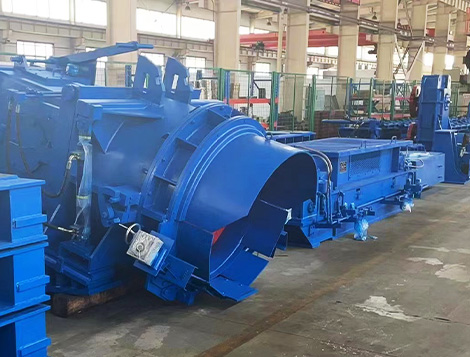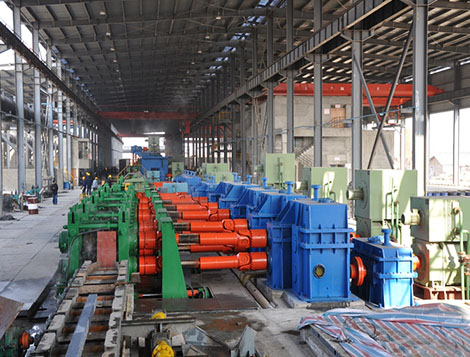
Los laminadores tienen una historia de desarrollo que abarca cientos de años, con registros históricos claros que rastrean su iteración tecnológica:
En 1480, Leonardo da Vinci de Italia redactó el primer boceto conceptual de un laminador.
En 1766, ingeniero británico J. Purnell mejoró un laminador manual de láminas de plomo e inventó el laminador de dos alturas para la producción de barras de hierro forjado..
En 1779, j. Picard aplicó con éxito máquinas de vapor para impulsar laminadores, Aumentar drásticamente la capacidad de producción y el alcance de aplicación de los equipos rodantes..
En 1783, inventor británico h. Cort fabricó un laminador de dos perfiles de altura accionado por rueda hidráulica, Lo que aceleró enormemente la popularización de la tecnología de laminación de perfiles de acero..
Por 1854, Europa inauguró el primer laminador de placa media reversible de dos alturas impulsado por vapor.
En 1864, Estados Unidos puso en funcionamiento el primer laminador de chapa media Lauth de tres alturas.
En 1891, A NOSOTROS. Steel construyó el primer laminador de chapa mediana reversible de cuatro alturas del mundo.
En 1897, Los ingenieros alemanes sustituyeron las máquinas de vapor por motores eléctricos para los sistemas de accionamiento de los trenes de laminación y lograron un funcionamiento industrial estable..
En 1910, Vítkovice Klement Gottwald Iron and Steel Company de Checoslovaquia encargó un conjunto completo de laminador de chapa gruesa de dos alturas y 4.500 mm.
En 1912, la planta metalúrgica de Ilich en Zhdanov, unión soviética, completó un laminador de chapa gruesa idéntico de 4500 mm.
La Guerra Mundial impulsó avances en las plantas de chapa gruesa extra ancha
La demanda masiva de material militar durante las dos guerras mundiales del siglo XX aceleró enormemente la innovación tecnológica de los laminadores.. Doble soporte, Se desarrollaron sucesivamente laminadores de placas medias semicontinuos y totalmente continuos en todo el mundo.. Después de la Segunda Guerra Mundial, en medio de la carrera armamentista de la Guerra Fría, los EE.UU., unión soviética, Alemania y Japón construyeron uno tras otro docenas de laminadores de chapa gruesa extra ancha de 4.100 mm a 5.500 mm.
Históricamente, La principal motivación de las principales naciones industriales para construir laminadores de chapa gruesa ultra ancha fue producir placas de acero de gran tamaño para la construcción naval y portaaviones., acorazados y otros buques de guerra. Las cubiertas de vuelo de los portaaviones deben resistir la intensa fuerza de impacto de los aviones de combate que aterrizan; Los acorazados y cruceros requieren placas de acero con blindaje de gran superficie.. Las placas de acero más largas y anchas pueden reducir significativamente la carga de trabajo de soldadura. Impulsado por las necesidades militares en tiempos de guerra, los EE.UU., unión soviética, Alemania y Japón invirtieron fuertemente en grandes proyectos de laminadores de chapa gruesa.
Tan pronto como 1918, para apoyar la fabricación de portaaviones, Obras Coatesville de Lukens Steel Co. en Pensilvania, EE.UU, encargó un laminador de chapa gruesa de cuatro alturas y 5230 mm, el primer laminador del mundo más ancho que 5 metros. Este equipo emblemático suministró placas de construcción naval pesadas de una sola pieza de alta calidad para la producción en masa de EE. UU.. portaaviones y acorazados.
[Imagen: El primer laminador de chapa gruesa de cuatro alturas y 5230 mm del mundo en Lukens Steel]
En 1922, El Astillero Naval de Norfolk reacondicionó un buque de transporte de carbón con una cubierta de vuelo y lanzó el USS Langley. (CV-1), El primer portaaviones de Estados Unidos.. Entre 1922 y 1950, aprovechando su fuerza industrial dominante, Estados Unidos. construido y reacondicionado 46 portaaviones de flota y más 100 transportistas de escolta, sentando una base sólida para su victoria naval en la Segunda Guerra Mundial.
En 1935, Alemania levantó las restricciones militares de la Primera Guerra Mundial y comenzó la construcción de acorazados clase Bismarck.. Los buques de guerra presentaban un blindaje lateral de 8,4 metros de altura fabricado con acero cementado KCn/A de 320 mm de espesor producido por Krupp AG.; Se alcanzó el peso total del acero blindado por buque. 17,450 montones.
Para fabricar súper acorazados clase H más grandes., Krupp AG construyó en su Horde Steel Works de Dortmund un laminador de chapa gruesa extra ancha de cuatro alturas y 5.000 mm de 1938, dedicada al suministro de chapa de acero naval.
Para la preparación militar en tiempos de guerra, La Unión Soviética encargó un laminador de chapa gruesa de cuatro alturas y 5.300 mm en la planta metalúrgica Serp i Molot de Moscú en 1940. La fábrica produjo en masa placas de blindaje para tanques y buques de guerra y prestó un apoyo fundamental durante la Gran Guerra Patria..
Antes 1940, La planta siderúrgica de Terni en Italia inauguró un laminador de chapa gruesa de dos alturas y 4600 mm.
En 1941, para expandir su guerra agresiva, Japón importó enormes equipos industriales de Alemania: una prensa hidráulica de forjado libre de 14.000 toneladas y un molino de chapa pesada extra ancha de cuatro alturas y 5.280 mm impulsado por vapor fabricado por DEMAG. El conjunto completo se instaló en la planta Muroran de Japan Steel Works para acelerar la construcción de portaaviones y súper acorazados.. Su carcasa fundida de una sola pieza pesaba 230 montones, Capaz de laminar placas de acero de hasta 350 mm de espesor..
Comenzando en 1937 en el dique seco número 3 del arsenal naval de Kure, Japón construyó súper acorazados clase Yamato. El blindaje lateral adoptó acero endurecido Vickers de 410 mm procesado por prensas de forja hidráulicas de diez mil toneladas.. El blindaje frontal de las torretas principales alcanzó un espesor extremo de 650 mm., con armadura total de acero por cada buque de guerra que golpee 22,895 montones, contabilidad de 33% de su cilindrada estándar.
Durante este periodo, el reino unido, Francia, Checoslovaquia, España y otros países también ponen en funcionamiento múltiples laminadores de chapa gruesa, Desencadenó un auge global en la construcción de portaaviones y buques capitales, un importante preludio de las batallas navales del Atlántico y el Pacífico de la Segunda Guerra Mundial..
Tres auges mundiales en la construcción de laminadores de chapa gruesa después de la Segunda Guerra Mundial
Después de la Segunda Guerra Mundial, impulsado por el crecimiento en la fabricación de maquinaria, construcción naval, ingeniería de puentes, construcción, recipientes de alta presión y aceite de gran diámetro & gasoductos, El mundo fue testigo de tres grandes auges en la inversión y la construcción de laminadores de chapa gruesa..
El primer auge: Estados Unidos
A finales de la Guerra de Corea, Estados Unidos. revirtió su política posterior a la Segunda Guerra Mundial de detener la construcción de grandes portaaviones. En 1952, para construir superportadores de clase Forrestal, Se puso en marcha un laminador de chapa gruesa de 5.335 mm en Gary Steel Works en Indiana..
Alrededor de la década de 1960, Estados Unidos. recién construido 16 Laminadores de placas medianas dominados por 160 pulgadas. (4064mm) dos-alto + configuraciones de doble soporte de cuatro alturas, incluido:
1 unidad de molino extra ancho de más de 5 metros,
7 juegos de molinos de 4064 mm,
4 juegos de molinos de clase de 3 metros,
4 conjuntos de molinos de placa mediana a continuación 3 metros.
1 unidad de molino extra ancho de más de 5 metros,
7 juegos de molinos de 4064 mm,
4 juegos de molinos de clase de 3 metros,
4 conjuntos de molinos de placa mediana a continuación 3 metros.
Además, 8 Los trenes de laminación existentes recibieron actualizaciones completas: 1 molino ultra ancho de más de 5 m, 2 unidades de molinos de 4064 mm, 3 unidades de molinos de clase 3m y 2 unidades de molinos de clase 2m. Se eliminaron gradualmente varios molinos Lauth obsoletos de tres alturas. Dentro de una década, El sistema de fabricación de chapa mediana de Estados Unidos experimentó una mejora integral con un aumento de la producción.
Por 1957, A NOSOTROS. Se superó la producción anual del plato medio 10 millones de toneladas con calidades de productos en rápida expansión: placa de barco de alta resistencia, acero submarino de alta tenacidad, Placa de puente resistente a la intemperie y acero X80 para soldadura longitudinal por arco sumergido de gran diámetro. (LSAW) tubería, Impulsando el desarrollo de infraestructura de oleoductos de larga distancia.. Entre 1961 y 1969, 8 Se completaron nuevas líneas de producción de tubos LSAW con diámetros de 406 a 1219 mm..
Durante esta era, Estados Unidos. oficial 7 súper portaaviones sucesivamente, Sentar una base material sólida para su despliegue naval global durante la Guerra Fría..
Acelerar la modernización naval, La Unión Soviética volvió a montar y puso en servicio una fábrica alemana de chapa gruesa de 5.000 mm incautada en la acería de Nizhny Tagil en 1946. En 1984, En la planta siderúrgica de Izhorskiye se inauguró un nuevo laminador de chapa gruesa de cuatro alturas y 5.000 mm, Especialmente diseñado para la producción de chapa pesada de portaaviones y grandes buques de guerra..
En 1962, La planta siderúrgica de Dunkirk, en Francia, construyó un laminador independiente de una sola plataforma de 4320 mm. Durante la renovación técnica en 1984, Se agregó una nueva fresadora de acabado de 5000 mm para formar una de 4320 mm. + 5000línea de molino de doble soporte mm, que se fue a vivir en 1985 Suministrará placas de acero para portaaviones clase Charles de Gaulle..
En 1970, Dillingen Steel Works en Alemania construyó una laminadora de acabado de 4300 mm con espacio reservado para una laminadora de desbaste. Durante la expansión en 1985, Se instaló un molino de desbaste de 5500 mm fabricado por DEMAG.. Debido al espacio excesivo entre los soportes de desbaste y acabado, la fresadora de acabado original de 4300 mm fue reemplazada por una unidad de 4800 mm, formando un desbaste emparejado de 5500 mm + 4800Línea de laminación de doble soporte de acabado en mm, con líneas de acabado de soporte totalmente modificadas en consecuencia.
El segundo auge: Japón
Durante las décadas de 1970 y 1980, La rápida expansión económica de Japón desencadenó la segunda ola mundial de construcción de laminadores de chapa gruesa de tamaño mediano.. En tan solo unos años, 17 Se terminaron de construir trenes de laminación de doble soporte y cuatro alturas con un ancho superior a 4700 mm., incluido:
4 Fresas ultra anchas de 5500 mm con especificaciones máximas de clase mundial,
5 juegos de molinos clase 4700mm,
1 juego de molino de 4200 mm,
7 conjuntos de molinos de placas medianas de 2 a 3 m.
4 Fresas ultra anchas de 5500 mm con especificaciones máximas de clase mundial,
5 juegos de molinos clase 4700mm,
1 juego de molino de 4200 mm,
7 conjuntos de molinos de placas medianas de 2 a 3 m.
La producción anual de chapa gruesa mediana de Japón se situó en poco más de 2 millones de toneladas en la década de 1950, saltando bruscamente a 20.3 millones de toneladas por 1974. La modernización total de su industria de laminación de chapas impulsó un rápido crecimiento en toda la maquinaria de Japón., construcción naval, automotor, electrodoméstico, sectores de transporte y construcción.
Los cinco laminadores de chapa para barcos de 4700 mm entregaron cada uno una capacidad anual de más de 2 millones de toneladas, elevando el tonelaje de la construcción naval de Japón por encima 10 millones de toneladas y asegurar su posición como la nación constructora naval número uno del mundo..
De 1970 a 1976, El aumento vertiginoso de los precios mundiales del petróleo crudo exigió entre 300.000 y 500.000 superpetroleros DWT y petróleo de gran diámetro para largas distancias. & Gasoductos para reducir costos de transporte.. Los cuatro principales conglomerados siderúrgicos de Japón construyeron cuatro laminadoras de chapa gruesa extra ancha de 5.500 mm de primer nivel., desplegado en Sumitomo Metal Kashima Works, Obras de Nippon Steel Oita, Obras de Kawasaki Steel Mizushima y NKK Kimitsu Works. Estas plantas se centraron en placas anchas de acero para petroleros ultragrandes y materias primas para tuberías LSAW.. Cada molino monoplato alcanzó una capacidad anual de más de 1.5 millones de toneladas, convertir a Japón en un importante exportador mundial de acero.
Más que 30 años después, aunque estos laminadores técnicamente están envejeciendo, Las continuas modernizaciones técnicas realizadas por empresas siderúrgicas japonesas mantienen un rendimiento estable de alta calidad del producto y una reputación en el mercado..
El tercer auge: Porcelana
Comenzando en 2003, El tercer auge mundial en la construcción de laminadores de chapa gruesa se arraigó en China. A finales de octubre 2009, China había encargado un total de 35 Laminadores de placas medianas de cuatro alturas, de soporte simple y doble soporte, que van desde 2800 mm a 5500 mm, con un desglose detallado de la siguiente manera:
- 4 Laminadores de más de 5000 mm de ancho.
- 9 Laminadores de 4100–4300 mm de ancho
- 6 Laminadores de 3800 mm de ancho.
- 12 Laminadores de 3500 mm de ancho. (incluido 3 Molinos Steckel de soporte único)
- 4 Laminadores de 2800 mm de ancho.
Todo 26 laminadores de placas medianas puestos en funcionamiento antes 2003 recibió diversos grados de renovación técnica. Además, 7 Se estaban construyendo más laminadores de más de 5000 mm de ancho..
Antes de esta expansión a nivel nacional, China no poseía ni un solo laminador de chapa gruesa de más de 4.300 mm de ancho..
Entre los tres laminadores de clase 4m existentes en China en aquel entonces:
- Angang Heavy Plate Mill importó un laminador de segunda mano de cuatro alturas y un solo soporte de 4300 mm de Sumitomo Metal Wakayama Works con una inversión de varios cientos de millones de RMB, que fue encargado en mayo 1993.
- La línea de producción de Shanghai Pudong Steel adoptó un tren de desbaste de cuatro alturas de 4250 mm de segunda mano procedente de Thyssen Heavy Plate Works en Alemania., combinado con un molino de acabado de cuatro alturas de 3300 mm de fabricación nacional de Erzhong (Deyang). La línea completa de doble stand comenzó a producir en octubre 1991.
- El laminador de cuatro alturas, monoplato y 4200 mm de Wuyang Iron and Steel fue diseñado y fabricado íntegramente en el país después de la división chino-soviética en la década de 1960., liderado por el Ministerio de Industria Metalúrgica y el Primer Ministerio de Construcción de Maquinaria., con la participación del Instituto General de Investigación del Hierro y el Acero de Beijing, Deyang Erzhong, Dongfang Electric y otros fabricantes clave. Este emblemático laminador nacional se completó y puso en servicio en septiembre 1978.